

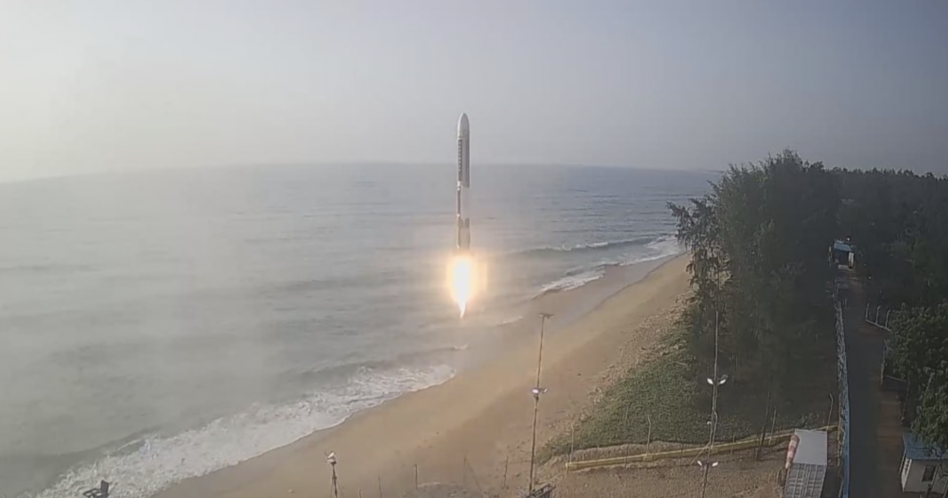
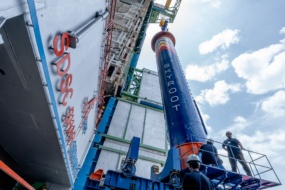
Agnikul Cosmos, an Indian rocket startup, successfully launched its Agnibaan SOrTeD vehicle on a suborbital test flight mission Wednesday, marking another win for the Indian space sector that has already had a banner past 12 months.
“All the mission objectives of this controlled vertical ascent flight were met and performance was nominal,” the company wrote in a statement posted to X.
The demo mission featured a single-stage rocket using a 3D-printed semi-cryogenic Agnilet engine, an important milestone as the company inches toward its maiden orbital launch.
Agnikul Cosmos 101: Founded in late 2017, Agnikul is building an 18-meter, two-stage orbital rocket. The vehicle, powered by its LOX/kerosene-guzzling Agnilet engines, will be capable of ferrying 300 kg to LEO.
The company designed the launch system to be highly customizable, with access to high- and low-inclination orbits.
- Customers can choose how many first-stage engines they need (between four and seven) in a pay-for-what-you-launch model.
- The launch system is mobile, allowing the rocket to fly out of 10+ designated sites.
Printing press: Agnikul 3D-prints the engines as single-piece hardware, with engineers adding the fuel pipes, sensors, and valves after printing is complete. The company said that this low-human-intervention method allows it to pump out two finished engines every week.
“A remarkable feat which will make the entire nation proud,” India’s Prime Minister Narendra Modi wrote on X. “The successful launch of the Agnibaan rocket powered by the world’s first single-piece 3D printed semi-cryogenic engine is a momentous occasion for India’s space sector and a testament to the remarkable ingenuity of our Yuva Shakti,” which local press translated as “youth power.”
In October, the company raised a $26.7M Series B, bringing its total funding banked to $40M.
Spacefaring India: India is rapidly developing into a space nation: ISRO manages three launch vehicles, and a wave of young commercial startups is emerging.
Reaction Dynamics Targets 2031 for Borealis Medium-Lift Launch
In the contest to build up commercial launch capabilities in Canada, Quebec-based startup Reaction Dynamics has entered a new weight class.
RATLOG Wants to Cut ~90% of a Rocket Engine’s Parts
The heavy-lift rocket startup debuted on Y Combinator as part of the Fall 2026 batch.
Reflect Orbital Buys Two Skyroot Aerospace Launches
Reflect Orbital announced the purchase of two launches today from Indian launcher Skyroot Aerospace.

DOT Proposes Changes to Part 450 Licensing Rules
On Tuesday, Transportation Secretary Sean Duffy announced five proposed FAA rules aiming to streamline and modernize commercial space launch and reentry regulations.


The head of the FCC is calling on the agency to change its regulations to further limit how much debris is created in orbit.
Under the new rules proposed by FCC Chairwoman Jessica Rosenworcel on Wednesday, satellite operators would need to limit the chance of a debris-causing incident to less than 1 in 1,000 as part of their application to the agency.
“We can no longer afford to launch new satellites into our skies without being thoughtful about space sustainability,” Rosenworcel said in a statement. “Our orbital debris mitigation efforts will help preserve the orbital environment to protect services we rely on and allow new services to be launched.
Keep reading