

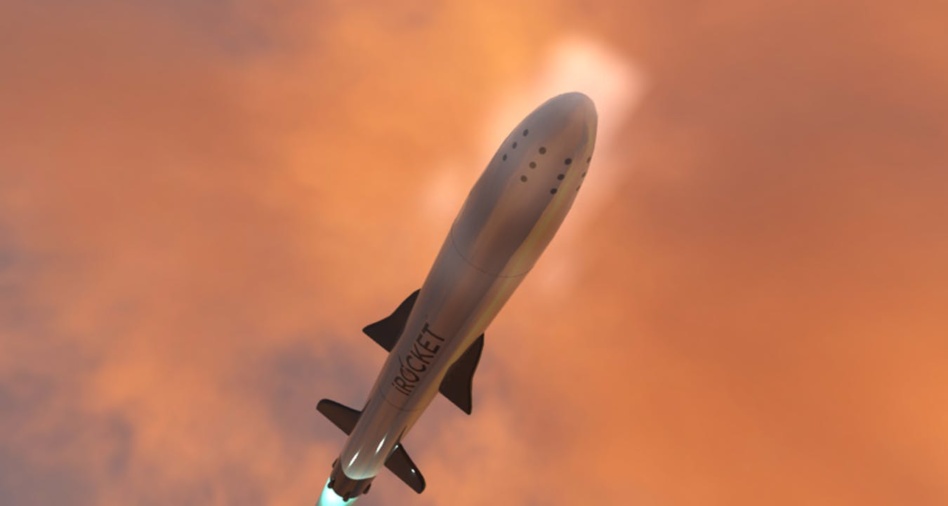
This morning, iRocket and Turion Space announced a multi-mission launch services agreement. The startups are focused on getting to space and providing in-space services, respectively.
Getting to space: iRocket is developing Shockwave, a reusable and fully autonomous small launch vehicle. The three-year old company is backed by the US Space Force, the M&J Engineering Group, and Village Global.
- iRocket is in talks with commercial Internet of Things (IoT) constellation operators, CEO Asad Malik told Payload.
- And…“We have a strong partnership with USSF and DoD to support their hypersonic/defense payloads.”
- $$$: Malik estimates that iRocket will need $200M to get Shockwave into orbit.
Launch is a business where everything that could go wrong very possibly will go wrong. What de-risks the equation for Shockwave? “The vast number of [launch] failures start with propulsion systems,” Malik said. “Because we understand propulsion, we are eliminating the highest risk and we can accelerate vehicle development.”
Providing on-orbit services: Turion Space, meanwhile, is a one-year-young company focused on space debris removal and satellite servicing. The startup recently graduated from Y Combinator’s Summer 2021 batch.
Turion is developing the “Droid” spacecraft and targeting 2024 for initial services. Droid-1, Turion’s demo craft, is headed to space next October (with a separate launch provider). Eventually, per the agreement, iRocket will launch 20 Droids.
- On its website, Turion has an interesting dashboard for satellite operators to scope out (theoretical) pricing for orbital transfer, deorbit, or geostationary graveyard services.
Why iRocket? “Great price, great team, and to be frank, keeping our options open,” Turion CEO Ryan Westerdahl told Payload. “If they win, we win, is really how we see it.” Birds of a feather flock together?
+ Postscript: Y Combinator S21 had five space companies, SpaceDotBiz notes. No other batch has had more than one space company, and most have had none.
RATLOG Wants to Cut ~90% of a Rocket Engine’s Parts
The heavy-lift rocket startup debuted on Y Combinator as part of the Fall 2026 batch.
Reflect Orbital Buys Two Skyroot Aerospace Launches
Reflect Orbital announced the purchase of two launches today from Indian launcher Skyroot Aerospace.

DOT Proposes Changes to Part 450 Licensing Rules
On Tuesday, Transportation Secretary Sean Duffy announced five proposed FAA rules aiming to streamline and modernize commercial space launch and reentry regulations.
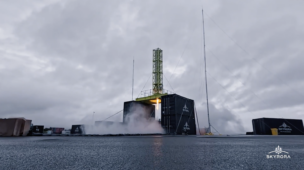
Skyrora Shifts Orbital Launch Timeline to 2030
First-mover advantage isn’t all it’s cracked up to be—at least, that’s the thought process for UK launcher Skyrora.

The UN General Assembly’s First Committee, a security and disarmament panel, has voted to create a working group focused on space conduct.
The working group, if stood up, would recommend rules aimed at curbing “threatening” space behavior…and ostensibly be a precursor to a new space treaty.
An expert’s POV: “It is definitely more than symbolic,” Secure World Foundation Director of Program Planning Brian Weeden told Payload via email. The resolution is “a deliberate, focused effort over the next two years to hammer out an agreement dealing with threats in space.”
Keep reading