



Isar Aerospace is the first privately-funded operator to gain access to the Guiana Space Centre (GSC) in French Guiana. French space agency CNES announced the news on Thursday.
GSC has been in operation since 1968 and has supported hundreds of missions. CNES responded to several requests from industry to open the site to privately-funded operators by publishing an open call for applications in December 2021.
Isar will operate its 28m, two-stage Spectrum rocket from the facility from 2024 onwards. The maiden flight of Spectrum will still take place from Norway’s Andøya Space next year.
“With adding Kourou, we will further extend our global network of critical infrastructure and gain even more flexibility for our customers,” said Isar COO Josef Fleischmann.
Ready for launch
Isar has a growing launch manifest, with more than five contracts already signed. Most recently, the company inked a launch services deal with D-Orbit to ferry an ION tug to space.
CNES’ decision to open its equatorial spaceport to the startup is the latest vote of confidence in its potential to reach orbit.
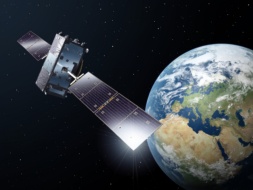
Europe’s Space Defenses Fall Just Shy of Weaponization
Europe doesn’t have any weapons in space—but that doesn’t mean the region is comfortable flying around in orbit defenseless.

DOT Proposes Changes to Part 450 Licensing Rules
On Tuesday, Transportation Secretary Sean Duffy announced five proposed FAA rules aiming to streamline and modernize commercial space launch and reentry regulations.
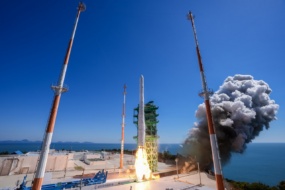
ArbaLabs Launches AI Verification Demo On South Korea’s Nuri Rocket
“In short, tons of companies are looking at the latest and greatest physical AI deployments,” ArbaLabs CEO Ashley Reeves told Payload. “Nobody is really thinking about putting some checks and balances on what these AI models are doing.”

Turkey Uses IAC Stage to Pitch Peace & Homegrown Hardware
During the 2026 IAC in Antalya, representatives from Turkey are leveraging the opportunity to showcase the country’s prgoress in space.


While government-operated orbital outposts may not have the amenities of future private stations, in-space internet, it would appear, will be table stakes.
Driving the news: NASA’s Lunar Gateway module, set to begin launching in a few years, will serve as a comms hub, a research lab, short-term living quarters for astronauts, and a holding bay for rovers and other Moon-bound machines.
Earlier this week, Northrop announced that it had subcontracted Solstar Space, a five-year-old startup, to provide two-way internet services for HALO and the lunar orbiting space station. Solstar’s bread and butter = developing “Wi-Fi Access Points” that could eventually be put to use on satellites, orbital outposts, and space vehicles.
Keep reading