


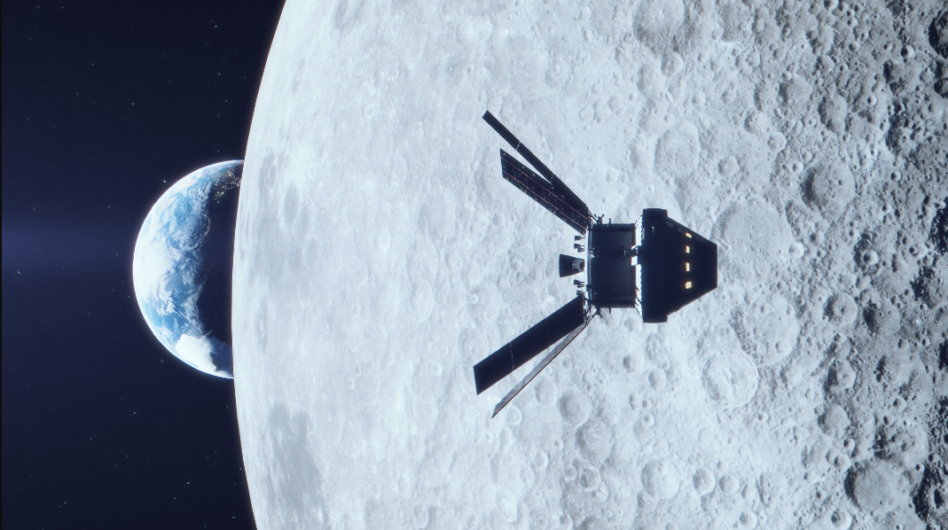
L3Harris Technologies announced Tuesday that it will provide the communications system Artemis astronauts use to communicate with each other and with Earth from the lunar surface.
While much attention has been paid to the rocket, spacecraft, and people that will part of the first crewed Moon mission in more than 50 years, communications are critical to the flight, because “that’s one small…man” doesn’t really have the same poetic quality as Neil Armstrong’s iconic transmission from the Moon.
The system: L3Harris’ Mission Astronaut Communications System is made up of three parts: an audio control unit within the Orion capsule that runs the whole system, a speaker in Orion that provides audio, and a voice-activated audio interface unit that clips onto an astronaut’s suit like a Secret Service radio. It will fly to space for the first time on the Artemis II mission, expected to launch next year.
The stakes: Providing communications for a crewed mission means everything has to work perfectly, Colin Mitchell, the VP of RF systems at L3Harris, told Payload at Space Symposium.
“Anything on a spacecraft carrying astronauts is a no-fail component,” Mitchell said. “That mission doesn’t succeed if the astronauts can’t communicate with the ground.”
Beyond the moon: The communications systems will need some updates if (when?) NASA sends the Orion capsule to Mars. The mission life of the system will need to be extended for the much longer mission to the Red Planet, Mitchell said. He also said he expects redundancy will be built into the system to ensure there is absolutely no chance of failure on the months-long mission.
But, he said the Artemis missions are great practice for eventually reaching Mars. “There’s no better test than doing it like this.
NASA Signs Space Nuclear Pact, Says Moon Base Is Ahead of Schedule
Isaacman gave updates at the White House’s “Science: A New Golden Age Summit.”
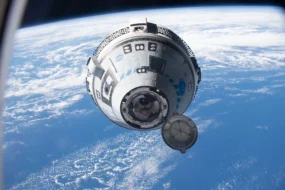
Starliner Targets Uncrewed Flight NET December, Crewed Follow Up in 2028
NASA and Boeing officials announced Monday that they have upgraded and redesigned Starliner following a dicey crewed test flight in 2024, which left NASA astronauts Butch Wilmore and Sunita Williams stuck on ISS for nine months.

Isaacman Doubles Down on New NASA Model for International Partnerships
Isaacman is less than a year on the job, but he’s already upended the way the agency interacts with the rest of the world.

Isaacman Promises ‘Artemis Acceleration’ Update Next Month
“There’s a lot of ingredients—so many ingredients—that need to come together for that landing, and we owe everybody an update,” he said. “There’s going to be an Artemis acceleration update…sometime in early October. Maybe it might even coincide with the [ISS] Crew 13 launch.”

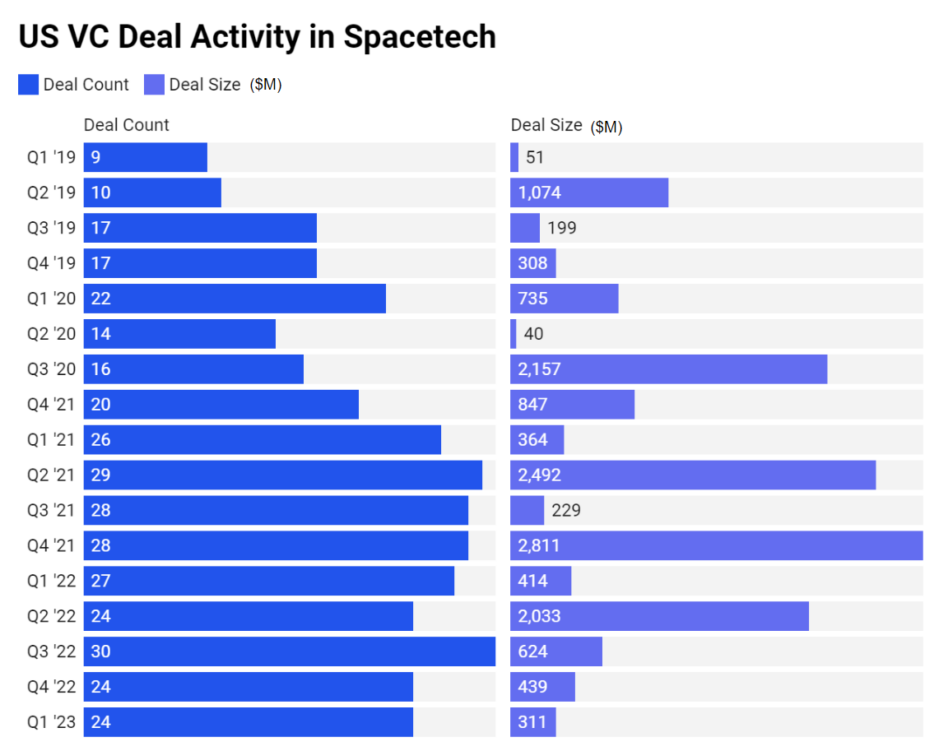
VCs invested $310.7M in the US space industry during the first quarter of 2023, according to new Pitchbook data. It’s the lowest amount since Q3 of 2021, but the 24 deals closed in the quarter is comparable to last quarter.
The biggest deals ranged across different segments of the industry from launch to manufacturing. These include:
Pitchbook reports two exits this past quarter totalling $245M.
Keep reading