


Japanese propulsion startup Letara closed a ¥2.6B ($16M) pre-Series A round to fund the development of its low-cost, hybrid rocket engine technology for both launch and in-space applications.
Headline Asia, JIC Venture Growth Investments, and Incubate Fund led the round, which included additional participation from a mix of US and Japanese VC firms—Aozora Corporate Investment, SMBC Venture Capital, NES Corporation, Gogin Capital, Toyoda Gosei, BIG Impact, Frontier Innovations, Mitsui Sumitomo Insurance Venture Capital, Mitsubishi UFJ Capital, and mint Inc.
Meet Letara: Founded in 2020, Letara is built on tech initially developed while Co-CEOs Shota Hirai and Landon Thomas Kamps were at Hokkaido University, as a doctoral student and professor, respectively.
Letara’s hybrid-engine tech is powered by a mix of plastic-based fuel (HTPB) and oxidizer that is safer to handle, compared with more explosive fuels often used by conventional engines—without sacrificing performance. While the company was founded with the idea of miniaturizing hybrid rocket engines for use as in-space thrusters, it has since expanded its ambitions to include both in-space and launch capabilities.
“We now build both satellite thrusters and launch-class rocket engines from the same core combustion technology—two markets, one technology base,” Hirai told Payload via email.
Letara’s in-development product lines include two spacecraft thrusters for satellite propulsion, and one hybrid engine for launch vehicles that can be scaled to meet a range of missions—from orbital satellite deployments, to point-to-point logistics.
Three-legged race: Letara plans to use the new capital to fund a three-pronged growth plan:
- Scale its technology to meet a wider range of thrust metrics;
- Finance its first in-space demonstration, the timing of which hasn’t yet been disclosed;
- Build its production capability to serve Japanese and international customers.
Letara completed a hot-fire test of its engine in 2025, demonstrating it could produce 5,000N of thrust. The company has since received orders from both undisclosed rocket and satellite companies, as well as the Japanese government.
Long-term, Letara is keeping its eyes open to new opportunities where its hybrid-engine tech can stand out, and Hirai said the company plans to eventually build its own vehicle.
“Beyond demonstrating our satellite thruster in space, this round lets us explore a much wider set of use cases across both the space domain and the defense and security domain, and develop hybrid systems suited to each of them,” Hirai said.

Colare Raises $2.5M to Expand its Hardware-Focused Hiring Platform
Colare’s technical-assessment platform maps the requirements of a role, and recreates decisions future engineers could face on the job.

Exclusive: DoD Taps Orbital Operations for Cryogenic Spacecraft Demo
The Long Beach, CA, startup has won up to $35M from the DoD under a prototype Other Transaction Agreement to fly a full-scale, in-orbit demo of Astraeus—its cryogenic-maneuvering vehicle.
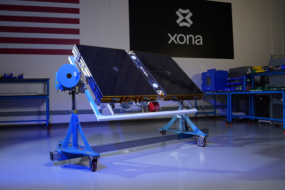
Xona Raises $250M Series D to Scale Commercial GPS Constellation
Xona’s long-term plan is to build a ~258-sat constellation to offer an upgraded commercial alternative to government GPS networks.
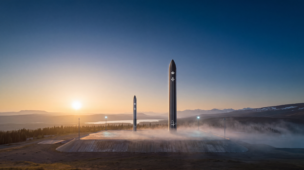
Reaction Dynamics Targets 2031 for Borealis Medium-Lift Launch
In the contest to build up commercial launch capabilities in Canada, Quebec-based startup Reaction Dynamics has entered a new weight class.

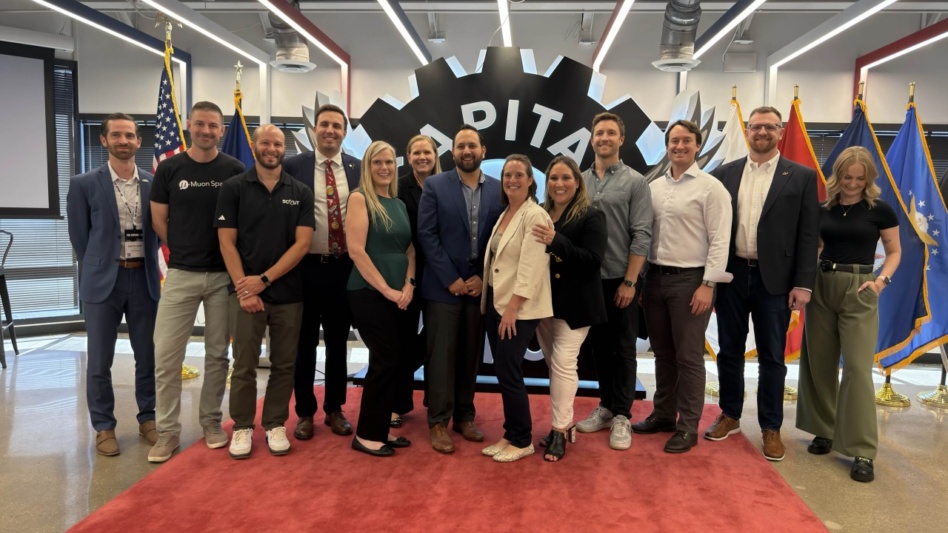
For 11 space startups, the “valley of death” just got a little more navigable.
At the Fed Supernova conference on Thursday, SpaceWERX named the newest recipients of its Strategic Funding Increase (STRATFI) program—money meant to help bridge the notorious gap where promising SBIR/STTR Phase II prototypes go to die before they ever scale into Phase III.
“STRATFI is a critical tool for the Space Force to signal demand to industry and private investors, de-risk innovative technologies, and empower non-traditional and small businesses to scale game-changing capabilities faster, more affordably, and at the speed required to maintain space superiority,” said SpaceWERX director Arthur Grijalva in a statement.
Keep reading