


Lunar Outpost Europe—the Luxembourg-based subsidiary of the US lunar terrain vehicle manufacturer—announced yesterday that it was selected to contribute to ESA’s Moonraker mission launching in 2030.
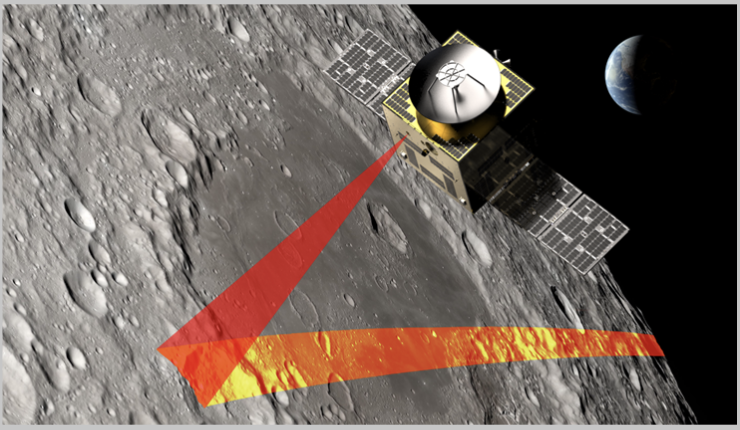
The mission is being led by NUVIEW GmbH, and will feature a lunar orbiting satellite that uses LiDAR to map the lunar surface in 3D, with the goal of gathering more information about potential landing sites at the lunar South Pole.
Stay cool: As part of the consortium, Lunar Outpost Europe will develop thermal management solutions to help Moonraker withstand the wide temperature swings in lunar orbit.
While Lunar Outpost is developing a range of lunar terrain vehicles, its work on Moonraker will not see the company simply repurpose vehicle components for the free-flyer. In fact, it’s the other way around.
Ahead of the Moonraker flight in 2030, Lunar Outpost plans to fly an in-orbit demonstration mission in LEO, funded by the European Commission, to gain flight heritage on thermal components it will use on Moonraker.
Lunar Outpost also expects to use data from the Moonraker flight to inform its development of its LUX-Thermal platform, which aims to help hardware survive the ice-cold lunar night.
Going global: Moonraker represents a big win for Lunar Outpost.
Not only does it validate the company’s decision to set up operations in Europe, it also proves the company can source revenue outside of NASA’s deep-space exploration ambitions.
Lunar Outpost has at least nine upcoming missions expected to fly before 2030, revealing a manifest with a healthy mix of commercial and civil missions from an increasingly global customer base.
- Lunar Outpost has signed onto two missions with the Australian Space Agency to demonstrate Aussie tech on the lunar surface, including hardware to grow crops on the Moon.
- The company also has at least one fully commercial mission on its manifest—Lunar Voyage 3—which will launch to the lunar surface on an Intuitive Machines lander and carry commercial and scientific payloads.
- Lunar Outpost is also planning an additional demo mission in LEO to test out autonomous swarm operations in LEO for the US Air and Space Forces.
Skyrora Shifts Orbital Launch Timeline to 2030
First-mover advantage isn’t all it’s cracked up to be—at least, that’s the thought process for UK launcher Skyrora.
Foundational Raises £8.2M for Satellite Laser Ranging
Foundational emerged from stealth today with Europe’s largest space tech pre-seed round.
Blackswan Space Raises €2.5M Seed to Fund RPO Kit Demo
The round comes as Blackswan gears up for its first in-orbit mission of its RPO Kit payload.

Isaacman Doubles Down on New NASA Model for International Partnerships
Isaacman is less than a year on the job, but he’s already upended the way the agency interacts with the rest of the world.
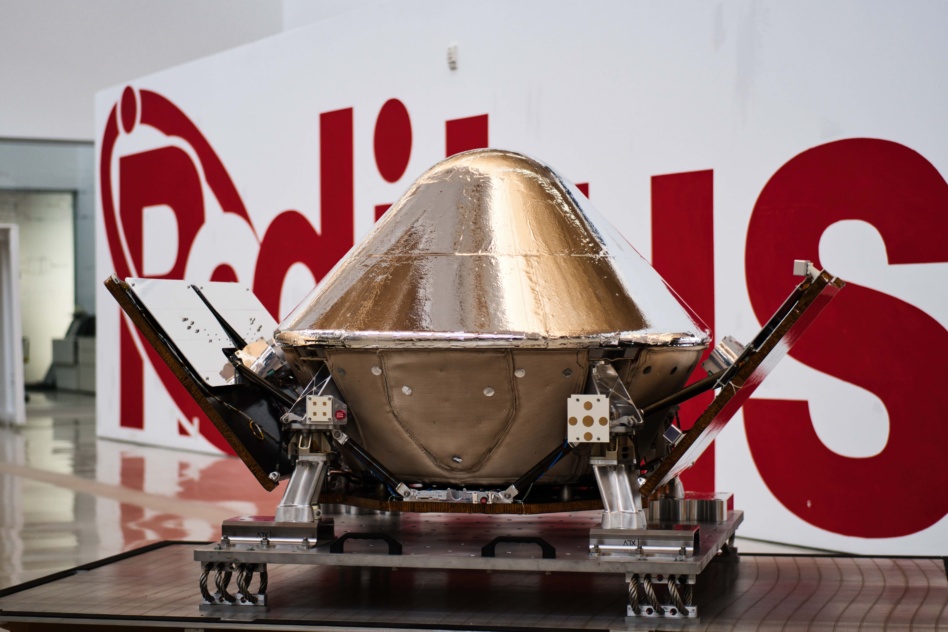
Reditus Space is ready to fly its first reentry mission. The startup, which emerged from stealth in December, announced today it completed development of its first reentry spacecraft—called ENOS—which is scheduled to fly its debut mission this fall.
ENOS is the latest in a string of newly developed reentry vehicles targeting the nascent but growing market for Earth-return capabilities. As the ISS winds down operations in the 2030s, more payload operators have started to look to free-flying reentry vehicles to conduct in-orbit science on the road to eventual, full-scale, in-space manufacturing operations.
Bring it home: To compete in this increasingly crowded market, Reditus is attempting to make a vehicle that can be flown to space and back multiple times—and officials are hoping to benefit from the same favorable economics that have opened up the launch market to high-cadence, affordable flights.
Keep reading