


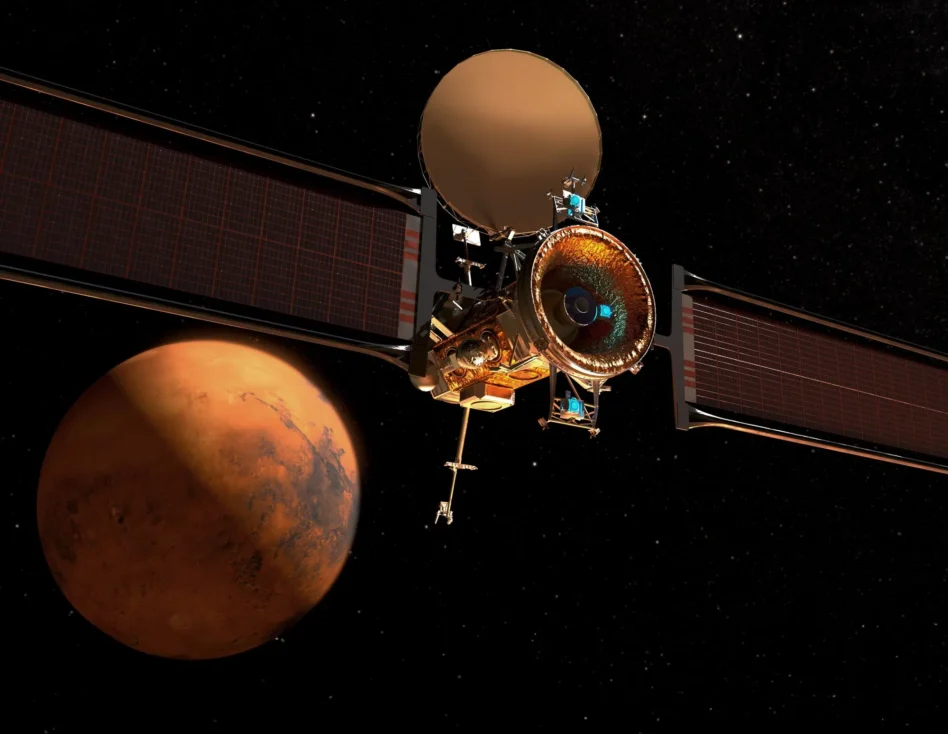
NASA has been communicating with Mars on hardware that predates the iPhone, the cloud, and 4G.
On Tuesday, the agency announced that it had selected Blue Origin to give that infrastructure a modern upgrade. The contract—valued at ~$700M—tasks Blue Origin with developing NASA’s Mars Telecommunications Network (MTN). The next-gen comms system will enable high-bandwidth comms and navigation services for current and future missions to the Red Planet.
With all eyes turned to the Moon in recent months, this award is a reminder that the agency hasn’t forgotten about Earth’s red neighbor. The MTN will support an anticipated growing number of Mars missions—and their increasing data demands.
Terms and conditions: The firm-fixed-price contract requires Blue Origin to deliver the Mars orbiter to NASA by the end of 2028—a deadline set by the July 2025 budget-reconciliation package funding the mission.
While the network will be managed by NASA’s Space Communications and Navigation program, Blue Origin’s role in the mission covers the entire lifespan, including design, development, integration, launch, and network operations.
One Ring: Blue Origin’s proposal is built on Blue Ring, the company’s high-powered, high-maneuverability spacecraft that can carry more than 1,000 kg to Mars orbit. Blue Origin CEO Dave Limp posted on X that the orbiter is under production in Huntsville, AL.
The orbiter is expected to be operational at Mars by 2030, for missions including:
- Transmitting science data, imagery, and navigation information,
- Providing critical mission comms for spacecraft on and around Mars,
- Carrying a 20 kg payload of either science instruments or deployable cubesats.
Bid farewell: The award puts an end to a public battle for the contract. The budget-reconciliation bill restricted the competition to the eight companies who participated in the 2024 and 2025 commercial-Mars-sample-return studies.
NASA did not state which or how many companies bid on the contract, but there were two very public contenders: Rocket Lab and Blue Origin.
Rocket Lab’s proposal highlighted the company’s Explorer spacecraft platform—which was the backbone of the company’s ESCAPADE mission to Mars with NASA—as well as its freedom from lunar commitments. Meanwhile, Blue Origin’s site states that “as much as 80 percent of our work to land on the Moon is directly applicable and reusable for the Red Planet.”
NASA did not provide a source-selection statement, or specify why the contract was awarded to Blue Origin.

NASA Signs Space Nuclear Pact, Says Moon Base Is Ahead of Schedule
Isaacman gave updates at the White House’s “Science: A New Golden Age Summit.”

Starliner Targets Uncrewed Flight NET December, Crewed Follow Up in 2028
NASA and Boeing officials announced Monday that they have upgraded and redesigned Starliner following a dicey crewed test flight in 2024, which left NASA astronauts Butch Wilmore and Sunita Williams stuck on ISS for nine months.

Isaacman Doubles Down on New NASA Model for International Partnerships
Isaacman is less than a year on the job, but he’s already upended the way the agency interacts with the rest of the world.

Isaacman Promises ‘Artemis Acceleration’ Update Next Month
“There’s a lot of ingredients—so many ingredients—that need to come together for that landing, and we owe everybody an update,” he said. “There’s going to be an Artemis acceleration update…sometime in early October. Maybe it might even coincide with the [ISS] Crew 13 launch.”

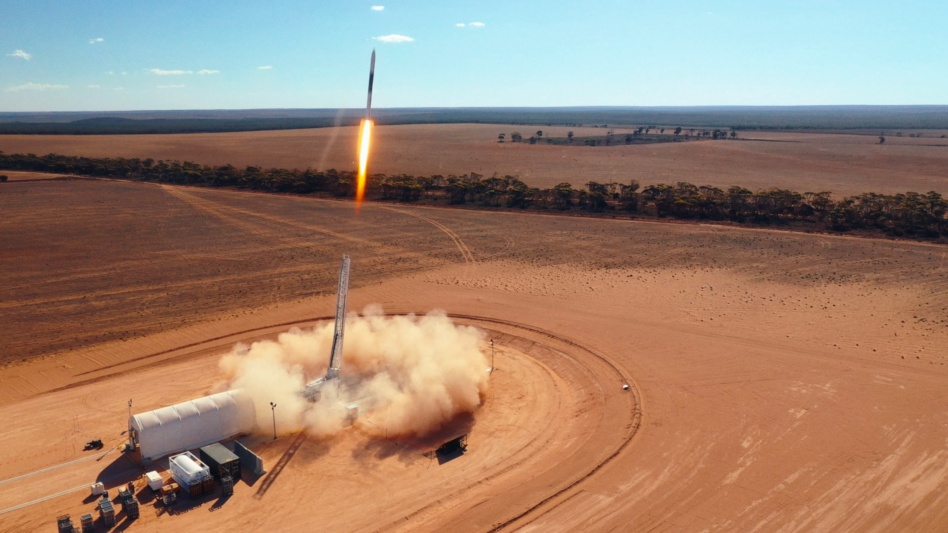
In recent years, VC appetite for investing in European space companies has paled in comparison to the US, but recent funding rounds from European launchers show the gap is starting to close.
This week, two European launch hopefuls—Spain’s PLD Space, and Germany’s HyImpulse Technologies GmbH—closed major extension rounds to support their efforts to create sovereign-launch capabilities for the European space ecosystem.
Departure times: While PLD and HyImpulse are at vastly different stages in their development, both companies are on the verge of passing major milestones.
Keep reading