



Space is “increasingly contested, congested, and competitive,” NATO writes in its newly released overarching space policy (emphasis ours). Those three C’s in space require allies to be ready to “operate in a disrupted, denied, and degraded environment.”
Monday represents NATO’s first public articulation of its space policy. NATO first declared space an operational domain and created a classified policy in late 2019. Last year, NATO released a communiqué saying an attack against one ally in space would be treated like an attack against them all. Article 5 beyond Earth’s upper atmosphere?
The key policy points:
- “Integrating space” into NATO’s core tasks
- “Serving as a forum” for political/military decision-making and intelligence-sharing
- “Ensuring effective provision of space support and effects to the Alliance’s operations, missions and other activities”
- Spearheading interoperability between allied countries’ space capabilities
NATO says that it needs space systems for situational awareness, intelligence-gathering, surveillance/reconnaissance, monitoring of Earth-based domains, satellite communications, position/navigation/timing, and shared early warning.
But…NATO explicitly notes that it doesn’t intend on becoming an “autonomous space actor,” but rather, will rely on member states’ voluntary contributions. Reading between the lines, NATO’s space policy has a decent dose of definitional ambiguity, CSIS’s Kaitlyn Johnson told Axios. NATO could be giving itself some face-saving leeway in the event space saber-rattling reaches a new, more dangerous level of brinkmanship.
NATO’s reluctance to publicize its space policy in the first place may be explained by some European member states’ stated opposition to militarizing space, Breaking Defense observes. The timing is nonetheless notable, as Russian military forces build up on the Ukraine border.
One-On-One With SDA’s GP Sandhoo
It’s been about six months since the SDA launched its first operational tranche of satellites—but troops still aren’t benefiting from the better comms tech because of a series of small issues that forced the agency to take a “strategic pause,” SDA Acting Director Gurpartap “GP” Sandhoo told Payload.

Leonardo’s Missile-Defense Demo in Ukraine Aims To Be a Blueprint for Other Nations
Leonardo is positioning itself to become a mass distributor of space-enabled missile defense shields.

A Recap of Payload’s Space Stage
Two days. Nine panels. Two dozen speakers—and that’s just the space content.

Q&A With Laurent Jaffart, ESA’s Director of Resilience, Navigation and Connectivity
Jaffart is leading the charge to build up ESA’s defensive posture. Payload chatted with him to hear his plans for the new role.
PitchBook and NVCA have released their Q4 ’21 Venture Monitor. If there’s one thing that’s evident, it’s that VCs had plenty to be happy about last year:
…Investors put nearly $7.9B to work globally across 308 “space tech” deals in 2021. Within the space tech vertical, as defined by PitchBook, ~$585M was invested in Q1, ~$3.2B in Q2, ~$797M in Q3, and ~$3.2B in Q4.
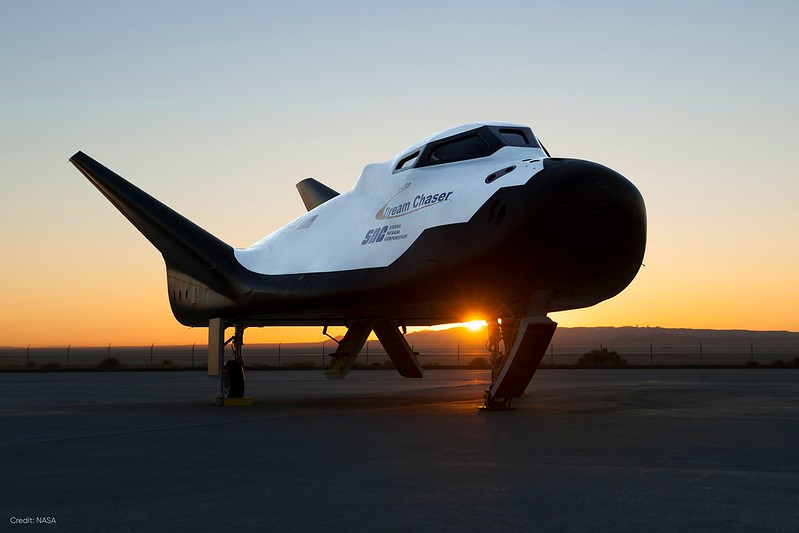
The larger quarters were heavily swayed by outlier deals. Case in point:In Q4, Sierra Space was the second largest early-stage VC mega-deal (priced at/above $100M) in any sector. In November, the Sierra Nevada subsidiary raised a $1.4B Series “A”, led by General Atlantic, Coatue, and Moore Strategic Ventures.
Keep reading