



The Space Force should use its capabilities to improve security for the global community rather than focusing solely on American security, according to a report from RAND, a non-profit research organization.
Preventative care: RAND argued that the Space Force’s assets can be directed toward multiple avenues of preventive monitoring, so that the US and its partners can respond to global crises before things spiral out of control. One specific example: RAND argued a human security focus could have helped mitigate the escalating crisis in drought and famine-stricken Somalia.
The broader idea is that mitigating the impact of food insecurity, climate change, and geopolitical unrest will improve national security.
RAND identified four areas where the Space Force could boost global security:
- Environmental monitoring: The Space Force can create models to predict devastating climatological events before they reach crisis levels. By sharing this information with partner nations, and focusing on the security of those living in affected areas, the Space Force can hamper the “risk accelerant” that is climate change.
- Intel, surveillance, and recon (ISR): With advancements in satellite monitoring, the Space Force has demonstrated its capability to identify human rights violations as they unfold, from China’s detention of the Uighur people to pirate vessels off the coast of Africa. However, further training to focus on human security and partnerships with the rest of the DoD is needed to make these insights actionable.
- SATCOM: The service branch can ensure connectivity to displaced populations that lack connectivity, which will help humanitarian groups. Broadening SATCOM coverage can also increase access to education, telehealth, and financial resources.
- Position, Navigation and Timing (PNT): RAND suggested that PNT could be used to build machine learning models to forecast the spread of disease, or enable mobile banking in disaster-stricken regions.
Same same, but different: The RAND report isn’t asking the Space Force to change its operations in a fundamental way. Instead, the organization wants the Space Force to alter its thinking, and integrate human security principles into its broader security imperative—increasing its monitoring capacity, bolstering predictive models, and improving global partnerships.
The report acknowledged that its recommendation requires a shift in Space Force culture, an increase in satellite capacity, and greater willingness to share data with others. Easier said than done, but there’s also real-world evidence that these changes could have wide spread benefits.
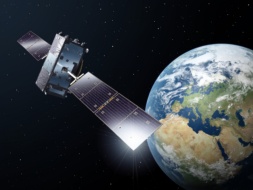
Europe’s Space Defenses Fall Just Shy of Weaponization
Europe doesn’t have any weapons in space—but that doesn’t mean the region is comfortable flying around in orbit defenseless.
Fortastra Raises $30M Series A to Fund its Next Security Spacecraft
The US military has weapons in space, and—with the orbital arsenal expanding—security is becoming a top priority.
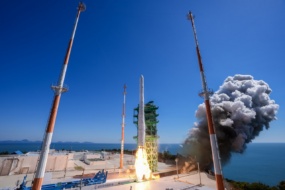
ArbaLabs Launches AI Verification Demo On South Korea’s Nuri Rocket
“In short, tons of companies are looking at the latest and greatest physical AI deployments,” ArbaLabs CEO Ashley Reeves told Payload. “Nobody is really thinking about putting some checks and balances on what these AI models are doing.”
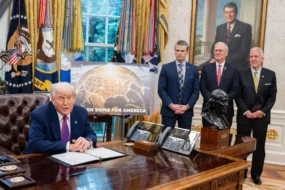
Colorado Springs, Huntsville Team Up on Golden Dome
“It’s a transformed relationship between Colorado Springs and Huntsville,” Rep. Jeff Crank (R-CO) told Payload. “When I took office, I don’t think it was a bad relationship, but it was one where both communities were kind of looking over their shoulder at the other. That wasn’t good for America, and I don’t think it was good for Colorado Springs or Huntsville either.”

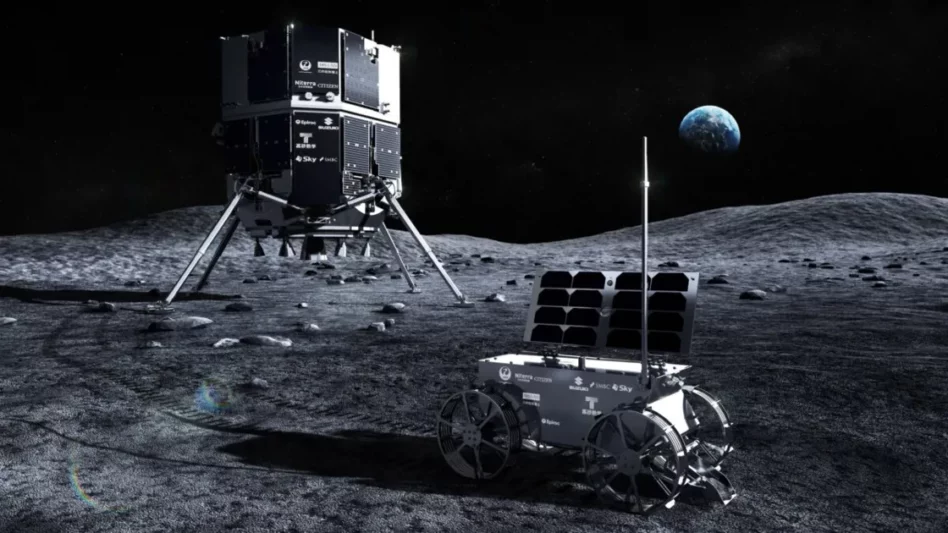
Japanese lunar firm ispace will launch its Hakuto-R lander to the Moon on a SpaceX Falcon 9 no earlier than December, CEO Takeshi Hakamada said yesterday.
The lander, called Resilience, is funded by private capital and JAXA, the Japanese space agency, and is expected to be shipped to Cape Canaveral a month and a half before launch.
It will deliver six payloads to the lunar surface, including the first experiment to attempt electrolysis on the Moon, and the Tenacity rover, which will collect regolith samples to sell to NASA—and drop off an art project in the shape of a little red house.
Keep reading