


From Tuesday to Wednesday, TechCrunch held TC Sessions: Space 2021, with excellent programming and speakers from startupland, the investment community, NASA, academia, and more. We took diligent notes and wanted to share some of the notable highlights below.
Debris: A spacecraft is 10X more likely to be hit by a dead satellite or cataloged debris than an active satellite, LeoLabs cofounder and CEO Dan Ceperley said.
Orbital outposts: The race is heating up to get commercial LEO stations into orbit to complement/replace the ISS, as underscored by a 1-on-1 between TC and NanoRacks cofounder and Voyager President Jeffery Manber.
VC: SPACs have been liquidity events for space investors, Bessemer Partner Tess Hatch said. She pointed to “unique sensors in space” as a 2022 investment thesis of interest. Hemisphere Ventures’ Lisa Rich said: “ I’m glad to see fewer people contacting me saying they’re going to build a rocket.”
On rocket-building: Rocket Lab’s Peter Beck walked through the trials and tribulations—and opportunities—with Neutron. “I laid a challenge down for the team…we should be able to fly this rocket 24 hours after it lands,” Beck said.
And finally…SPACs! Going public via SPAC helped Astra “bulletproof the books” and turbocharge recruiting, CFO Kelyn Brannon said. On the flipside, “I actually think this party is going to end very badly for a number of companies,” Rocket Lab CFO Adam Spice said. He said SPACs could represent a “dangerous” financial product and that a company needs to “be the right fit for it.”

Nebex Partners with Thrusters Unlimited to Unlock $700M for Mexico’s Space Ecosystem
The capital will fund EO, telecoms and other strategic capabilities, according to Nebex.
Exclusive: Meridian Space Spins Out from SpinLaunch
“Meridian will carry forward the satcom infrastructure business… SpinLaunch will continue to build on its vision for a lower-cost approach to launch, with further applications in hypersonics to support the Golden Dome program and in the lunar economy,” Meridian Space CEO Massimiliano Ladovaz told Payload.
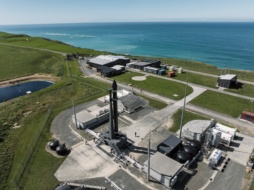
Rocket Lab CFO Adam Spice Predicts More M&A Deals on the Horizon
Iridium shareholders voted overwhelmingly to approve the company’s acquisition by Rocket Lab. According to Rocket Lab CFO Adam Spice, there’s more M&A on the horizon.
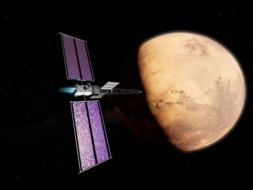
TRL11 Will Build Imaging Tech for SR-1 Freedom
TRL11 has received a NASA contract to provide imaging systems for the Space Reactor-1 (SR-1) Freedom mission to Mars.

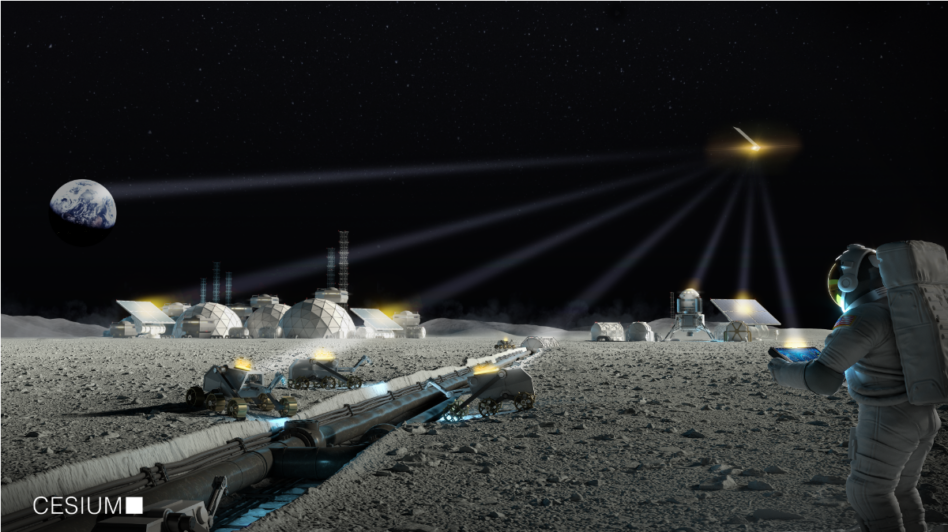
CesiumAstro, an Austin-based software communication system developer, has announced plans to accelerate production on the second generation of its active phased array product, Nightingale. The software-defined steerable array can attach to satellites to provide inter-satellite and ground connectivity and is optimized for lunar and cislunar applications.
The acceleration was prompted by a Phase II NASA SBIR grant and will speed up production time from 24–36 to 16–18 months, CesiumAstro CEO Shey Sabripour told Payload.
A little background: CesiumAstro focuses on building modular, out-of-the-box arrays that can be steered electronically by satellite operators—as opposed to steering mechanically, which uses more energy and generates torque. The flat design is meant to be more “dynamically efficient” than conventional arrays.
The modular technology is “the entire basis for our company,” Sabripour said. “We can provide very sophisticated payloads using … Lego-like building blocks that you can bolt together. And the software automatically adjusts.”
V2: CesiumAstro is building the second generation of Nightingale to be lighter, more customizable, and easier to mass-produce than the first. “We’re creating a very agile, very scalable, very software-defined, sophisticated payload out of a few building blocks,” Sabripour said.
The next generation will enable communication and sensing across Tracking and Data Relay Satellite (TDRS) and 5G mmWave frequency bands, along with the Ka-band.
Looking forward: CesiumAstro expects hardware delivery in January 2023, with demo missions coming soon afterwards. Over the next three to five years, the company hopes to make its flat antenna array technology available across all frequencies used in commercial and government applications, “from L-band all the way up to V-band,” per Sabripour.
“Flat array technologies will ultimately replace traditionally, mechanically steered antennas in most applications,” Sabripour said. “That’s the fundamental reason why we exist.”
