


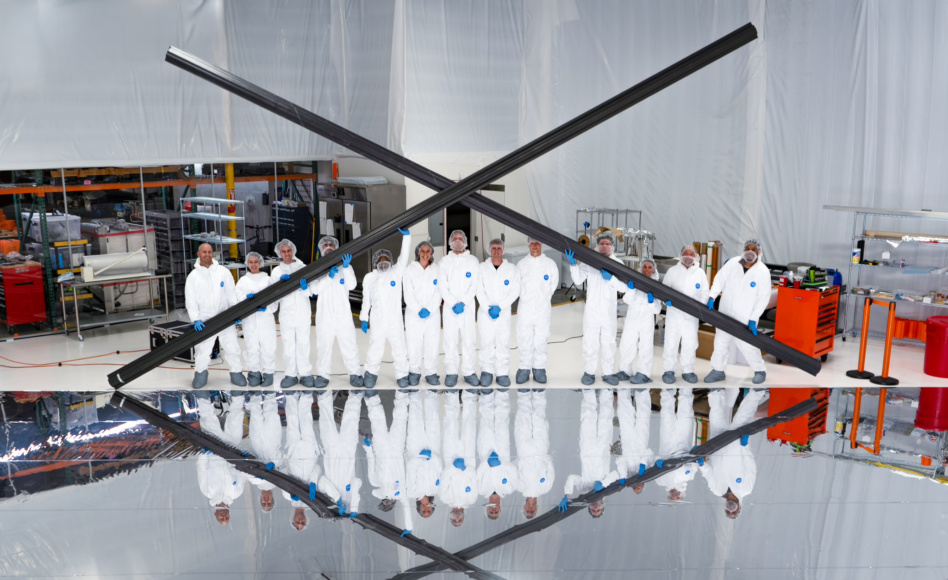
Reflect Orbital closed a $20M Series A to ramp up the development of its sun-reflecting sat constellation and support the company’s first expected launch next spring.
Lux Capital led the round, with participation from Seqouia Capital and Starship Ventures.
Bright horizon: Reflect’s ultimate vision is to boost solar power production on Earth. It aims to position mirrors in orbit to beam down sunlight to solar farms just before dawn, and just after dusk—effectively increasing the total time during which a solar farm can generate electricity.
In the meantime, the company has other plans to bring in revenue. Since its founding in 2021, the company has received 260,000+ requests for nighttime lighting. Future services could include illuminating overnight construction projects, public events, disaster relief efforts, and defense operations.
The World Tour: Reflect is planning to launch its first sat next spring to illuminate 10 locations around the world. The idea is to boost public interest with the lighting events, but so far, responses haven’t always been supportive.
Early explainer videos from the company left many wondering about the impact of the tech on light pollution and terrestrial flora and fauna, but as CEO Ben Nowack explained to Payload: The goal is to have the light beam be as targeted as possible, so the better the reflector, the less light pollution and spillover there will be.
This demo sat will feature an 18m by 18m (59ft by 59ft) mirror made from mylar plastic—the steely fabric used in space blankets—pulled tight to form a solid reflective surface. It is expected to reach the brightness of 0.1 lux—comparable to a full Moon on a cloudless night.
What’s next: Future sats could upgrade the reflector size to 55m by 55m (180ft by 180ft, or nearly an acre in size). Reflect anticipates having thousands of satellites in orbit once the constellation is complete. At that scale, Reflect’s total constellation luminosity could be comparable to the Sun at high noon.
The sats would eventually pay for themselves through bookings before launch, according to Nowack.
“Our deals in the pipeline already exceed our first two mission costs. And we are just getting started,” Nowack told Payload via email.
PAVE Space Raises $40M for In-Space Propulsion Tech
PAVE’s propulsion systems rely on a storable rocket bipropellant, which aims to make launch operations simpler and more cost-effective, compared with cryogenic fuels.
Symphony Space Unveils Adagio Hosted Payload Platform
Symphony Space is building a new model for hosting payloads—one where the satellite remains in orbit and the payloads come and go.
Contrivian Launches New Product Bundling Amazon Leo & Starlink
Customers looking for satellite connectivity are often forced to choose between one provider or another. Those days are over.

Kayhan Space Launches Satcat Terminal
Business and liberal arts majors rejoice!

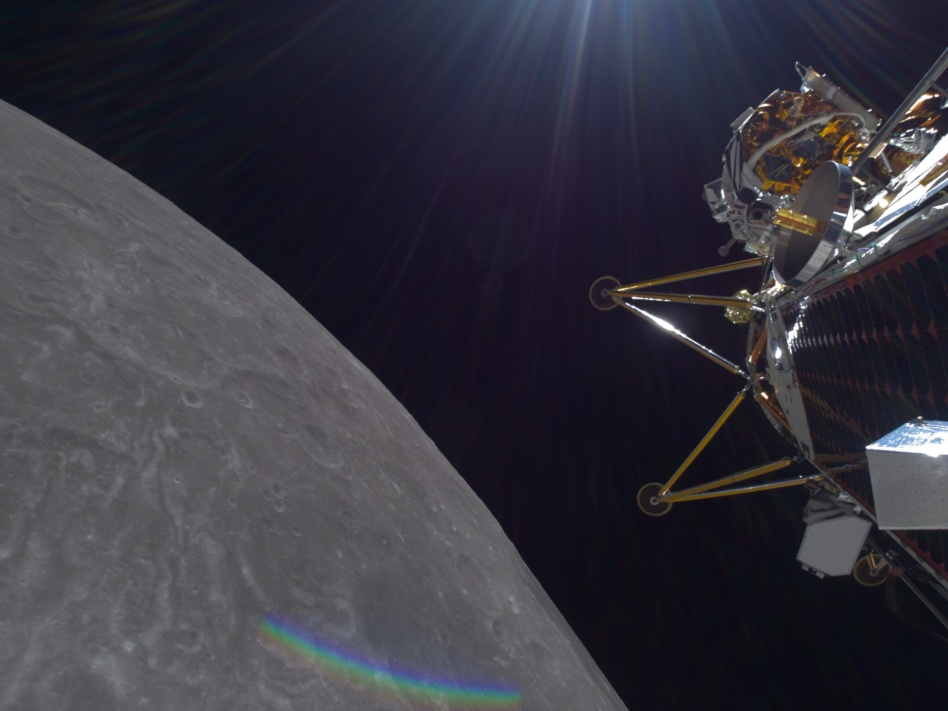
Intuitive Machines CEO Steve Altemus is a fan of the White House’s plan for space, telling investors on a first quarter earnings call that “the president’s recent NASA budget request signals continued support for deep space initiatives that Intuitive Machines [is] built to serve.”
Does it? The top-line budget shared by the White House this month would cut $2.27B from the space science division that funds IM’s Moon landers under the CLPS program—as well as the SLS and Orion vehicles at the heart of the current Artemis Moon program IM hopes to service.
He went to Jared: Altemus said he is confident in NASA administrator nominee Jared Isaacman’s vision for Moon and Mars exploration in parallel, by relying on commercial contractors. In 2025, IM is competing for two more commercial Moon lander task orders—”we do not see a direct impact into the CLPS budget,” Altemus said.
Keep reading