


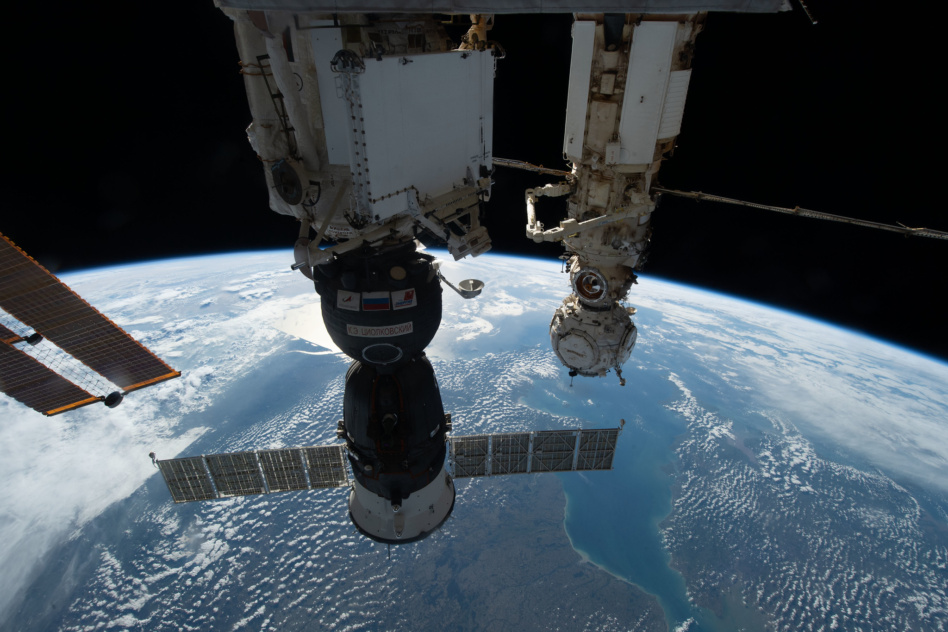
A lifeboat for members of the ISS crew is on the way. A Roscosmos investigation of a leak in the Soyuz MS-22 spacecraft found that the ship is unsafe to use for a ride home, and the agency announced this morning that it will send an uncrewed Soyuz to the station to use instead.
What happened? Last month, a micrometeoroid struck an external coolant loop on the Soyuz MS-22, which was docked to the ISS. The impact made a tiny hole that resulted in all the coolant in that loop leaking into the void of space.
- NASA astronaut Frank Rubio and cosmonauts Sergey Prokopyev and Dmitri Petelin journeyed to the ISS aboard that capsule, and were expected to make the return trip in March.
The solution: Roscosmos reviewed the data from the leak and determined that it rendered the Soyuz MS-22 capsule unusable for the journey home.
The three crew members will now have to extend their stay on the station for an unknown amount of time. Russia plans to send up the MS-23 capsule, which was originally planned to carry three cosmonauts to replace the departing crew. The agency hasn’t yet announced when that crew’s flight will launch.

LambdaVision Taps Starlab for Post-ISS Manufacturing Plans
LambdaVision is preparing for its post-ISS future.
Vast Delays Haven-1 Launch to 2027
Haven-1, which was expected to launch in 2026, will now launch no earlier than Q1 2027—and it could be significantly longer before the station gets its first crew.
Voyager Details its Plans for In-Space Manufacturing
Voyager Technologies secured a patent from the US government covering its unique process of manufacturing crystals in microgravity to support the future of optical communications.

United Semiconductors, Aegis Aerospace Partner on In-Space Manufacturing Platform
Forget offshoring—the future of manufacturing is off-world.


Today, satellite startup Quub emerged from stealth mode with two Air Force contracts in tow.
Pronounced like “cube,” the Lancaster, PA-based startup bills itself as a “data company,” placing an emphasis on the value of its eventual downstream analytics products. But don’t get it twisted—Quub is taking a verticalized approach to Earth observation (EO) and will very much be flying its own hardware. The startup already has a teensy bit of flight heritage under its belt, with plans to ramp up operations and on-orbit activity.
Quub formally incorporated in 2018, though it leverages prior “PocketQubes” work done by cofounder and CEO Joe Latrell. “This all started at a small desk in the basement,” Latrell told Payload.
Keep reading