


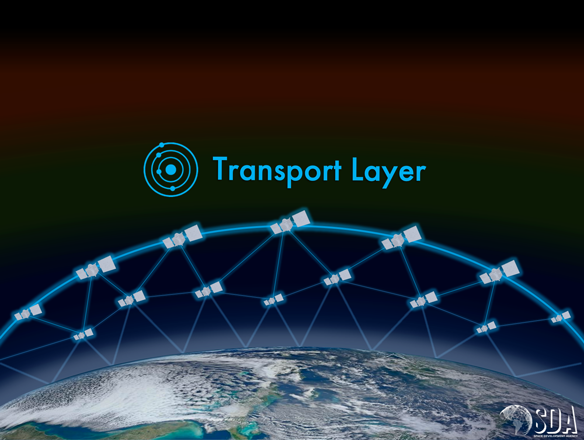
The Space Development Agency (SDA) is going full steam ahead on its Proliferated Warfighter Space Architecture (PWSA). Yesterday, the agency announced that it has awarded the first two contracts to build and operate spacecraft for the second tranche of the network.
The two contracts are worth a combined $1.5B and secure 72 satellites. The birds will support encrypted communication for Tranche 2 of the Transport Layer of the planned national defense architecture (more on all that later). The awardees:
- Northrop Grumman ($NOC) won $733M for 36 satellites
- Lockheed Martin ($LMT) won $816M for 36 satellites
Transport and tracking
The SDA’s ambitious plans for a national defense architecture in space focus on taking full advantage of emerging technologies whenever they’re ready. A batch of satellites, or “tranche,” is planned to launch approximately every two years.
The architecture also breaks down into two individual constellations, Transport and Tracking. These contracts cover satellites that will be part of the Transport Layer, which will be connected in a mesh network via laser inter-satellite links to ferry information wherever it needs to go as quickly as possible.
Peeking ahead: Tranche 2 is expected to launch in 2026 and provide global persistence for Tranche 1 capabilities. Northrop and Lockheed, along with satellite manufacturer York Space, are also in the process of building satellites for Tranche 1, which is slated for launch next year.
Airbase Emerges From Stealth With $5M to Automate Spectrum Allocation
As demand for spectrum grows alongside the rising number of missions in orbit, a new startup is looking to ease management of this precious, finite resource.
One-On-One With SDA’s GP Sandhoo
It’s been about six months since the SDA launched its first operational tranche of satellites—but troops still aren’t benefiting from the better comms tech because of a series of small issues that forced the agency to take a “strategic pause,” SDA Acting Director Gurpartap “GP” Sandhoo told Payload.
Ramon.Space, Ingrasys Aim To Fly Prototype Orbital Data Center In 2027
There’s another entry in the space-data-center race.

Contrivian Launches New Product Bundling Amazon Leo & Starlink
Customers looking for satellite connectivity are often forced to choose between one provider or another. Those days are over.

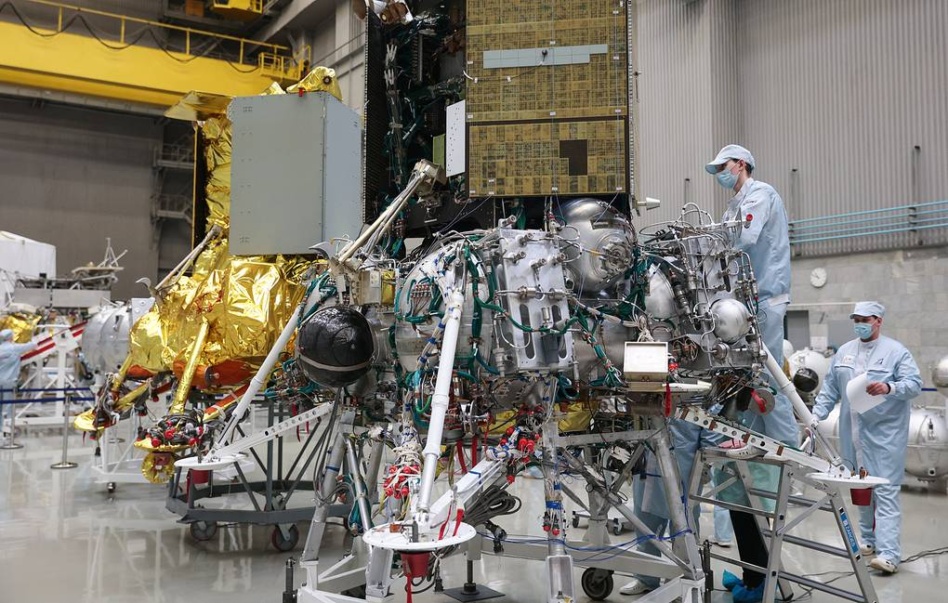
The lunar surface has claimed another victim.
Russia’s Luna-25 crash-landed on the Moon this weekend after the spacecraft fired its engines in an attempt to maneuver into its pre-landing orbit. The failed mission is a blow to the Russian space program, which hoped for a triumphant return to the lunar surface after a 47-year absence.
“According to the results of the preliminary analysis, due to the deviation of the actual parameters of the impulse from the calculated ones, the device switched to an off-design orbit and ceased to exist as a result of a collision with the lunar surface,” Roscosmos said in a statement.
Keep reading