


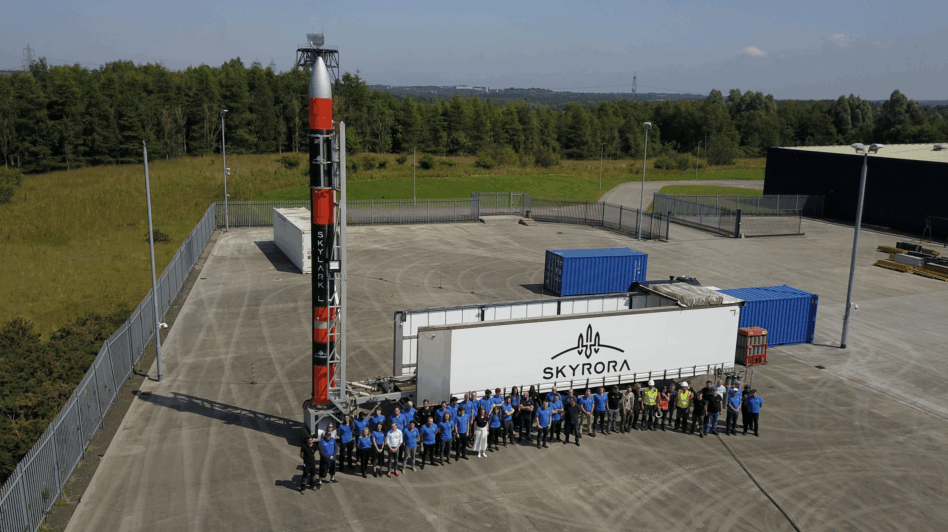
First-mover advantage isn’t all it’s cracked up to be—at least, that’s the thought process for UK launch startup Skyrora.
The company announced this week that it completed a 45-second hotfire test of a scaled-down version of the engine that will power the first stage of Skyrora’s orbital Skylark XL rocket. The test will inform the company’s development of the larger 70 kN engine, and Skyrora will use the data to make upgrades on the engine interface, firing operations, and tank design, according to COO Jack-James Marlow.
While Skyrora is working toward a potential second flight of its suborbital Skylark L2 vehicle next year, Marlow told Payload Skyrora is “tentatively aiming for 2030 for orbital launch.” Its a big jump from last year’s projection, when Skyrora told Payload it could optimistically attempt an orbital flight as early as Q4 2026.
Winning by a hare: The lengthy development path is far different from other European launch hopefuls who are racing to get past the Kármán line. But Skyrora’s pace is a feature, not a bug.
“Our strategy is not to sprint towards [orbit]. We’ve seen other companies increase their opex, [and] grow drastically,” Marlow said. “I see rocket companies want to be rocket companies, rather than stable businesses. Where my view is, we’ve got to be a stable business first, rather than one, big 10-year gamble.”
Skyrora was founded in 2017. For comparison, German launch startup Isar Aerospace was founded one year later, and reached orbit for the first time in September. Although Skyrora was quicker to get off the ground—attempting its first suborbital flight of Skylark L from Iceland in 2022—it’ll take a lot longer to get to orbit.
Marlow explained that the decision to move methodically toward the orbital goal was a product of the relatively contracted appetite for sovereign launch, both from the UK government and local investors. The UK is still standing up its SaxaVord Spaceport launch site in northern Scotland, and—despite receiving a launch license in August 2025—Skyrora is still limited in what it can do.
Skyrora said last year that the issue came down to available launch pads. That may be a tough issue to solve anytime soon, as SaxaVord has opened its doors to foreign startups—German launchers HyImpulse and Rocket Factory Augsburg—which are both setting up facilities at the site.
“The technology was outpacing the regulations, [and] the actual physical locations for spaceports,” Marlow said. “Our second [suborbital] vehicle, the Skylark L2, has been ready since 2022…now it’s been waiting, ready to launch.”
Go it alone: While other European launch startups have taken on massive funding rounds to accelerate their paths to orbit, and meet tight development milestones to unlock further funds under ESA’s European Launcher Challenge, Skyrora is attempting to fund its development largely through revenue and grants.
The company has raised ~$65.9M in VC financing since its founding in 2017, according to PitchBook—but officials expect to need approximately double that to get to orbit. Skyrora is aiming to lock down part of the remaining funds through a mix revenue-generating schemes, including:
- Selling components developed in-house to the broader space industry;
- Renting out its test facilities to other researchers in the UK;
- Offering its 3D-printing machines to build prototypes for other industries.
Skyrora’s ultimate goal is to avoid the same fate as Orbex, and Virgin Orbit before them. Both companies raised large funding rounds and outgrew their own income streams before ending in bankruptcy.
“We’ve seen from other competitors who were sprinting, and increasing operational costs drastically,” Marlow said. “So we’re happy to keep the company fixed at a set headcount whilst extending our timeline.”
Transporter-18 Tests the Building Blocks of Orbital Data Centers
Few rideshares come with a theme, but SpaceX’s Transporter-18 had one: getting power to compute in orbit.
Foundational Raises £8.2M for Satellite Laser Ranging
Foundational emerged from stealth today with Europe’s largest space tech pre-seed round.
Blackswan Space Raises €2.5M Seed to Fund RPO Kit Demo
The round comes as Blackswan gears up for its first in-orbit mission of its RPO Kit payload.
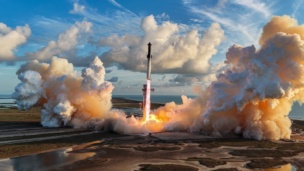
Starship Reaches Orbit on 14th Test Flight
After reaching orbit, Starship deployed 26 V3 Starlink sats over about 30 minutes using its ‘Pez dispenser’ system.

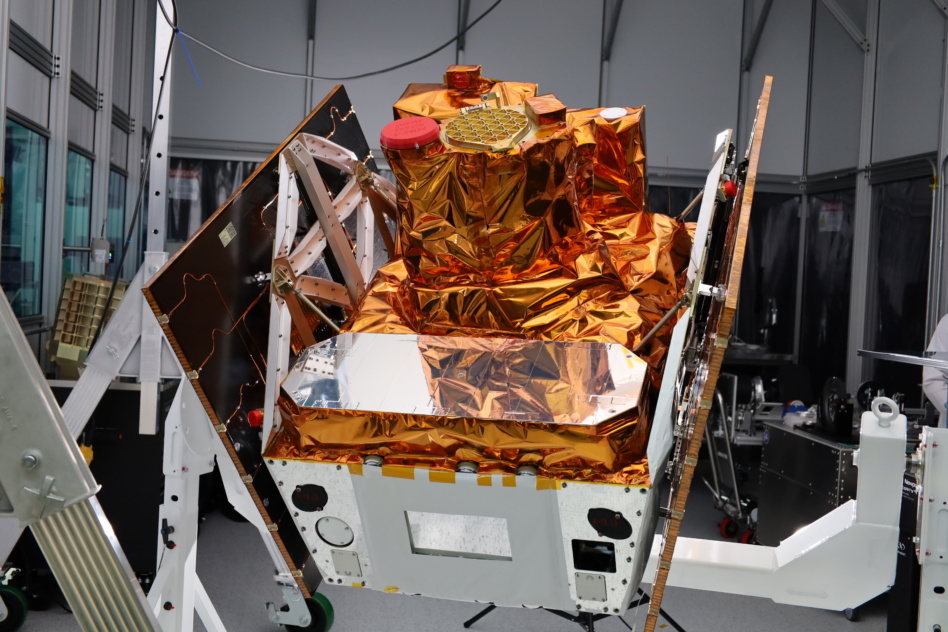
Few rideshares come with a theme, but SpaceX’s Transporter-18—which launched Thursday from Vandenberg—had one: getting power to compute in orbit.
Three of its payloads are each testing a different piece of the ODC puzzle.
“We passed the point of saying, ‘Will there be people doing AI computing in space?'” Cowboy Space COO and Chief Legal Officer Joseph Yaffe told Payload. “We’re focused on building the infrastructure for that.”
Keep reading