


SpaceWERX, the Space Force’s innovation funding division, announced a new batch of STRATFI awardees last week at SXSW.
Build a bridge: SpaceWERX provides the much-needed bridge over the “valley of death” by supporting startups in their transition from an SBIR/STTR Phase II staged company to the more elusive Phase III contracts. STRATFI funding ranges from $3M to $15M.
The program works on a match system, requiring a level of private dollar contribution in order to be eligible. In 2023, SpaceWERX funded $72M into 14 programs. Including the private funding match, the total investment reached $125M.
The STRATFI awardees include:
- Astranis for its GEO comms satellites
- Starfish Space for its servicing vehicle
- Skyloom for its optical comms
- Lunar Outpost for its robotic swarm
- Defense Unicorns for its software solutions
Highlighting an awardee: Defense Unicorns received a $15M STRATFI award to help modernize the Space Force’s Assured Access to Space IT and cybersecurity systems. The AATS upgrades will help maintain the organization’s mission readiness as it handles a steep ramp in launches per year.
“The STRATFI program is advancing game changing end-to-end capabilities for the United States Space Force,” director of SpaceWERX Arthur Grijalva said in a release. “These innovative ideas, technologies and capabilities are what we need to compete and win as a nation.”
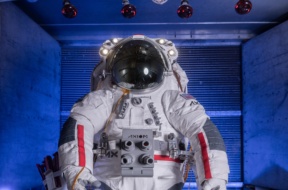
Axiom Space’s Suit Set to Fly in 2027
“From a production standpoint, we’re putting together the first qualification suit,” Michael López-Alegría, the company’s chief astronaut, told Payload. “That continues regardless of what they say.”
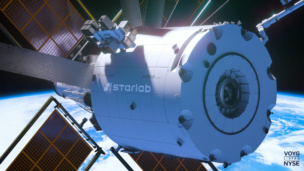
Voyager Technologies Wins Its First Private ISS Mission
Axiom Space was the only provider for the first five PAMs awarded by NASA, but new players have entered the competition in 2026.

NASA Administrator Jared Isaacman On Artemis, Budget, And Establishing a Lasting Space Vision
“There’s a lot of passionate people out here. They can do incredible things from a scientific perspective,” Isaacman told Payload. “I don’t know how many of them have ever pulled together a financial model, and driven execution on some of these things, to say what should or shouldn’t be the right budget.”
CLD Companies Say NASA Is Wrong. NASA Says Prove It.
“I’m not surprised that CLD providers didn’t like what we had to say,” Isaacman told Payload on the sidelines of the Space Symposium. “So, prove we got it wrong.”

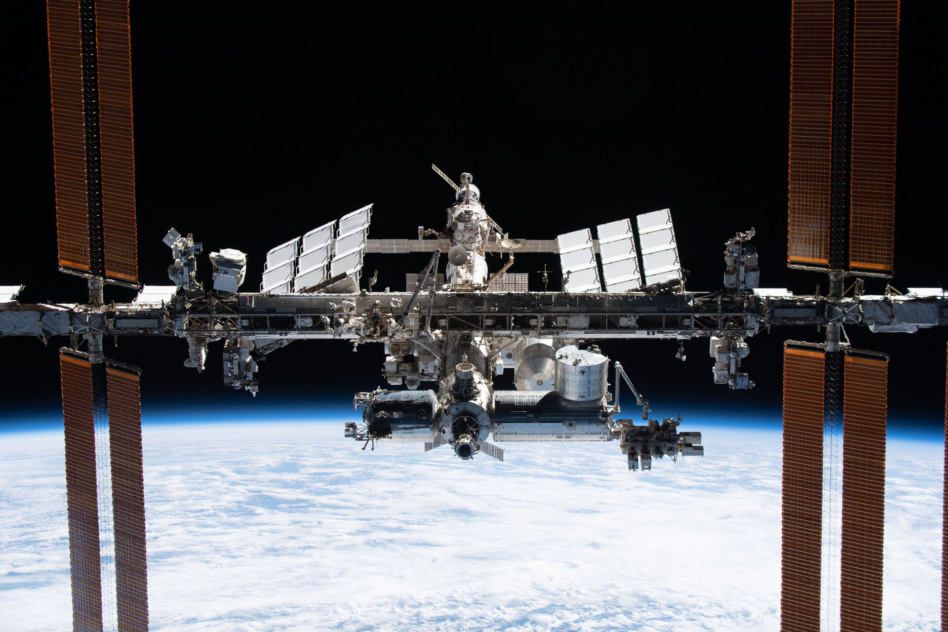
The US’ highest scientific laboratory is changing with the times.
Michael Roberts is the chief scientific officer of the ISS National Lab, a government-funded organization that helps connect non-NASA scientists and companies with opportunities to perform research aboard the station. He sat down with Payload to discuss the lab’s priorities, how its relationship with the commercial space industry has developed, and what’s planned for the lab after ISS decommissioning and the anticipated rise of commercial outposts to take its place in LEO.
“We’re seeking to optimize access to space because it is a precious resource,” Roberts said. “The cost of getting to low Earth orbit has fallen significantly over the past several years, largely through the initiative of NASA engaging with the commercial sector to build new capabilities, and then the response of industry.”
Keep reading