


The hottest real estate for the data-center business right now may just be the one place with no neighbors to object.
Starcloud has raised a $250M extension to its March $170M Series A funding round. With the new funding, announced Friday, the orbital-data-center company has now raised $450M, at a valuation of $2.3B.
Manhattan West—which has invested in other orgs such as SpaceX, Relativity Space, and Axiom—led the extension, which also included participation from Benchmark (which led the initial Series A), EQT, Soma Capital, NFX, SevenSevenSix, Cedar Capital, Goanna Capital, and Standard Capital. NVIDIA and Cisco also participated in the round, suggesting a role for terrestrial-infrastructure providers in the orbital infrastructure market.
The new investment comes amid public backlash against data centers on the ground, with ~71% of Americans telling Gallup this spring that they oppose one being built near them.
Silicon signals: Of the 11 extension investors, NVIDIA’s participation is a signal of Starcloud’s potential advantage in the orbital-compute market, CEO Phillip Johnston told TechCrunch.
- Starcloud is the only known company to operate a NVIDIA H100 data-center GPU in orbit—launched in November.
- The company also ran Google’s Gemma LLM and trained the open-source NanoGPT.
- The H100 experience feeds back to NVIDIA as the chip company develops the Space-1 Vera Rubin Module—its first GPU built for space.
Starcloud hopes to fly Vera Rubin Space-1 in late 2028, though the chip still has to be built. Space isn’t exactly the calmest environment for chips, and Johnston says his engineers are tracking the design tradeoffs that come with it: where to place radiation shielding, how to ruggedize the hardware against the violence of launch, and how the chip’s operating temperature drives the size of the radiators needed to shed heat.
“The reason they’ve chosen to do this investment now is because of all of this data that we got from Starcloud One,” Johnston told TechCrunch. “They, more than any other VC, did way more technical duty on this than anybody else.”
Rocket hoarding: While the funds will help Starcloud expand its Washington manufacturing footprint and advance its Starcloud-3 spacecraft, the extension was also a response to every constellation operator’s burgeoning fear—a looming launch shortage.
As SpaceX prepares to sunset the Falcon 9 rocket and pauses new bookings for rideshare missions, space companies are investing increasing amounts to ensure access to launch:
- SEOPS is doubling down on its Waymaker dedicated-rideshare program.
- Portal Space Systems purchased an entire Falcon 9 for its Motus Via Sol 2028 mission.
- Cowboy Space pivoted to build its own launch vehicle for its own orbital data center plans.
Starcloud has asked the FCC for permission to operate 88,000 spacecraft in LEO, which would require hundreds—if not thousands—of launches to deploy, even if leveraging Starship’s capacity.
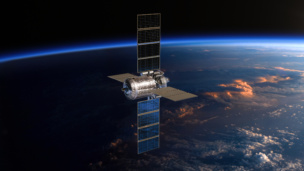
Exclusive: DoD Taps Orbital Operations for Cryogenic Spacecraft Demo
The Long Beach, CA, startup has won up to $35M from the DoD under a prototype Other Transaction Agreement to fly a full-scale, in-orbit demo of Astraeus—its cryogenic-maneuvering vehicle.
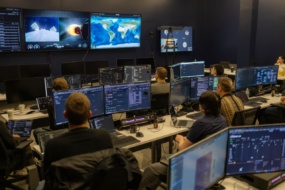
Inside Starburst’s First Flight, and Portal’s New Bothell Office
“I feel like 80% success now,” CEO Jeff Thurnburg said. “But honestly, to get this far this fast, I’m tempted to call it 100%.”
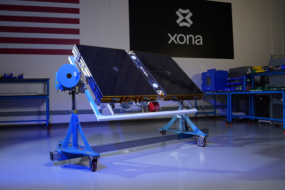
Xona Raises $250M Series D to Scale Commercial GPS Constellation
Xona’s long-term plan is to build a ~258-sat constellation to offer an upgraded commercial alternative to government GPS networks.
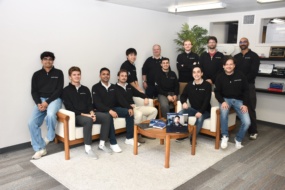
Exclusive: EraDrive Lands $13M DoD Award For Autonomy Module
EraDrive won a $13M DoD award, under which the Space Force will buy an undisclosed number of the company’s Era-Node vision-based autonomy modules.


Japanese propulsion startup Letara closed a ¥2.6B ($16M) pre-Series A round to fund the development of its low-cost, hybrid rocket engine technology for both launch and in-space applications.
Headline Asia, JIC Venture Growth Investments, and Incubate Fund led the round, which included additional participation from a mix of US and Japanese VC firms—Aozora Corporate Investment, SMBC Venture Capital, NES Corporation, Gogin Capital, Toyoda Gosei, BIG Impact, Frontier Innovations, Mitsui Sumitomo Insurance Venture Capital, Mitsubishi UFJ Capital, and mint Inc.
Meet Letara: Founded in 2020, Letara is built on tech initially developed while Co-CEOs Shota Hirai and Landon Thomas Kamps were at Hokkaido University, as a doctoral student and professor, respectively.
Keep reading