


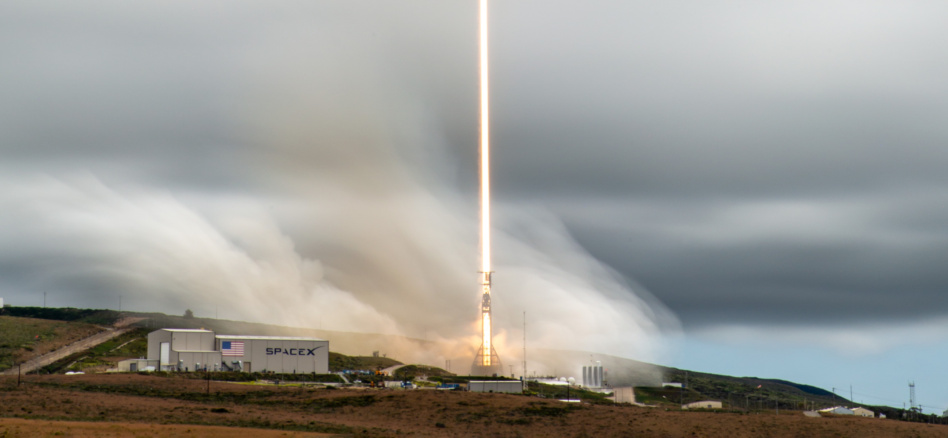
Last night, SpaceX launched its eighth Transporter rideshare mission aboard a Falcon 9, deploying 39 spacecraft that hosted 72 payloads from a slew of startups and established companies into orbit.
Transporter launch days always spur a lot of enthusiasm for spaceflight, as many crafts from smaller companies that rely on the lower price tag board the train to space. Now a few years into this program—SpaceX launched Transporter-1 in Jan. 2021—the company is striking a regular launch cadence, providing reliable and comparatively inexpensive rides to orbit.
First-timers
It was a big night for the companies flying satellites for the very first time.
Otter Pup goes up: Starfish Space, a Seattle-based startup developing spacecraft to dock with, refuel, and otherwise service satellites in orbit, deployed its Otter Pup craft. Otter Pup is the demo version of the planned full-size Otter servicer, and on this mission, it will perform a series of docking maneuvers.
- Otter Pup is manifested aboard Launcher’s Orbiter, which will also play host to the docking tests.
- If successful, the demonstration will represent the first docking between two commercial spacecraft in LEO.
Flying factories: Varda Space Industries’ first demonstration mission also went up on Transporter-8. The El Segundo, CA-based startup is designing microgravity factories to manufacture certain pharmaceuticals and bioprinted products that can’t be built in Earth’s gravity. This first mission will deploy the reentry capsule, and the company will count a success if it can successfully recover the craft when it returns to Earth.
Earth observation
The space industry is keeping a close eye on the Earth’s surface from space, and the passengers on this flight were no exception.
Laser links: Spire deployed three satellites on Transporter-8. Two are RF-sensing sats that came equipped with optical inter-satellite links, which will use lasers to communicate data more quickly and with more accuracy than traditional radio comms. The third satellite is carrying the FOREST-2 thermal imaging payload for OroraTech.
A host of new cameras…also on the imaging front:
- ICEYE expanded its SAR constellation by four satellites
- Orbital Sidekick added the third member of its GHOSt hyperspectral constellation
- Satellogic launched four more NewSat Mark V spacecraft, which collect multispectral and hyperspectral observations
- Satellite Vu deployed its first thermal imaging satellite
The Internet of Things
Several companies are getting in on IoT communications from space via payloads launched last night. Swarm, a SpaceX-owned company, deployed a handful of its Spacebee nanosatellites. OQ Technology, a Luxembourg-based 5G IoT company, launched its Tiger-4 craft to join its constellation. Hello Space, FOSSA, and Innova Space also deployed craft with IoT communications capabilities.
+ Looking for more details? SpaceX posted the full launch, landing, and deployment schedule on its website.
Note: This story originally stated that Otter Pup will perform the first docking between two commercial spacecraft in orbit, not just in LEO. This error has been corrected.

Fortastra Raises $30M Series A to Fund its Next Security Spacecraft
The US military has weapons in space, and—with the orbital arsenal expanding—security is becoming a top priority.

DOT Proposes Changes to Part 450 Licensing Rules
On Tuesday, Transportation Secretary Sean Duffy announced five proposed FAA rules aiming to streamline and modernize commercial space launch and reentry regulations.
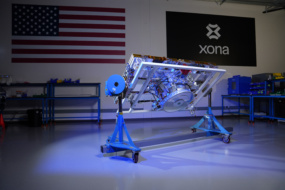
Exclusive: Xona Ramps Up Production Ahead of Pulsar Launch
With FCC approval in hand and six sats ready for the pad, Xona is turning to its next challenge: building the next 250.
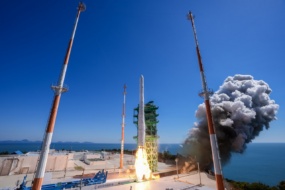
ArbaLabs Launches AI Verification Demo On South Korea’s Nuri Rocket
“In short, tons of companies are looking at the latest and greatest physical AI deployments,” ArbaLabs CEO Ashley Reeves told Payload. “Nobody is really thinking about putting some checks and balances on what these AI models are doing.”


The chairman of the House Science, Space and Technology Committee introduced a bill on Friday that would establish NOAA as a standalone agency akin to NASA.
The National Oceanic and Atmospheric Administration Act of 2023, led by Rep. Frank Lucas (R-OK), would also require the agency to submit a reorganization plan to boost efficiency and the science board to submit an R&D roadmap every five years.
“After years of complex organizational challenges, it’s time for NOAA to become an independent agency and reach its full potential,” Lucas said. “The NOAA Organic Act not only gives NOAA formal statutory authority and authorizes its critical mission, but reduces bureaucratic inefficiencies, streamlines oversight efforts, and refocuses core mission areas.”
Keep reading