



Goodbye red balloon, yellow balloon, weather balloon, Red Bull skydive balloon, 2023 Chinese spy balloon; say hello to 10-lb “personally deployable satellite” stratospheric balloons.
Urban Sky raised a $30M Series B led by Altos Ventures to advance its balloon technology, the company announced this morning. The startup is aiming to siphon off some of the national security EO market, using its balloon tech to conduct tactical DoD applications and real-time data processing.
Balloon mania: Founded in 2019, the Denver, CO-based startup builds navigable stratosphere balloons for Earth imaging. The company has flown its Microballoon on 330+ missions, including last month over the Los Angeles fires.
- The reusable balloons fit inside a backpack and can be deployed within five minutes.
- Microballoons can fly for a few days at over 60,000 ft (higher than aircraft but well below satellites), navigating by shifting altitudes to catch wind pockets.
The company operates the balloons on behalf of governments and commercial customers, launching them through a network of contractors. However, the DoD is interested in procuring the balloonware for in-the-field operations.
“Within the last year, we’ve had an enormous amount of interest from the Department of Defense,” cofounder Andrew Antonio told Payload. “Rapid deployability and response imagery for the military basically amounts to a personally deployable satellite.”
Personally deployable satellite: Soldiers can carry the 10-lb balloon into contested environments and deploy them on multi-day stratosphere remote sensing and comms missions. The low-cost and rapid deployability tech is a particularly attractive capability for the Pentagon as it creates economic asymmetry for adversaries wanting to eliminate the balloon with a $100,000 missile.
Compared to real satellites: “We’re roughly three times higher resolution than the best satellite imagery you can buy right now, and at half the price,” said Antonio.
- Given the company’s proximity to the ground, Urban Sky can capture 10-cm imaging (priced at $5 to $15 per square km), compared to the 30-cm imaging taken by large LEO sats.
- Also, unlike satellites, balloons can station themselves over a particular area, beaming 24/7 imagery instead of orbital flyover images.
- The drawbacks of ballooning are that stratospheric hovering may not be acceptable in certain regions, and paying for continuous coverage may not be necessary.

Fortastra Raises $30M Series A to Fund its Next Security Spacecraft
The US military has weapons in space, and—with the orbital arsenal expanding—security is becoming a top priority.
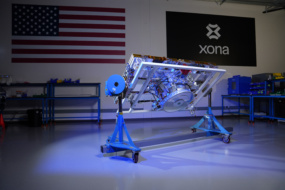
Exclusive: Xona Ramps Up Production Ahead of Pulsar Launch
With FCC approval in hand and six sats ready for the pad, Xona is turning to its next challenge: building the next 250.
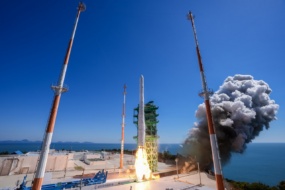
ArbaLabs Launches AI Verification Demo On South Korea’s Nuri Rocket
“In short, tons of companies are looking at the latest and greatest physical AI deployments,” ArbaLabs CEO Ashley Reeves told Payload. “Nobody is really thinking about putting some checks and balances on what these AI models are doing.”
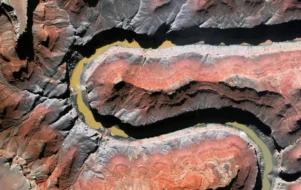
Nebex Partners with Thrusters Unlimited to Unlock $700M for Mexico’s Space Ecosystem
The capital will fund EO, telecoms and other strategic capabilities, according to Nebex.

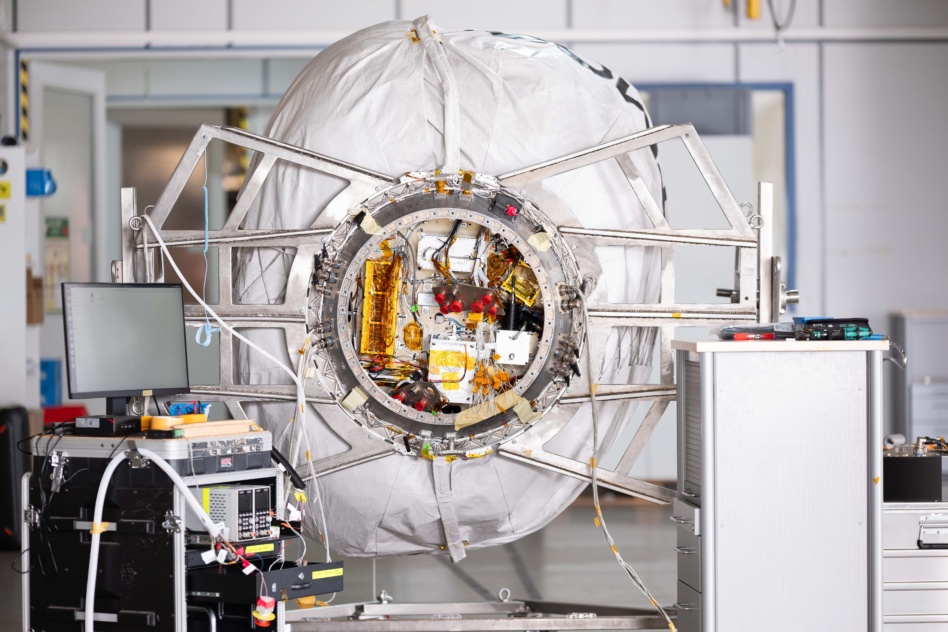
ATMOS Space Cargo, a German-based orbital reentry startup, received regulatory approval to fly the first test flight of its Phoenix reentry capsule, making it the first European company to attempt a reentry from space.
During the mission, scheduled to launch on SpaceX’s Bandwagon-3 rideshare mission as early as April, Phoenix will complete two Earth orbits before blasting through the atmosphere and landing in the Indian ocean—without any parachute.
The tech: Unlike other reentry capsules, which use ablative heat shields, Phoenix relies on an inflatable heat shield to protect its payloads from the shock and heat of reentry. It inflates using a two-stage system of nitrogen gas canisters and air intakes to suck air out of the atmosphere, reaching a full diameter of 6 m. The combination of light weight and large surface area make for a slower, cooler reentry.
Keep reading