


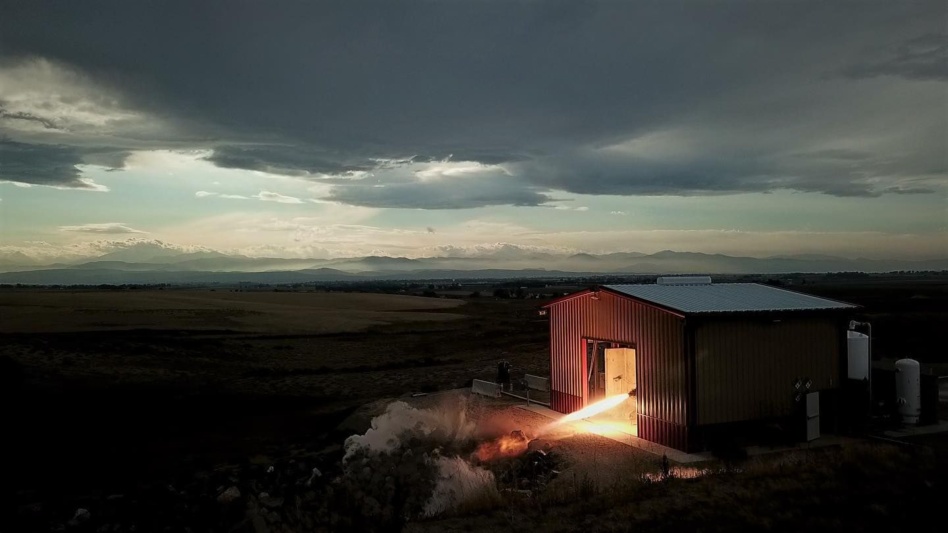
Ursa Major received a contract from the Air Force Research Laboratory (AFRL) on Tuesday to test a prototype of its new Draper engine for hypersonics and to continue developing its Arroway engines.
AFRL awarded these funds aiming to decrease US dependence on foreign propulsion systems for space launch, a key goal of its rocket propulsion division.
The Draper engine: As part of the contract announcement, Ursa Major revealed Draper, which is designed to defend against hypersonic weapons. The 4,000-pound thrust engine is designed for hypersonic applications, and its fuel, a hydrogen peroxide and kerosene blend, is storable, optimizing the design for rapid-response and launch on demand.
- The startup claims that solid rocket engines cannot offer the same degrees of maneuverability and flexibility required by missile defense systems.
- A hotfire test is planned within 12 months.
The Arroway engine: Ursa Major unveiled its Arroway engine, a 200,000-pound thrust reusable liquid oxygen and methane engine for medium and heavy launch vehicles, in August 2022. When several of these engines are clustered together, they will be capable of supporting next-generation heavy launch vehicles.
Payload’s takeaway: Over the past few decades, the US defense industrial base has consolidated drastically, leaving behind only two independent propulsion providers by 2020. The DoD’s push for a stronger base of domestic propulsion providers—as well as a hunger to develop homegrown hypersonics capabilities—has led to a broader field of competition in the rocket engine manufacturing space.
Europe’s Space Defenses Fall Just Shy of Weaponization
Europe doesn’t have any weapons in space—but that doesn’t mean the region is comfortable flying around in orbit defenseless.
Fortastra Raises $30M Series A to Fund its Next Security Spacecraft
The US military has weapons in space, and—with the orbital arsenal expanding—security is becoming a top priority.

DOT Proposes Changes to Part 450 Licensing Rules
On Tuesday, Transportation Secretary Sean Duffy announced five proposed FAA rules aiming to streamline and modernize commercial space launch and reentry regulations.
ArbaLabs Launches AI Verification Demo On South Korea’s Nuri Rocket
“In short, tons of companies are looking at the latest and greatest physical AI deployments,” ArbaLabs CEO Ashley Reeves told Payload. “Nobody is really thinking about putting some checks and balances on what these AI models are doing.”

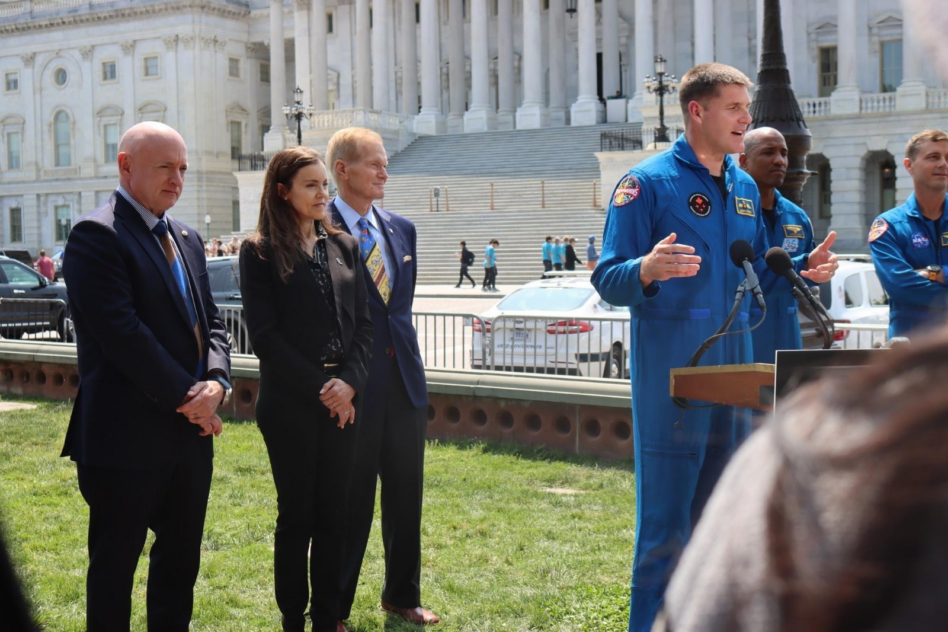
The Artemis 2 crew found inspiration in their visit to DC last week, despite the backdrop of partisan debt limit debates and Republican-backed efforts to slash nearly a quarter of NASA’s budget.
When I asked Victor Glover how the crew’s meetings with lawmakers had gone amid these financial concerns, he was overwhelmingly optimistic about the level of bipartisan support they had received.
“People expect us to show up places and provide some inspiration, and we take that very seriously,” Glover said on Thursday at a press conference. “But what has happened is, as we show up in places, folks are cheering us on and telling us how they’re going to support us and make sure that we can keep doing the things that we’re doing. … I have walked away inspired.”
Keep reading