


Two major space companies are joining forces to make a commercial successor to the ISS a reality.
On Tuesday, Voyager Space and Airbus Defence and Space announced a joint venture to build and operate Starlab, a LEO space station designed by Nanoracks, a department of Voyager Space.
“The International Space Station is widely regarded as the most successful platform for global cooperation in space history,” Voyager Space President Matthew Kuta said in a statement. “We are establishing this joint venture to reliably meet the known demand from global space agencies while opening new opportunities for commercial users.”
Some context: If this news sounds a bit familiar, it’s because Airbus and Voyager announced in January that Airbus would offer technical design support for Starlab. Now, the company is taking on a bigger role by having a hand in also building and operating the station.
The station is expected to be operational by 2028, and it’s inching closer to that goal: back in June, Starlab passed its systems requirement review, which proved its ability to meet NASA’s mission readiness and safety baseline requirements.
A commercial future: The future of space is looking a lot different than it did when the ISS launched in the ‘90’s. Now, space stations need to hold up to more use cases in commercial space exploration (movies in space, anyone?). We’re living in a world—ahem, universe—where countries could access space without an enormous upfront investment, or tourists could spend a couple nights among the stars.
Starlab, which is partially funded by a $160M space act agreement with NASA, is expected to be able to hold four people and will be used to conduct scientific research.
More to come: Starlab isn’t the only commercial space station in the works. Blue Origin received $130M From NASA for its space station, Orbital Reef, and Northrop Grumman nabbed $125.6M from the space agency for an unnamed space station.
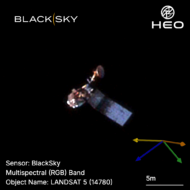
BlackSky Renews HEO Deal, Adds Gen-3 Imagery for Space Domain Awareness
BlackSky Technology inked a seven-figure deal to extend its partnership with Australian non-Earth imaging (NEI) provider HEO for another year.

Nebex Partners with Thrusters Unlimited to Unlock $700M for LATAM Space Ecosystems
The capital will fund EO, telecoms and other strategic capabilities, according to Nebex.

Exclusive: Meridian Space Spins Out from SpinLaunch
“Meridian will carry forward the satcom infrastructure business… SpinLaunch will continue to build on its vision for a lower-cost approach to launch, with further applications in hypersonics to support the Golden Dome program and in the lunar economy,” Meridian Space CEO Massimiliano Ladovaz told Payload.
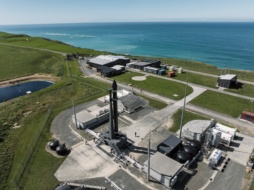
Rocket Lab CFO Adam Spice Predicts More M&A Deals on the Horizon
Iridium shareholders voted overwhelmingly to approve the company’s acquisition by Rocket Lab. According to Rocket Lab CFO Adam Spice, there’s more M&A on the horizon.


Astronauts like Sally Ride and Judith Resnik made history by shattering the glass ceiling to space, but a bipartisan group of lawmakers says it’s time to recognize the group of women who made the first cracks.
Rep. Chrissy Houlahan (D-PA), Young Kim (R-CA), Haley Stevens (D-MI), and Debbie Lesko (R-AZ), the four co-chairs of the Women in STEM Caucus, introduced a bill last month that would award the Congressional Gold Medal to the Mercury 13, a group of women who underwent the same training as Mercury astronauts but never went to space. If the bill passes, the medal will be displayed at the National Air and Space Museum.
A little history: At the dawn of America’s space program, NASA’s William Randolph Lovelace developed a rigorous testing program for wannabe astronauts to be administered to a group of all-male volunteers. At the same time, Lovelace used private donations to put women through the same evaluations, and 13 women passed the first round of tests (in some cases, they outscored the men).
Keep reading