



Northrop Grumman is pulling out of NASA’s competition to build a private space station in LEO as a solo entity to instead pair up with Voyager’s Nanoracks.
“This is a positive development for the commercial low Earth orbit destinations effort,” Phil McAlister, NASA’s director of commercial space, said in a statement on Wednesday. “Northrop Grumman has determined that its best strategy is to join the Nanoracks team, and NASA respects and supports that decision.”
How we got here: In December 2021, NASA awarded contracts to three companies to begin developing commercial LEO destinations, or CLDs, as the agency prepares to retire the ISS. Nanoracks won a $160M contract to build out its Starlab space station, Blue Origin won a $130M contract to continue work on its Orbital Reef station, and Northrop won a $125.6M contract for its own commercial space station.
Separately, Axiom Space will add commercial modules to the ISS under an agreement with NASA as part of a long-term goal to run a standalone commercial space station.
New partners: Under the new teaming, Northrop, which currently flies cargo resupply missions to the ISS with its Cygnus spacecraft, will send cargo to Nanoracks’ Starlab station for an initial-five year period, according to a Voyager release. Northrop will also upgrade Cygnus to include autonomous rendezvous and docking technology.
Northrop has already been paid $36.6M of its $125.6M contract. NASA will use the $89M not yet spent on Northrop’s contract to add additional milestones to the contract with the other companies, including Nanoracks, Blue Origin, and Axiom Space, to ensure CLDs are up and running before the ISS retires in 2030, according to a press release.
Others in trouble? Last week, CNBC reported that Blue Origin was reconsidering its Orbital Reef space station partnership with Sierra Space so both companies could focus on higher-priority projects: the Blue Moon lunar lander for Blue Origin and the Dream Chaser spaceplane for Sierra.
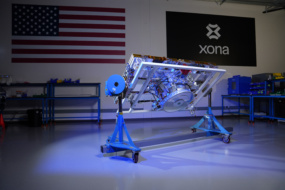
Exclusive: Xona Ramps Up Production Ahead of Pulsar Launch
With FCC approval in hand and six sats ready for the pad, Xona is turning to its next challenge: building the next 250.

Nebex Partners with Thrusters Unlimited to Unlock $700M for Mexico’s Space Ecosystem
The capital will fund EO, telecoms and other strategic capabilities, according to Nebex.

Exclusive: Meridian Space Spins Out from SpinLaunch
“Meridian will carry forward the satcom infrastructure business… SpinLaunch will continue to build on its vision for a lower-cost approach to launch, with further applications in hypersonics to support the Golden Dome program and in the lunar economy,” Meridian Space CEO Massimiliano Ladovaz told Payload.
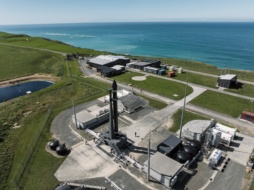
Rocket Lab CFO Adam Spice Predicts More M&A Deals on the Horizon
Iridium shareholders voted overwhelmingly to approve the company’s acquisition by Rocket Lab. According to Rocket Lab CFO Adam Spice, there’s more M&A on the horizon.

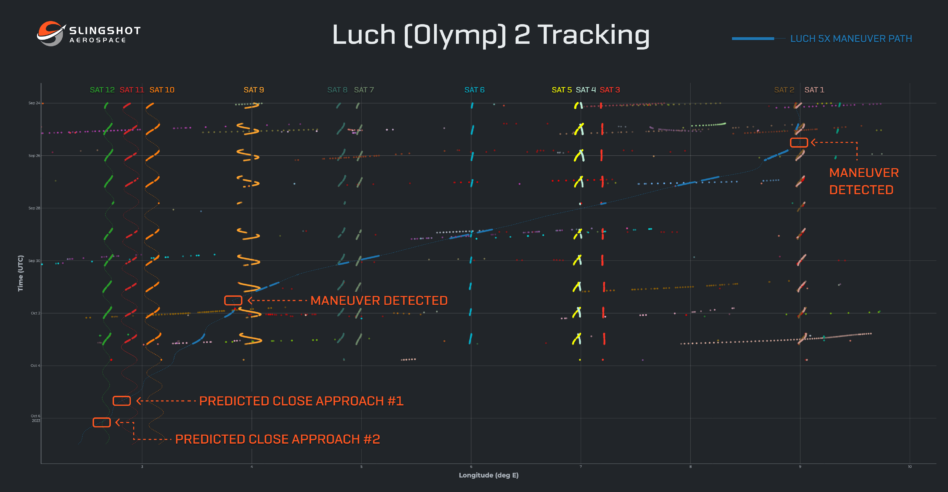
GEO operators are on high alert after a Russian craft was spotted maneuvering around in orbit, presumably to take a peek at neighboring satellites.
Slingshot Aerospace, an Austin, TX-based space situational awareness company, released data yesterday that shows that the Russian-operated Luch (Olymp) 2 satellite, which launched in March, has been approaching multiple groupings of satellites in GEO.
It’s unusual for satellites in GEO to move around much. Usually, operators send their satellites there to maintain a position over a particular area of the Earth’s surface. Such frequent movement is a red flag to US authorities and satellite operators.
Keep reading