


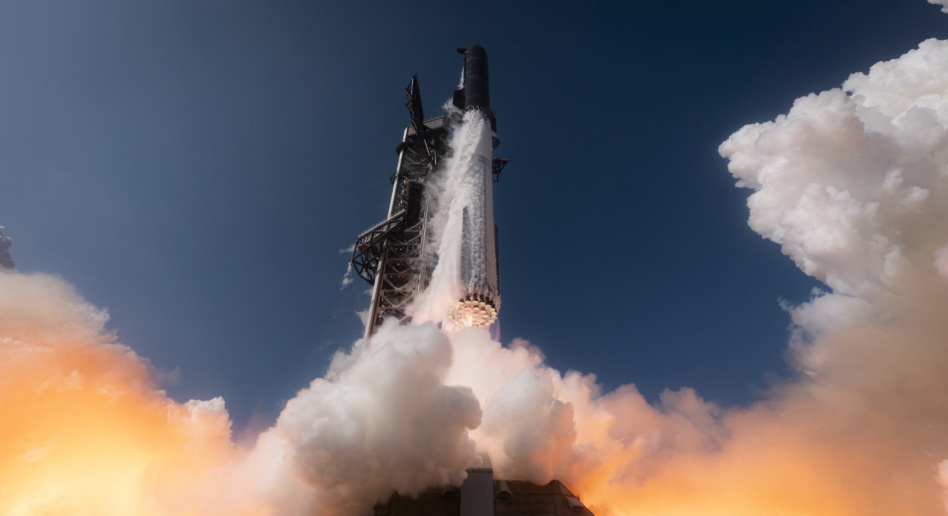
All eyes are on New York today for SpaceX’s IPO, but the moment represents more than just a record-breaking exit by a US space company.
For leaders in the European space sector, the IPO stands as a unique learning opportunity about how to build their region’s space economy—at least according to the European Space Policy Institute.
In an op-ed posted on LinkedIn yesterday, ESPI researchers said the IPO offers Europe a “second chance” in scaling its ambitions—highlighting what it takes to build a successful space venture, and offering insights about where Europe’s space sector needs to mature to remain competitive.
You can too: While the IPO—and the roughly $75B in fresh capital it could hand SpaceX—has the potential to stoke fear in the hearts of European space executives who see SpaceX as competition, leaders shouldn’t view it that way, according to ESPI Lead on Industry & Finance João Falcão Serra.
“If a company can have these sorts of ambitions, then why not a continent?” Serra told Payload. “That’s why we see it as a second chance for Europe’s digital ambition—not a chance that is created by this IPO, but more a big, in-your-face [example]. It’s literally possible.”
The IPO proves that success in space is dependent on both public capital and public contracts, according to Serra. Looking at the strategies Europe has employed to stand up its space industry in recent years—by opening up public finances to space startups, increasing defense budgets, and promoting sovereignty through public procurement—the proof is clear: Europe is on the right track.
The blueprint: Growing Europe’s space sector, however, requires more than just public capital. It needs companies with larger ambitions—and ones willing to take a risk, according to Serra.
“It’s not just about whether you are big or not. It’s about your ability to deliver at speed and at scale,” Serra said. “Look at ICEYE… they are—not just in Europe, but also globally—one of the main players in Earth observation…why? Because they dared. They didn’t wait for public contracts.”
Essentially, SpaceX’s IPO should give European space executives the confidence to swing for the fences, and the assurance that expanding ambitions to include more than one business line can be worth the risk.
“[The IPO] is a signal that the next phase of the digital economy may reward actors who control multiple layers of the digital stack, including in space: launch, satellite connectivity, chips, AI, cloud platforms, and applications,” Serra wrote in the op-ed.
Strength in numbers: While the SpaceX IPO documents revealed the company’s widespread plans to compete in many sectors of the space industry, Europe still has its opportunities.
For one, Europe’s sovereignty push isn’t going anywhere soon.
“Some governments, if they perceive the US as an unreliable partner, might try to diversify the risk,” Serra said. “Their willingness to work with [SpaceX] will not change based on whether they are public or not.”
This sovereignty push is more than a talking point. In May, the European Commission proposed new rules that would allocate two-thirds of local comms spectrum to European satellite operators. And up-and-coming companies competing in the European Launcher Challenge can expect future contracts to flow from ESA and national governments. The list goes on.
Europe’s fragmented geopolitics could, counterintuitively, have a beneficial role to play in the growth of the region’s space economy. Multiple national space hubs breeds resilience, and even when large primes win institutional contracts in Europe, the wealth is often distributed through industry consortiums composed of pan-European partners.
The bottom line: While the IPO offers important lessons, it also highlights just how far Europe has to go before it can birth its own trillion-dollar space ventures. Standing in its way is the growth-stage financing gap abroad that continues to drive space industry scale-ups for growth capital.
Hopefully, according to Serra, the IPO can temper VC expectations of what space startups require to succeed in the way SpaceX has.
“VCs are already realizing it takes more than 10 years [to exit]. Once you go into other sectors, you need to start stretching your timelines,” Serra said.

Analysts Debate SpaceX’s $1.75T Valuation Ahead of IPO
Analysts are split over whether that’s the right number, and how the stock will perform in the short term—but everyone agrees the space industry is booming.
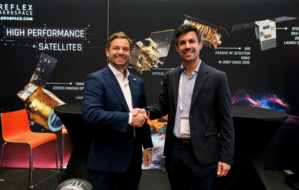
Reflex Aerospace Taps Arkadia Space for 2027 Mission
Reflex Aerospace selected Spanish startup Arkadia Space to provide a propulsion system for its satellite mission, launching in 2027.
ICEYE, Isar Aerospace Announce Significant Funding Rounds
Finnish EO company ICEYE announced a €450M ($520M) Series F raised at a €10B ($12B) valuation.
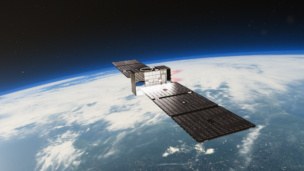
NewOrbit Raises $18.5M to Build VLEO Spacecraft at Scale
While NewOrbit has yet to fly in any orbit, the company is targeting a first flight of its VLEO-capable NEO-1 satellite in 2028.

Tilebox announced an update today aiming to make AI agents more effective geospatial-data analysts.
AI is supposed to make EO data much more accessible to non-technical analysts, but a problem persists: AI can often feel like a black box—submit your prompt, get an answer, and don’t worry about how we got there.
Tilebox’s update aims to solve this issue, by giving human analysts in-depth understanding of how a given AI workflow arrived at its results.
Keep reading