



You might think more dairy than deep space when you think about Wisconsin, but the Badger State is the most space-obsessed in the nation, according to a study released Thursday.
Science news publication Alt Futures tracked nationwide space-related Google searches, including “NASA DART,” “International Space Station,” and “Mars rover,” between April 1, 2022 and March 31, 2023.
Overall, Google searches for space-related keywords were up 10% over the past year, according to a spokesperson from Alt Futures.
Win: Wisconsin’s 5.9M residents used Google to search for space terms more than 122,000 times per month over the past year. When standardized, that equals 6,920 space-related searches per 100,000 people. The top search term? “Artemis launch.”
Place: DC is the runner up, with 5,612 space searches per 100,000 people. Katherine Johnson, the NASA mathematician whose life inspired the book and movie Hidden Figures, was the top search term.
Show: Wyoming rounds out the top three most space-obsessed states in a photo finish, with 5,611 space searches per 100,000 people, just one less than DC. Starbase may be more than 1,500 miles away in Texas, but that doesn’t stop Wyomingites from being interested, with “spacex starship” being the top search term.
And the rest: Vermont, Alaska, Florida, North Dakota, Rhode Island, New Hampshire, and South Dakota rounded out the top 10, in that order.
Some other well-known space states were stuck in the basement of the rankings.
- California, home to Vandenberg Space Force Base in addition to well-known space companies like SpaceX, ranked 30th.
- Alabama ranked 31st, despite its historical and current-day ties to the space program in Huntsville.
- Texas, which hosts launch facilities for both SpaceX and Blue Origin in addition to NASA’s astronaut training pipeline, came in 35th.
- The least interested state was Missouri, with just 1,126 searches per 100,000.

Exclusive: Kapta Space Raises $24M Series A to Build Moving Target Radar Payload
Seattle-based Kapta Space announced a $24M Series A to build next-gen radar payloads designed to track moving targets.

NASA Signs Space Nuclear Pact, Says Moon Base Is Ahead of Schedule
Isaacman gave updates at the White House’s “Science: A New Golden Age Summit.”

Europe’s Earth Observation Providers Set Their Sights on Satcom
Open Cosmos recently laid out plans for a 192-satellite comms constellation, and ICEYE announced a partnership with Nokia for its own comms satellite network.
The post Europe’s Earth Observation Providers Set Their Sights on Satcoms appeared first on Payload Pro.
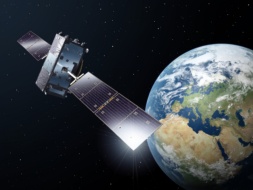
Europe’s Space Defenses Fall Just Shy of Weaponization
Europe doesn’t have any weapons in space—but that doesn’t mean the region is comfortable flying around in orbit defenseless.

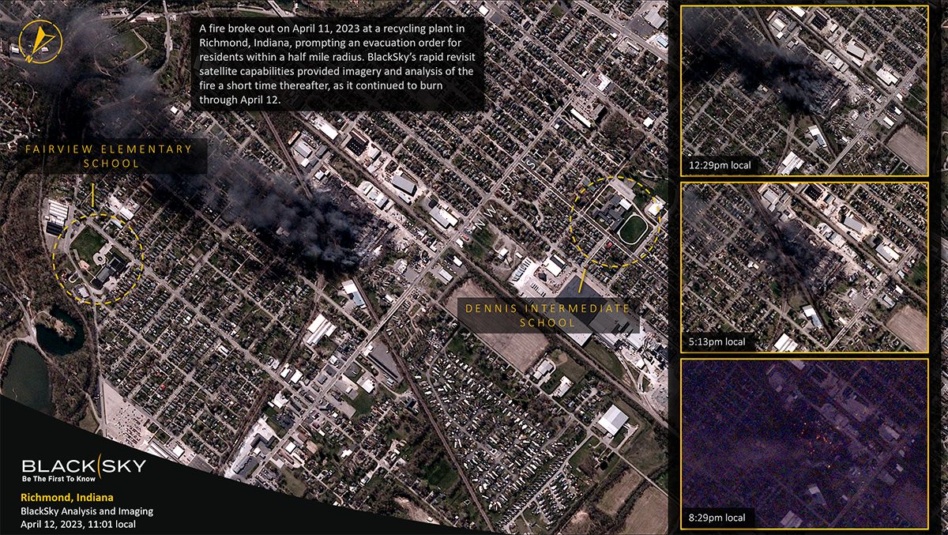
BlackSky ($BKSY) is predicting a boom in 2023, partially driven by growing government demand for its Earth observation imagery and geospatial intelligence.
2023 outlook: BlackSky remains bullish on its projections for the rest of the year, including annual revenue between $90M-$96M, which would be a 42% increase from 2022. The company’s top priority for the year is a positive adjusted EBITDA in Q4, which it remains on track to achieve.
The company is also working to expand its sales pipeline and customer base, win new multi-year subscription contracts, and will continue to invest in space and AI capabilities.
Keep reading