



Yesterday, the European Investment Bank (EIB) announced that it will lend €300M (~$323M) to Luxembourg-based SES to finance a trio of broadcast satellites that will serve Western Europe, Africa, and the Middle East. It’s the largest investment the EU’s investing arm has made to date into a Luxembourg-based company.
ESA head Josef Aschbacher has repeatedly reaffirmed his support for the private space industry across the EU, emphasizing the need to compete with the US and China in orbit. In a press release, EIB pointed out that the seven-year loan represents their support of the European space economy.
Suzanne Ong, VP of external communications for SES, told SpaceNews that the financing covers about half of the overall program cost. The satellites, procured from Thales Alenia Space, are currently slated for launch in 2024.
A step back: NASA has employed a winning strategy of late, buying services and products from the private sector rather than managing large projects in-house.
Some aren’t convinced that European private capital markets could accommodate a NASA-esque approach across the pond.
In an FT op-ed published Wednesday, Sinead O’Sullivan, a senior researcher at HBS, argued that Europe should take a different tack when procuring space infrastructure from the commercial markets.
The private capital markets, she wrote, are constrained in two ways: 1) European venture funds are smaller and unprepared to back large infrastructure projects in space, and 2) these funds often can’t tackle large, complex, and risky defense endeavors.
“Aschbacher’s desire to have governments act as a customer-of-first-resort for European space start-ups is admirable,” O’Sullivan wrote. “But one forward-thinking man cannot bend an industry to his will.”
Payload’s takeaway: The public-private models in the US and EU are quite divergent, and that won’t change overnight.
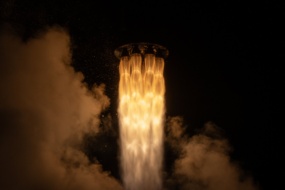
Rocket Lab Enters Europe’s Crowded Launch Market
European launch companies are in for a surprise next month when they get back from holiday. While they were out, Rocket Lab moved into their turf.

Astranis Unveils Perceptor, an SDA Product for GEO
Astranis found problems with existing SDA tech while operating in GEO—so it built a tool to fix it.
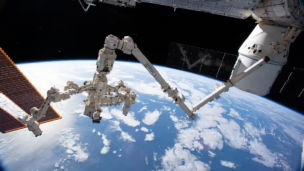
MDA Space Will ‘Repurpose’ Canadarm3 For Lunar Surface
MDA Space will “repurpose” its microgravity robot-arm tech for lunar surface operations after the US space agency put the Gateway plans on hold.

Europe’s IRIS2 Constellation Enters the Build Phase
After seven months of negotiations, officials from the European Commission, ESA, EUSPA, and SpaceRISE have agreed to move into the implementation phase of IRIS2.

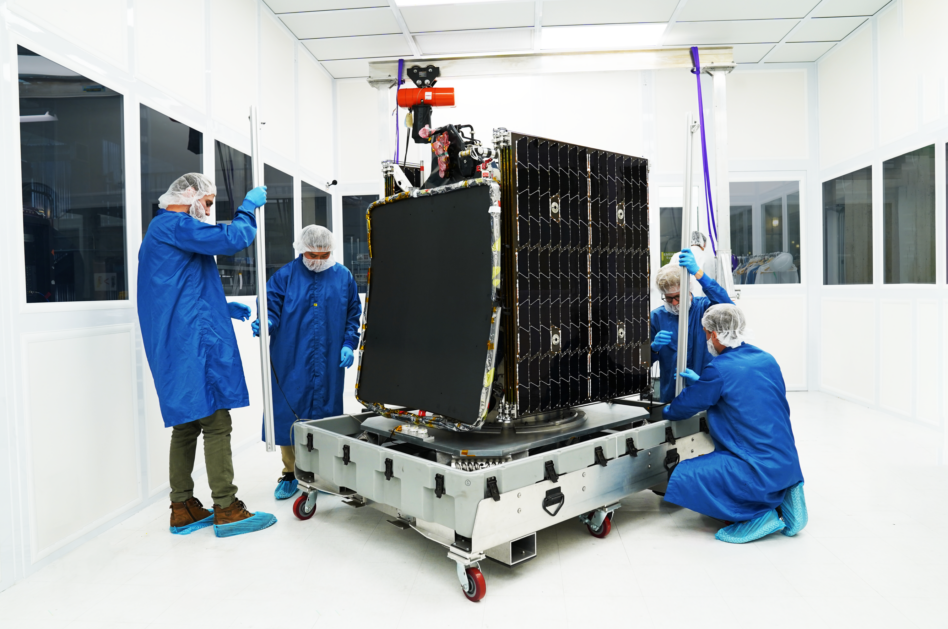
Doug Abts is joining Astranis’s C-suite as its new chief commercial officer. Abts, a former Navy SEAL and grad of Harvard Business School, comes to Astranis by way of Viasat, where he was GM of the publicly traded company’s in-flight connectivity (IFC) business. Abts grew Viasat’s IFC biz into a “multi-hundred million dollar in annual revenue business,” Astranis CEO John Gedmark told Payload.
“I think it just speaks to all the momentum that we have been gaining in our commercial sales,” Gedmark said. “We’ve had a huge amount of success with a very small sales team and effectively zero marketing spend.” With Astranis’s new facility and production ramp, “we’re pretty excited about blowing it out of the water.”
Astranis has already leased its first MicroGEO out to Pacific Dataport, an Anchorage-based satellite middle-mile provider, to provide comprehensive coverage across the sparsely populated state of Alaska. In December 2021, Astranis also announced a deal with Andesat, a Peruvian telco, to extend connectivity to underserved, remote pockets of Peru—and help cell networks leapfrog from 2G to 4G across the country.
Keep reading