


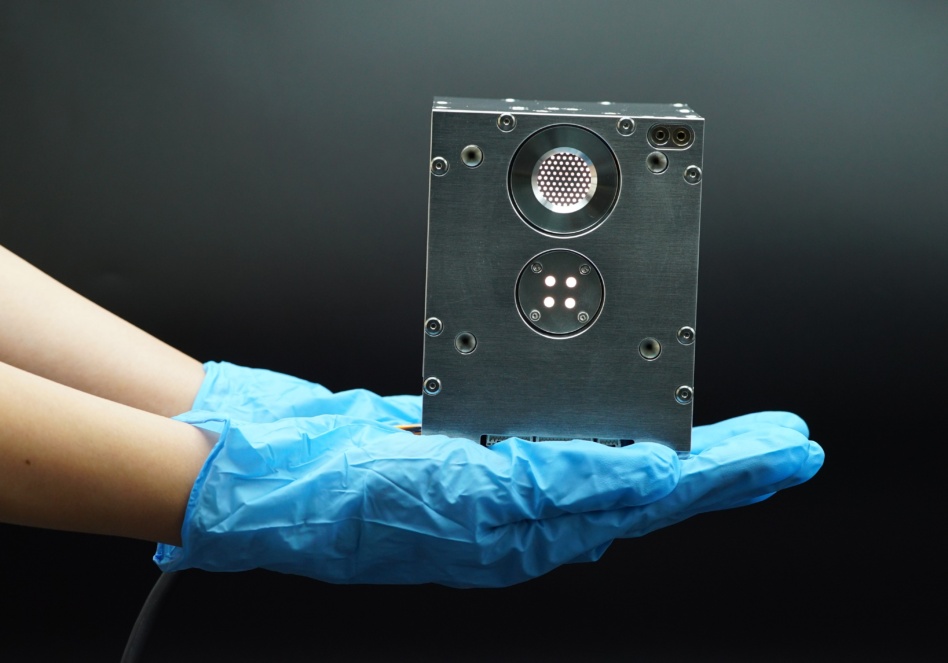
Japanese startup Pale Blue announced that it successfully tested its water propulsion thrusters in space for the first time. The propulsion system, which is installed on Sony’s “EYE” satellite, operated for 2 minutes without hiccups.
“Water propulsion has been well known to exist, but I think performance has been the big reason why people wrote off water,” Pale Blue COO Toku Sakai told Payload. “That was the key pain point that we were able to unlock with our propulsion technology.”
Water Propulsion Method
Water propulsion creates thrust by heating water to generate steam and then expelling out the nozzle. Weighing just 1.4kg, the thrusters can be appended to a microsatellite to help maintain its orbit.
Pale Blue is betting that the cost-effective and sustainability properties of water positions it well to be the preferred fuel for next-gen satellite thrusters.
- It’s a cost-effective propellant compared to Xenon, a commonly-used noble gas which has seen prices surge during the Russian-Ukrainian conflict.
- Water is an abundant resource, not just on Earth but also on the Moon, making it a sustainable long-term solution.
- Because water is not pressurized, in-space refueling can be a much simpler process.
What’s next: In the next few weeks, the Pale Blue thrusters will exit test mode and begin maneuvering Sony’s satellite into its targeted orbits. Going forward, with a successful demonstration under its belt, the company will look to expand the commercial use of its propulsion system beyond Sony and into the broader nano-satellite market.
BlackSky Renews HEO Deal, Adds Gen-3 Imagery for Space Domain Awareness
BlackSky Technology inked a seven-figure deal to extend its partnership with Australian non-Earth imaging (NEI) provider HEO for another year.

Nebex Partners with Thrusters Unlimited to Unlock $700M for LATAM Space Ecosystems
The capital will fund EO, telecoms and other strategic capabilities, according to Nebex.
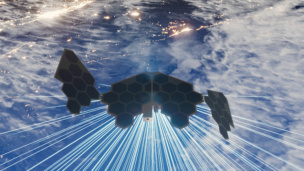
Exclusive: Meridian Space Spins Out from SpinLaunch
“Meridian will carry forward the satcom infrastructure business… SpinLaunch will continue to build on its vision for a lower-cost approach to launch, with further applications in hypersonics to support the Golden Dome program and in the lunar economy,” Meridian Space CEO Massimiliano Ladovaz told Payload.
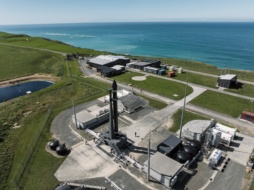
Rocket Lab CFO Adam Spice Predicts More M&A Deals on the Horizon
Iridium shareholders voted overwhelmingly to approve the company’s acquisition by Rocket Lab. According to Rocket Lab CFO Adam Spice, there’s more M&A on the horizon.


LeoLabs announced that it has selected a site in Argentina for its next ground radar for remotely identifying and tracking objects in space. The new site, called the Argentina Space Radar (AGSR), is expected to be completed later this year.
Keeping an eye on orbit: The Menlo Park, CA-based startup is building out a global network of ground radars to identify and track spacecraft and debris in orbit. It’s got a need for speed, popping up new radar sites back to back around the globe.
Before LeoLabs, “nobody had contemplated a worldwide network of radars,” CEO Dan Ceperley told Payload in January when the company unveiled WASR. “We’re in the business because nobody else knew how to build radar sites quickly.”
Keep reading