


NASA recently held its annual exercise to game out next steps if an asteroid or other astronomical body is on a threatening course with Earth—a mission seen as the agency’s top priority by 60% of Americans.
The participants, including space researchers and emergency management experts, contemplated what would happen if officials detected an asteroid that would impact the US within fourteen years. They found it would be difficult to marshall the resources to understand and address the threat, while also struggling to communicate with political leadership and the public. (You’ve seen Don’t Look Up, right?)
Start with the data: Lindley Johnson, NASA’s outgoing Planetary Defense officer, said that “our largest gap is, we don’t know the whole population of [Non-Earth Objects] out there.” Researchers have been pushing the agency to launch an infrared space telescope to fill that gap for years, and NEOSurveyor is expected to finally launch in 2027.
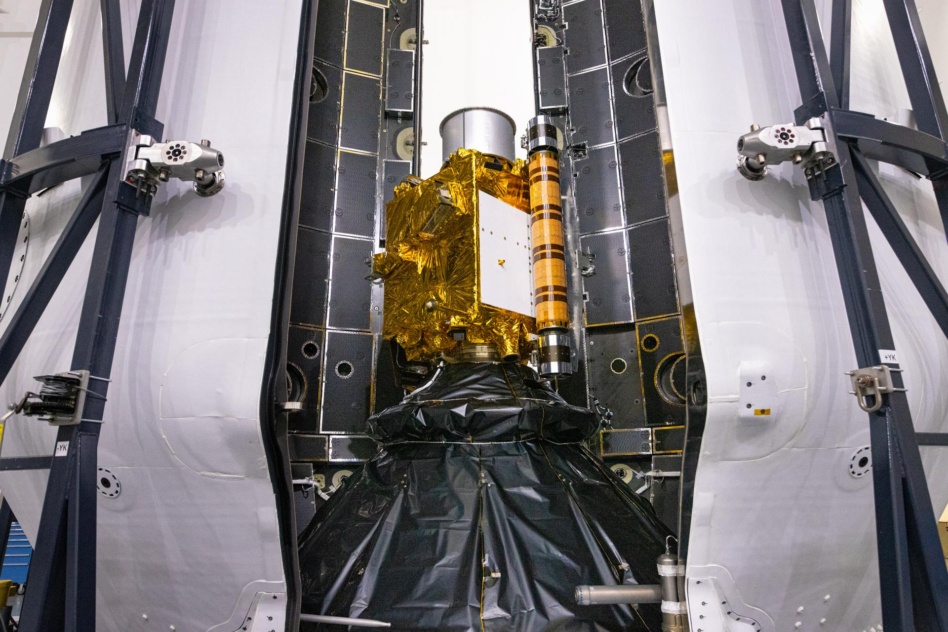
Once NASA knows where the threats are, NASA’s Double Asteroid Redirection Test (DART) mission in 2022 proved that, for at least some asteroids, it’s possible to divert their orbits with an impactor.
The challenge lies in standing up the missions required to characterize an asteroid and divert it before it reaches Earth, given cost and delays often associated with space missions, as well as difficulty convincing leadership to foot the bill for those projects. That’s particularly true if there’s uncertainty about exactly how risky a given NEO is.
Then what do you do? The participants considered plans like a $200-$400M US-led flyby mission, followed by a $1B program to design a vehicle to divert the incoming asteroid. That’s predicated on the cost of the $324.5M DART mission.
A commercial approach could offer faster and cheaper information, Matt Gialich, CEO of Astroforge, a company that plans to extract platinum group metals from asteroids, told Payload. His company will be launching a spacecraft to characterize a NEO alongside Intuitive Machines’ second Moon lander this year. They built their spacecraft for $3.5M in 12 months.
While Gialich conceded that his vehicle uses less sophisticated sensors than NASA and assumes more risk, he thinks the commercial model is better incentivized for rapid response. That said, he acknowledged that his company wouldn’t exist without NASA’s planetary defense efforts, which have collected a massive catalog thought to contain more than 90% of large NEOs.
Those jokers in Washington: “I know what I would prefer [to do], but Congress will tell us to wait,” one participant in the exercise told the organizers anonymously. Our suggestion: Get some retired politicians in the mix for these exercises. Maybe Barack Obama or Mike Pence could add some real-life political response to the tabletop games—and they’re not doing much these days.
This story has been updated with current cost and schedule numbers for Astroforge’s space mission.

Mars Rover Drives with the Help of Anthropic AI
AI is everywhere these days—even on Mars.
Engineers at JPL announced Friday that they had successfully used Anthropic’s AI model, called Claude, to map a 450-meter Martian path for NASA’s Perseverance rover.

WEF’s Space Debris Report Projects Significant Costs
This week, the World Economic Forum came out with a report, produced in partnership with the Centre for Space Futures, the Saudi Space Agency, LeoLabs, and Novaspace, titled “Clear Orbit, Secure Future: A Call to Action on Space Debris.”

Starfish Wins SDA Deorbit-As-A-Service Contract
Starfish says this marks the first contracted mission for end-of-life satellite disposal services, in comparison to typical missions that treat disposal as a one-off or a demo.

Atomic-6 Space Armor to Fly in October With Portal
It’s rare for space operators to cross their fingers, hoping their sat will get hit with a piece of space debris. But that’s exactly what Atomic-6 CEO Trevor Smith is doing.

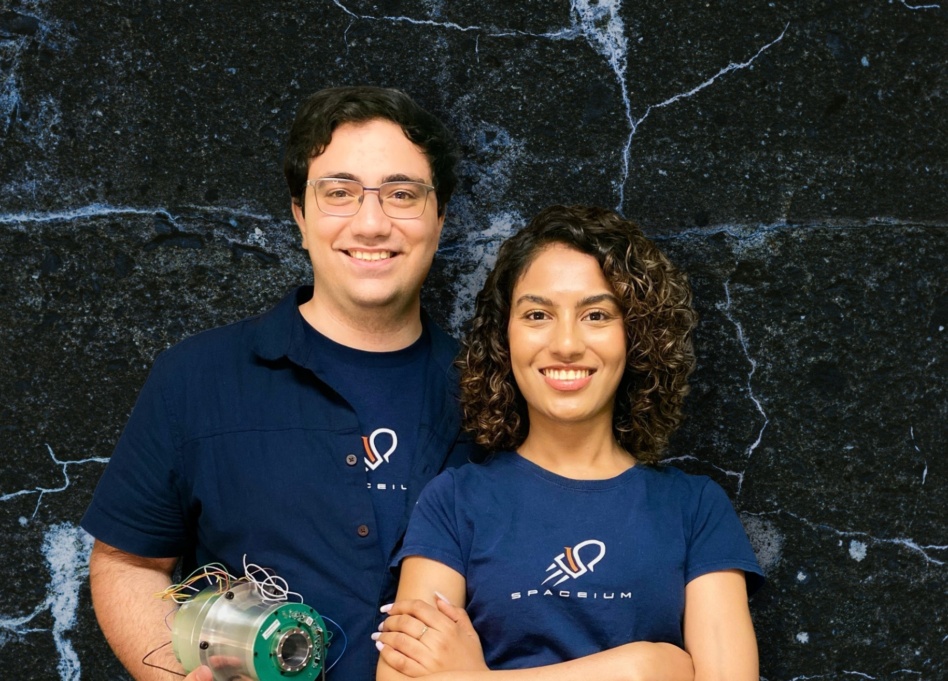
Ashi Dissanayake and Reza Fetanat built a rocket that flew to 30,000 feet as students at the University of Ottawa. As the cofounders of Spaceium, a Canadian startup focused on in-orbit refueling and servicing, they’ve set their sights a fair bit higher.
The company, which was recently selected as part of Y Combinator’s space portfolio, wants to be the refueling and repair shop for spacecraft in GEO and beyond. Its first step toward that goal will come in mid-2025, when it plans to perform the first in-orbit cryogenic refueling mission in partnership with Space Machines Company.
How did we get here? Space travel has a fuel problem—namely that there are zero gas stations once you’re off Earth. Spaceium is trying to change that.
Keep reading