


Hitting the atmosphere at high speed can mean the end for unprepared spacecraft, but for Inversion Space’s Arc reentry vehicle? It could be the beginning of a new way to brake.
NASA announced today it awarded Inversion a contract to study a new method of interplanetary travel—called aerocapture—which uses a planetary body’s atmosphere to slow incoming spacecraft looking to enter into orbit.
What’s that mean? The contract tasks Inversion with studying how its Arc lifting-body reentry vehicle could be used to demonstrate aerocapture for the first time using Earth’s atmosphere.
“One of the nice things about having a maneuverable reentry vehicle is we can fly trajectories that represent an aerocapture of a different planetary body here at Earth,” Inversion CEO Justin Fiaschetti told Payload. He added the study could open the door for Arc to play a central role on future missions “looking at Mars, looking at Titan, looking at Uranus, [and] looking at Venus.”
Today, deep space missions attempting to enter into orbit around other planets or moons must carry a lot of fuel, firing thrusters upon arrival to slow their approach. The setup means these rare interplanetary missions often sacrifice costly payload space for additional fuel—lest they catch fire on arrival.
In theory, aerocapture would allow Arc to fly interplanetary flights loaded with less fuel, and more payload compared to traditional spacecraft. Aerocapture would also allow for quicker journeys to otherworldly locales.
“Aerocapture lets you actually get to other planets faster because you don’t need to spend months of time firing your propulsion system in a slow-down configuration,” Fiaschetti said. “You just go full speed to the planet, then hit the atmosphere and brake before getting into orbit.”
Lessons learned: The aerocapture study contract is somewhat of a sidequest for Inversion, which is working towards its first in-space demonstration of Arc planned for NET 2027. But it’s not a total diversion.
Fiaschetti told Payload that studying aerocapture using Earth’s atmosphere can help Inversion offer more maneuverability to customers on Earth, paving the way for new kinds of missions that leverage the atmosphere to maneuver in ways other spacecraft can’t match.
“The same principles can be useful here on Earth for highly maneuverable satellites,” Fiaschetti said. “So, we’re fully focused on the kind of interplanetary use cases for this NASA contract, but the same technology that we’ve developed for our Arc vehicle can be used for aerodynamic orbit changing as well.”
Exclusive: EraDrive Lands $13M DoD Award For Autonomy Module
EraDrive won a $13M DoD award, under which the Space Force will buy an undisclosed number of the company’s Era-Node vision-based autonomy modules.
WarpWare Closes Pre-Seed to Bring Agentic Tools to Flight Software
CO-based WarpWare closed its $1.2M pre-seed round today to expand what it calls an AI-enabled engineering platform for space missions.

RATLOG Wants to Cut ~90% of a Rocket Engine’s Parts
The heavy-lift rocket startup debuted on Y Combinator as part of the Fall 2026 batch.

Seraphim Space Investment Trust Doubled its Value in 2026
Seraphim’s major holdings—ICEYE, ALL.SPACE, D-Orbit, HawkEye 360, and Xona Space Systems, which together represent more than 75% of the firm’s portfolio—all had a great year, and that success has trickled upwards.
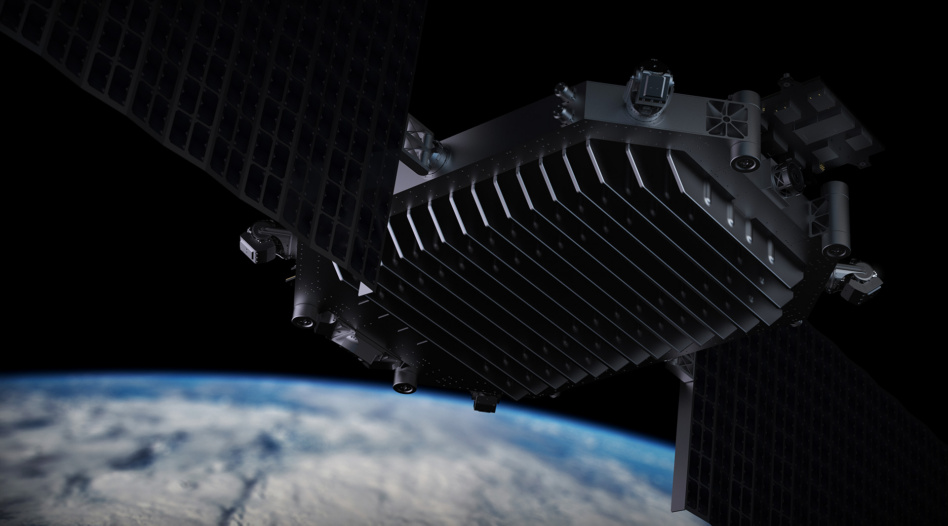
EnduroSat will build a 40-sat constellation for TrustPoint, the startup building a commercial GNSS service, the companies announced today.
The satellites will be built and delivered in three batches, with the first set to launch NET 2027. Depending on the supply chain and launch availability, TrustPoint CEO Patrick Shannon said he expects the full constellation could come online in the next 24 to 30 months.
Location, location: The award signifies TrustPoint’s graduation from testing and demonstration into full-fledged operations. The company has launched three demo satellites—two early tech-demos in 2023, and a demo of the full tech-stack in 2025.
Keep reading