


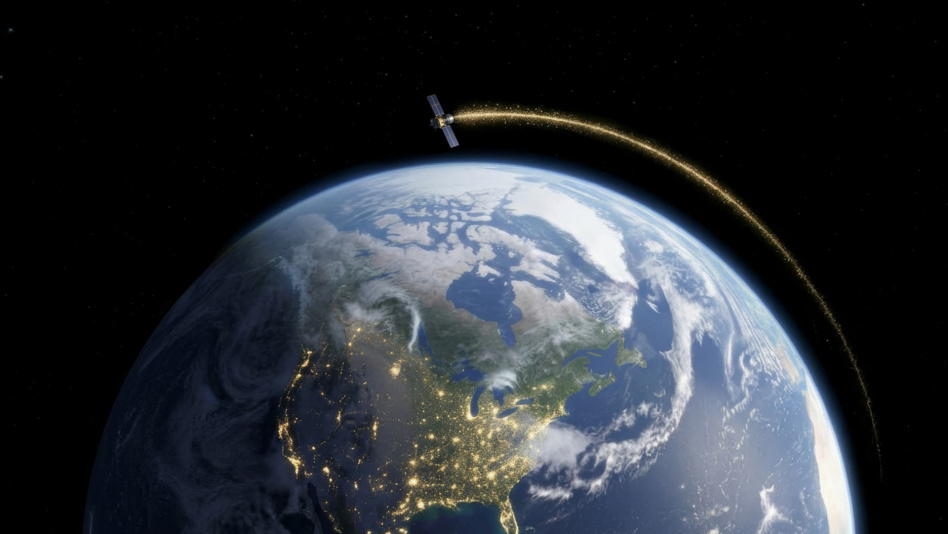
Aitech Systems, the CA-based supplier of space-computing platforms, announced an upgrade to its supercomputer today that is intended to fuel the next wave of AI applications in orbit.
By integrating NVIDIA’s IGX Thor platform into the S-A2300 COTS AI Supercomputer, as well as future computing iterations, Aitech officials say the company is drastically expanding customers’ ability to process data in orbit—an important growth point as the demand for in-space computing skyrockets.
“From what the customers are doing in space…they’re starting to push the capabilities of what the hardware can provide,” Aitech General Manager Pratish Shah told Payload. “Thor will be there for us to allow them to push the boundaries of applications and AI processing.”
Applications: While space-based compute and orbital data centers have become hot topics in the past few months, this isn’t Aitech’s first rodeo. The S-A2300, newly upgraded with Thor, is Aitech’s third generation of space-rated supercomputers.
- Aitech sent six of its first space-rated supercomputers—the S-A1760 Venus generation—to space and back in 2022. These flew on a NASA inflatable decelerator demonstration mission, to help record data on the performance of a space agency heat shield.
- Aitech’s second generation—an S-A2300 with NVIDIA’s Jetson AGX Orin—is set to launch for the first time this year, according to Shah.
But the demand for new technology is advancing as fast as customers can get their hands on new hardware.
The IGX Thor upgrade will drastically increase what the next generation of satellites can do in space, Aitech officials say.
What’s next: While Shah declined to share when the first Thor-powered supercomputer is expected to launch, the pace of technological change is accelerating quickly.
Aitech is capitalizing on this demand by leaning into its COTS business model, providing customers with hardware that comes off an assembly line and that is ready to launch when customers need it.
“The revolution of the space industry is driven by the fact that customers worry less about paying for launch,” Shah said. “Now, the challenge that we see from our customers is the speed at which you can produce equipment, in order to actually get things launched.”

Viasat and Space42 Commit Up to $1B to Equatys Joint Venture
Space42 and Viasat agreed to formally establish Equatys, a shared satellite-and-ground-infrastructure company for D2D connectivity and advanced mobile satellite services.

Kuva Space Spots Illegal Poppy Farms from Orbit
Kuva Space released data today from a pilot program that demonstrated its ability to monitor illegal crop farming from space.
Satellogic Expands DoD Work As it Preps for Next Launch
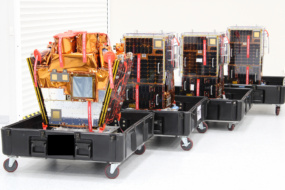
Satellogic is gearing up to launch its latest batch of satellites next month, potentially including the company’s first Merlin sat, which is designed to gather constant 1-m-resolution EO imagery.

Sophia Space, SLI Set Terms for $300M Satellite Leasing Deal
Orbital compute startup Sophia Space and space asset leasing company SLI have set terms for a $300M asset-financing deal.

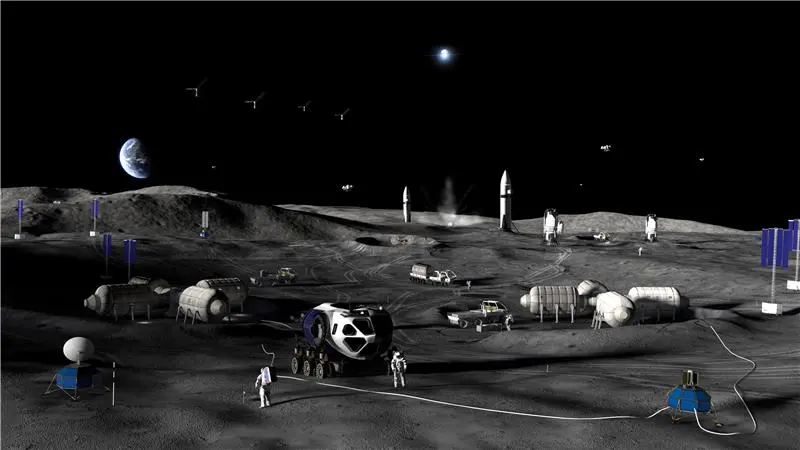
NASA announced awards to four companies on Tuesday to help make the agency’s Moon base a reality.
“For those waiting patiently, the grand return is close at hand,” NASA Administrator Jared Isaacman said during a press conference at NASA HQ.
Vroom, vroom: NASA awarded two companies a contract to build Lunar Terrain Vehicles:
Keep reading