


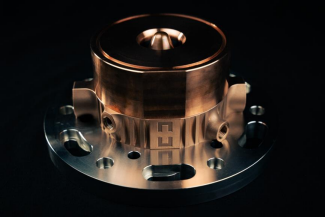
A European propulsion startup is trying to bring a new kind of thrust to the market.
Switzerland’s Stellar Alpina announced today that it raised a CHF3.5M ($4.5M) pre-seed funding round to support the development of rotating detonation rocket engines (RDRE). These engines can offer more efficient in-space mobility compared to traditional chemical propulsion systems—at least in theory.
Founderful led the round, joined by fellow Swiss VC LP&E.
Shake and bake: Stellar Alpina has its early roots in a RDRE project at Switzerland’s Academic Spaceflight Initiative. After four engineers with ties to the initiative founded the company in February, the team set a bold goal of completely designing and hotfiring an RDRE within 100 days. They did it in 82.
Now, the plan is to test “as many engines as possible,” by potentially firing a new configuration every two weeks for the next year, Stellar Alpina Cofounder Victor Elliesen told Payload.
The company also plans to use its pre-seed funds to hire more than a dozen employees, and build a higher-class test stand to support larger engine tests beginning next year. The goal is to complete a spaceflight-ready RDRE by 2028, but what exactly that will look like depends a lot on demand.
“Our way to commercialization is to talk to as many customers as possible, figure out where the current pain points [are]—where the high maneuver is needed,” Elliesen said. “It’s definitely going to go beyond LEO. The question is just how fast.”
Zoom out: While it’s still early days for RDRE tech, the benefits of detonation engines have been well-understood in academic circles for decades. Compared to traditional, chemical-propulsion engines, RDREs offer greater thermodynamic efficiency in a more compact form, while potentially offering a higher thrust-to-weight ratio.
But translating those theoretical benefits from the page to the launch pad is no simple feat. Though industry has run various demonstrations, building RDRE engines at commercial scale has yet to be proven.
- In 2021, a team of Japanese universities, with help from JAXA, demonstrated the first in-space RDRE engine firing.
- In May 2025, Venus Aerospace completed its first test flight of an RDRE-powered small rocket.
- In July, WA-based startup Juno Propulsion won a $500,000 NASA TechLeap prize to bring a RDRE to space this summer.
- In April, Astrobotic said it broke the record for longest hotfire of an RDRE.
“There is a race, which is establishing: Who’s going to figure out how much more efficient are RDREs?” Elliesen said. “Who says the first RDRE can’t come from Europe?”
Update: This article was updated to include details of Venus Aerospace’s RDRE flight.
Hop Aero Wants to Deliver Cargo via Rocket
Hop Aero launched on Y Combinator this week with their autonomous suborbital rocket: Rook.
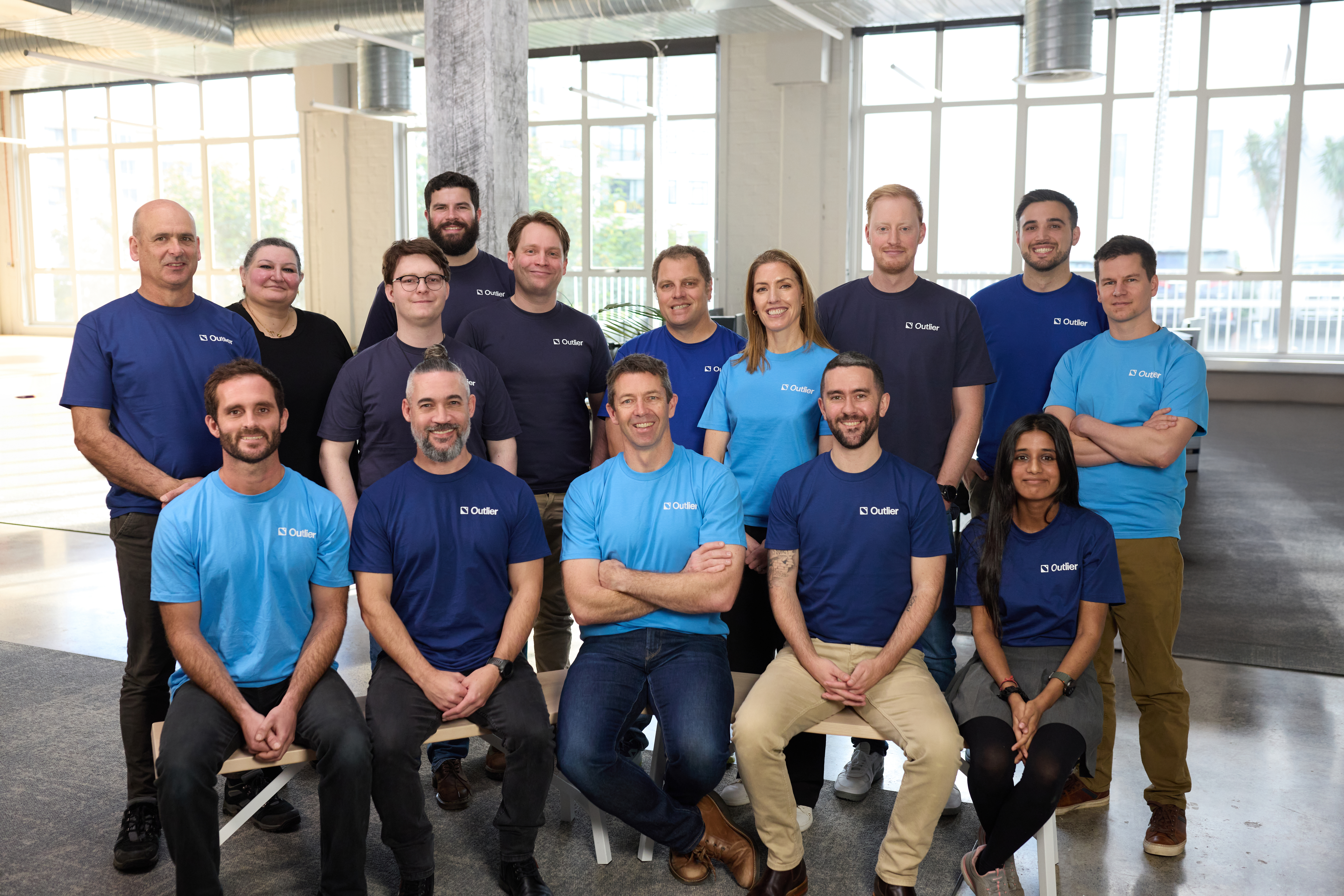
Outlier Space Raises $7.3M to Build New Zealand’s First Reentry Vehicle
Outlier Space announced a $7.35M round yesterday to develop its microgravity research and return vehicle, scheduled to fly its debut mission in 2028.
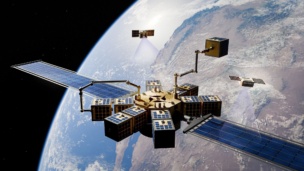
ORBES Unveils Exo-ORB Maintenance Spacecraft
Exo-ORB is a ~12U, sub-26-kg spacecraft that’s designed to launch on-board customer infrastructure for ready-to-go inspection.
ESA Puts €65M Behind Europe’s First Lunar Ice Rover
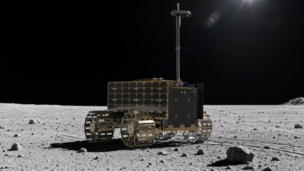
ispace-Europe is heading to the Moon following a €65M commitment from ESA for Europe’s first lunar polar ice exploration rover mission.
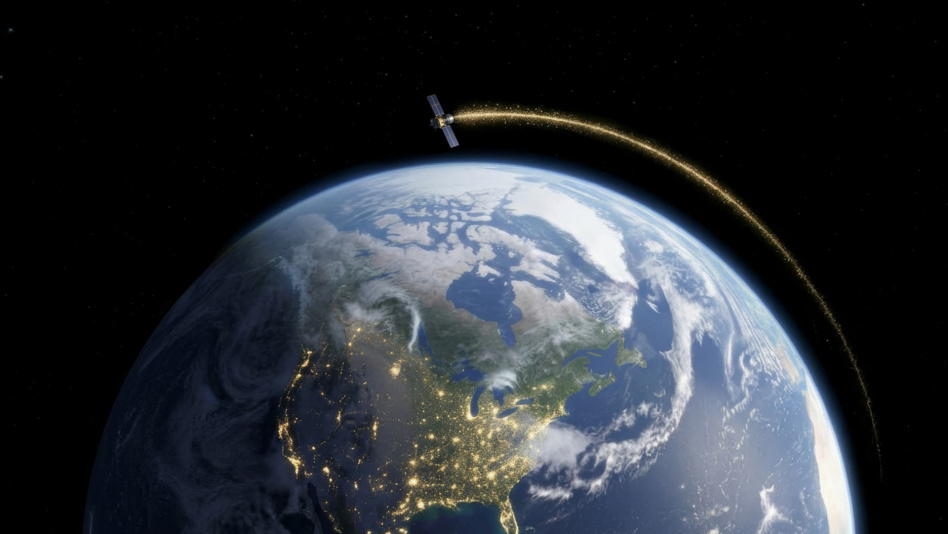
Aitech Systems, the CA-based supplier of space-computing platforms, announced an upgrade to its supercomputer today that is intended to fuel the next wave of AI applications in orbit.
By integrating NVIDIA’s IGX Thor platform into the S-A2300 COTS AI Supercomputer, as well as future computing iterations, Aitech officials say the company is drastically expanding customers’ ability to process data in orbit—an important growth point as the demand for in-space computing skyrockets.
“From what the customers are doing in space…they’re starting to push the capabilities of what the hardware can provide,” Aitech General Manager Pratish Shah told Payload. “Thor will be there for us to allow them to push the boundaries of applications and AI processing.”
Keep reading