


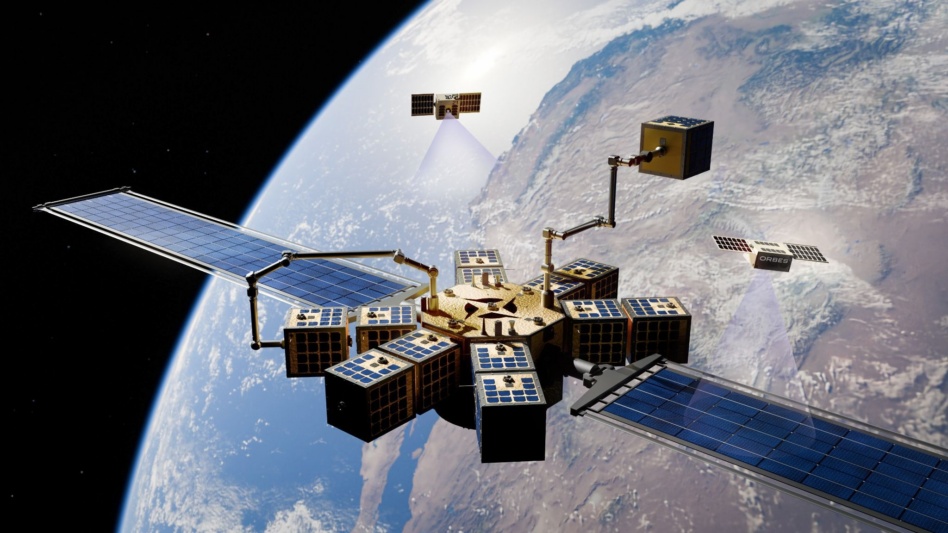
ORBES, a California startup building robotic spacecraft for in-orbit servicing missions, unveiled its first inspection satellite today—called Exo-ORB.
The robotic spacecraft is one of two models ORBES is building:
- ORB is a free-flying robot designed to fly inside pressurized space stations, replacing or flying alongside astronauts to perform tasks like inventory management.
- Exo-ORB is the external alternative, designed to fly 10 m to 20 m away from its host spacecraft to perform up-close inspection on-orbit with a high-res camera. Later iterations of Exo-ORB will come equipped with robotic arms to perform in-space maintenance tasks, such as repairs and component replacements.
Meet ORBES: ORBES was founded in 2024 on the idea that large structures in space—data centers, commercial space stations, and other proposed projects with massive solar arrays—need a cheaper, more efficient maintenance option.
Today’s large space structures don’t have a lot of options when it comes to identifying and fixing problems in orbit. On the ISS, astronaut spacewalks are complex, risky, and expensive—by NASA’s estimate, an hour of ISS crew time costs $130,000.
Several companies are working on in-orbit inspection and servicing missions from ISAM spacecraft that can launch and rendezvous on orbit, but ORBES officials argued this method can be costly and inefficient.
The company’s solution is to instead fly alongside future customers.
- Exo-ORB is a ~12U, sub-26-kg spacecraft that’s designed to launch on-board customer infrastructure, so that in-orbit servicing capabilities are built-in from the get-go.
- It’s equipped with both electric- and cold-gas-propulsion capabilities to raise its orbit and maneuver around the host spacecraft for imaging at any angle.
“Our belief is that the most efficient way to do [in-orbit servicing] is to have robots that ride along with that large infrastructure,” ORBES CEO Anna Shaposhnik told Payload. “If you need a small thing fixed locally, you don’t have to pay for all of the fuel to travel from a completely different orbit to do so.”
What’s next: ORBES announced its first commercial mission today, unveiling an LOI with Symphony Space to fly Exo-ORB on the demo mission of Symphony Space’s Adagio Platform in late 2027 or early 2028.
But that’s not ORBES’ first mission to orbit. In early 2027, ORBES will fly its internal ORB spacecraft to the ISS to validate its ability to fly in microgravity and study how to use its robotic arms to manipulate components on the station.
ORBES is also working toward an Exo-ORB mission with the Space Force, according to Shaposhnik, and plans to roll out an upgraded Exo-ORB with robotic arms for missions beginning in 2028.
RATLOG Wants to Cut ~90% of a Rocket Engine’s Parts
The heavy-lift rocket startup debuted on Y Combinator as part of the Fall 2026 batch.

Seraphim Space Investment Trust Doubled its Value in 2026
Seraphim’s major holdings—ICEYE, ALL.SPACE, D-Orbit, HawkEye 360, and Xona Space Systems, which together represent more than 75% of the firm’s portfolio—all had a great year, and that success has trickled upwards.
Exclusive: In Orbit Aerospace Pivots From Re-entry Vehicles to Spacecraft Autonomy
In Orbit has won new government contracts for its onboard AI system, which the company says can run a spacecraft’s operations without waiting on ground control.
Reflect Orbital Buys Two Skyroot Aerospace Launches
Reflect Orbital announced the purchase of two launches today from Indian launcher Skyroot Aerospace.

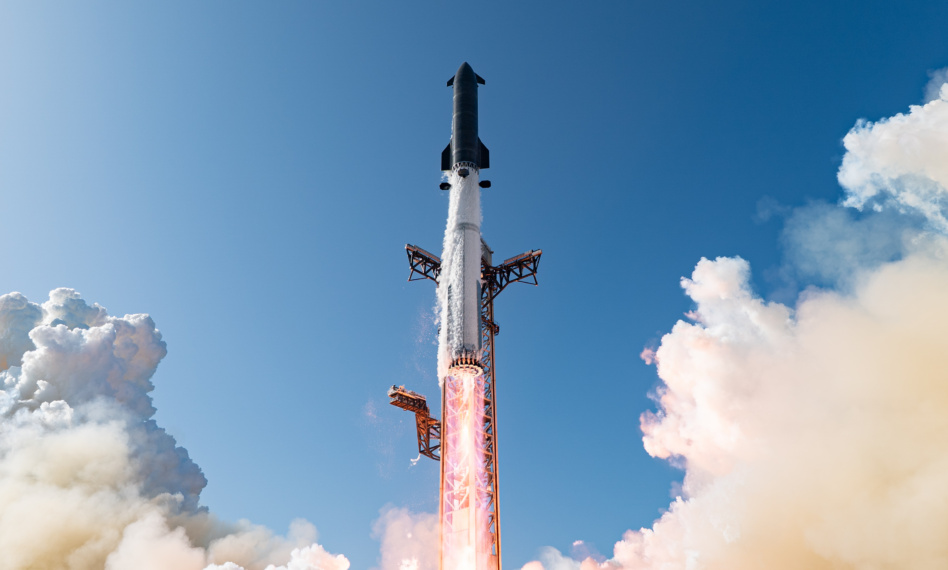
SpaceX flew the 13th test flight of its Starship rocket Friday evening, lifting off from Starbase at 6:51 pm EDT and ending with the first intact Starship put in the water.
It was the first Starship flight since the company’s record-breaking IPO in June. A Thursday attempt was scrubbed for cloud cover that would have blocked heat-shield imaging.
Hot to go: The ship splashed down in the Indian Ocean ~65 minutes after liftoff, flipped upright, then tipped over and floated (versus exploding). It continued transmitting over Starlink while SpaceX drones inspected it.
Keep reading