


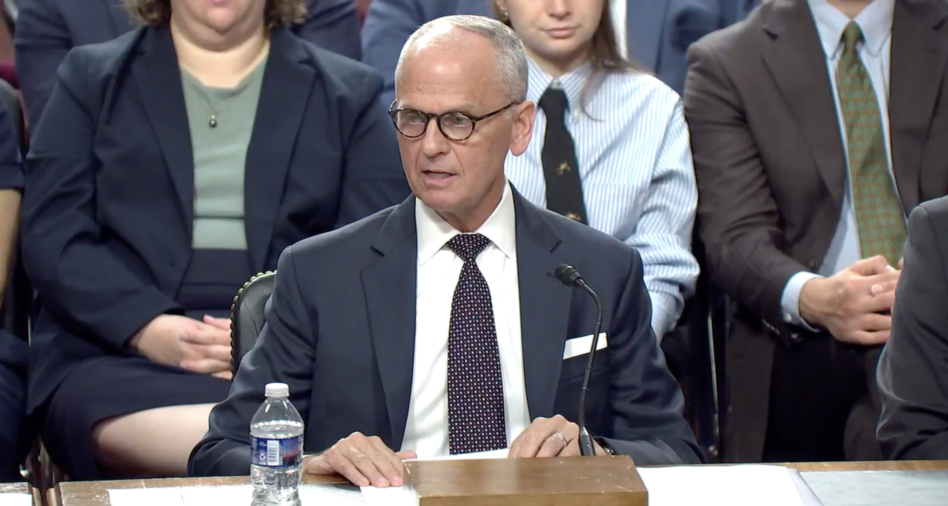
The Pentagon’s nominee to lead space acquisition said the military’s legacy space programs weren’t built for the modern acquisition reforms now reshaping the Space Force.
“Those are the ones that are going to be encumbered the most because they weren’t born with the new digital engineering techniques,” Erich Hernandez-Baquero told members of the Senate Armed Services Committee on Tuesday. “They weren’t born with the intent to integrate into these hybrid architectures.”
The Space Force is reorganizing acquisition around nine mission-focused Portfolio Acquisition Executives (PAEs), shifting authority from individual programs to operational missions. Despite his concerns about legacy programs, Hernandez-Baquero told senators that the changes overall made him optimistic that future Space Force acquisition programs would move faster.
I gotta testify: Hernandez-Baquero’s remarks came during a confirmation hearing, where he was considered to serve as Air Force assistant secretary for space acquisition and integration, a role that’s been without a permanent appointee since Frank Calvelli left the DoD at the end of the Biden administration in January 2025. He is currently VP of Space ISR at Raytheon—a role that raised some eyebrows for senators.
Sen. Jack Reed (D-RI), the committee’s ranking member, flagged the possible conflict of interest between Hernandez-Baquero’s Raytheon portfolio and the DoD role, noting the Space Force’s growing ISR budget. He also raised the committee’s “longstanding concern about SpaceX’s near monopoly position in launch and proliferated satellite constellations.” Neither question was answered due to time, and Reed said he would submit them for the record.
The hearing also considered Roger Mason’s nomination to lead the NRO.
Blurred lines: Another major topic of discussion during the hearing? With the ground moving target indication (GMTI) mission shifting to space, the NRO is acquiring many of the satellites on the Space Force’s behalf.
Reed worried the arrangement could leave the NRO too operationally focused on near-term Space Force requirements.
Mason, however, pushed back. Rather than starting from scratch, he said, the department adapted radar technology the NRO already developed, getting capabilities on orbit cheaper and faster. AMTI, the air-tracking follow-on, is now being procured by the Space Force directly, via May’s $4.16B SB-AMTI award to SpaceX.
“To me, this is a good progression of good government decisions in terms of taking strengths and moving them into areas where they should be done by the military,” Mason told the committee.
Trillion-dollar dilemma: No SASC nomination hearing would be complete without mention of Golden Dome. Sens. Angus King (I-ME) and Mark Kelly (D-AZ) pressed on the projected cost, notably the space-based interceptor layer.
Hernandez-Baquero said he has not been briefed on the program’s details. Comptroller nominee Jules W. Hurst III said the capability is possible, but deferred justifications to a classified setting.
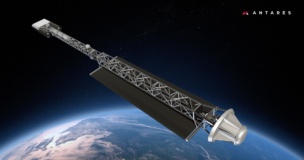
Antares Wins $161M Award for Space Nuclear Power
Antares announced today that it won a $161M DoD contract to advance nuclear power for space—which Antares says is the largest DoD space nuclear award to date.

LeoLabs Wins $20.68M Space Force Award for Scout
LeoLabs is applying its radar tech to national security missions under a new contract with the Space Force, announced Wednesday.
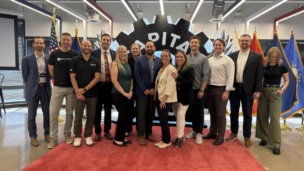
SpaceWERX Announces 2026 STRATFI Awardees
The Space Force announced the newest awardees of the SpaceWERX Strategic Funding Increase program during the Fed Supernova conference on Thursday.

White House Publishes S&T Strategy for National Security
The Office of Science and Technology Policy released its National Security Science & Technology Strategy.

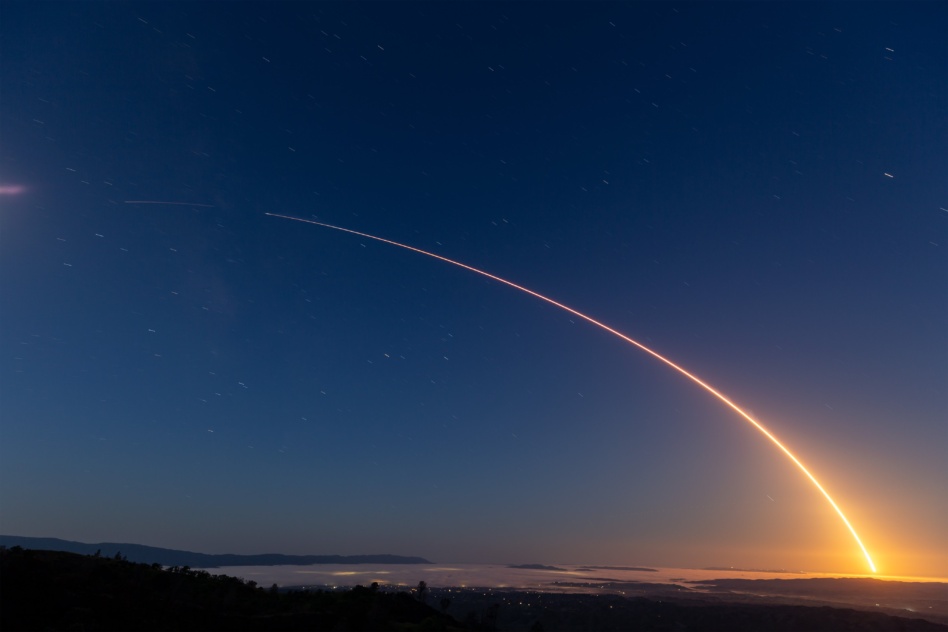
The Space Force added two new companies to its stable of launchers on July 8, bringing the military’s launch acquisition program to seven companies.
What: The National Security Space Launch program allows the military to block buy launches to get defense payloads to orbit, both giving the Pentagon assured access to space and promoting competition in the industry by pre-ordering rides to space from multiple providers. A different form of the program dates back to the ‘90s, though the NSSL in its current iteration and name came to be in 2019.
The process: The Pentagon onboards companies into the launch program and awards IDIQ contracts for missions to be launched over a set time period. That makes pre-vetted companies eligible to compete for task orders to launch specific missions.
Keep reading