



Pulse Space, a WA-based startup building laser systems capable of beaming power to other satellites on orbit, announced a $40M OTA contract from the Space Force this week to develop its laser technologies.
While officials didn’t share which specific applications were included in the OTA agreement, the company is developing lasers to perform a range of services for commercial and government customers.
“The beautiful thing about lasers in orbit is they are very versatile. They have a lot of use cases,” Pulse CEO Karl Stedman told Payload. “There are wavelengths that are better at the power-beaming side of the equation, and there are wavelengths that are better at other effects.”
A beam for every season: When Pulse Space was founded in 2022, it was focused solely on power-beaming tech. But Pulse officials quickly learned that its lasers could do much more than provide a power up for satellites.
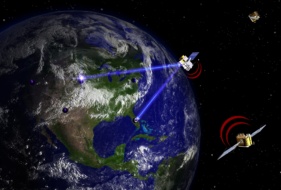
The core technology works by taking in solar energy, and redistributing that energy through high-power laser beams.
- The approach gives customer spacecraft extra power through their existing solar arrays, thereby lessening reliance on batteries as the spacecraft transits through shadowed regions.
- Shining a high-energy beam of light in orbit also has huge implications for debris identification, tracking, and removal.
“As we transmit from satellite to satellite, you have a bunch of beams that illuminate anything in between,” Stedman said. “Like shining a laser in a dark room and seeing all the dust flying around—the same concept applies, just at far greater distances.”
The tech can help to fill in the blanks for space-debris databases, as telescopes and non-Earth imaging sats are good at spotting the big stuff in orbit—but can often miss smaller, equally dangerous pieces of debris.
Once Pulse spots debris, however, it doesn’t intend to just leave it there. The company’s laser beams can, in theory, use radiation pressure to deorbit at least some of this orbital flotsam, providing a “garbage collection service” for the entire industry.
What’s next: While Pulse’s defense work is largely secretive, it’s driving a huge wave of development within the company. Despite early commercial interest, the US government is “by far” Pulse’s biggest customer, according to Stedman.
Ahead of its first demonstration mission, which could fly as early as this year, Pulse has already attracted demand in the market. Customers include Starlab Space, which will rely on power beamed from Pulse satellites; and Privateer, which has signed on for the SSA side of things.
To achieve its dual-use ambitions, Pulse expects to grow considerably over the coming years. The company employs ~25 workers now, but expects to grow to 100+ by the end of the year, and as many as 1,500 in the next two years.

Satlyt Raises $8M Seed to Expand Its Virtual ODC Network
Satlyt was founded in 2024 by Afullo, an alum of SpaceX and Google who spent years trying to convince both companies to invest in in-space edge computing opportunities.
Foundational Raises £8.2M for Satellite Laser Ranging
Foundational emerged from stealth today with Europe’s largest space tech pre-seed round.

Space Insurer Charter Space Raises $5M Seed Round
You can bundle your home and auto insurance with the click of a button, but covering your spacecraft has traditionally been a little trickier.
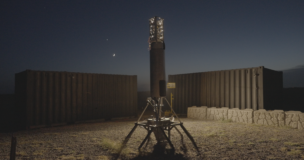
Exclusive: Hop Aero Raises $11M for Suborbital Point-to-Point Delivery
The suborbital point-to-point logistics company announced $11M in funding today following its participation in the summer Y Combinator batch.

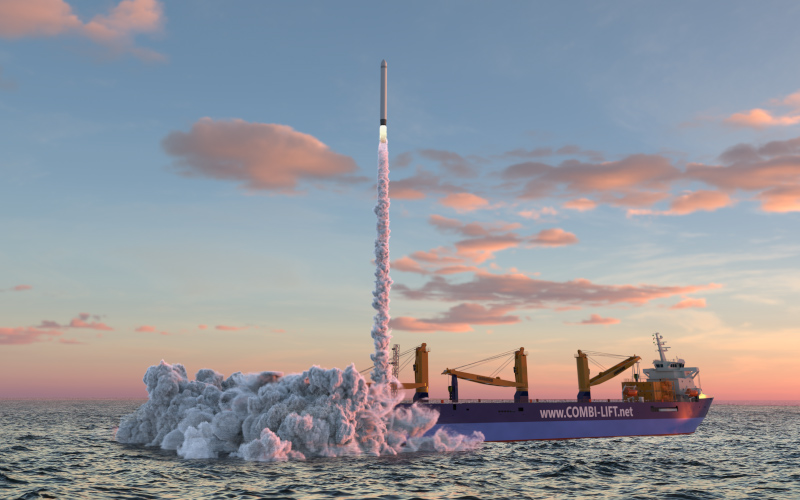
The US government is asking the space community to weigh in on bringing launch and recovery operations offshore.
The Bureau of Ocean Energy Management (BOEM) published an RFI on Wednesday seeking information, to consider building or repurposing infrastructure on the Outer Continental Shelf, for space launch and reentry.
Zoom out: The RFI is in response to a December 2025 executive order from President Donald Trump that ordered federal agencies to find ways to support the US commercial space sector.
Keep reading