


Reflect Orbital, the startup attempting to provide on-demand sunlight using in-space mirrors, received a license from the FCC last week to fly its first in-space demo satellite—named Eärendil-1.
The debut flight, which is scheduled to fly this year, will attempt to validate Reflect Orbital’s core technology—an 18 m film reflector that will try to beam sunlight down to Earth.
Rubber glue: The mission—and Reflect Orbital’s broader plan to launch a constellation of 50,000 additional mirrors—has drawn the ire of astronomers who argue that the hardware will have long-reaching effects on their ability to conduct space science from terrestrial telescopes.
Meanwhile, other scientists have argued that reflecting sunlight onto the planet during periods of darkness could have impacts on local flora and fauna, by disrupting the natural cycle of activity during the day and rest at night.
In its review of Reflect Orbital’s application, however, the FCC said concerns about how the spacecraft will impact the environment and astronomy are outside of the Commission’s scope.
As a result, the FCC has essentially punted the problem down the road. The license gives Reflect Orbital clearance to fly a single mission, and the FCC declined to weigh in on concerns about the larger constellation.
“The harms that commenters allege are unlikely to materialize from the operations of a single satellite, and commenters have not sufficiently justified the necessity of conditions on or denial of Reflect Orbital’s application,” the FCC wrote in its decision.
Reflecting the mood: To its credit, Reflect Orbital has responded to the concerns of researchers and scientists head on—stating that its debut mission is built to prove that it can operate in space in a way that mitigates the impacts on astronomy and local environments.
“Reflect Orbital is earning the right to operate and to scale. That means proving that reflected sunlight can be controlled precisely, used only where appropriate, limited in brightness and duration, and coordinated with affected communities and scientific institutions,“ Tristan Semmelhack, the company’s chief product officer and cofounder, said in a statement.
Inside Starburst’s First Flight, and Portal’s New Bothell Office
“I feel like 80% success now,” CEO Jeff Thurnburg said. “But honestly, to get this far this fast, I’m tempted to call it 100%.”
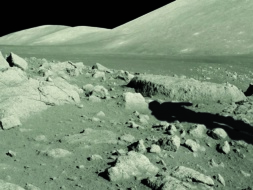
National Academies Rank Nonpolar Moon Sites
A new report from the National Academies ranks the top four non-polar sites for future crewed lunar missions.

State Department Taps Trio for $5M Space Diplomacy Push
At last week’s second annual US Space Forum, the US Mission to the International Organizations in Vienna launched Project Constellation, a $5M effort to build international space partnerships.
Exclusive: EraDrive Lands $13M DoD Award For Autonomy Module
EraDrive won a $13M DoD award, under which the Space Force will buy an undisclosed number of the company’s Era-Node vision-based autonomy modules.

Pulse Space, a WA-based startup building laser systems capable of beaming power to other satellites on orbit, announced a $40M OTA contract from the Space Force this week to develop its laser technologies.
While officials didn’t share which specific applications were included in the OTA agreement, the company is developing lasers to perform a range of services for commercial and government customers.
“The beautiful thing about lasers in orbit is they are very versatile. They have a lot of use cases,” Pulse CEO Karl Stedman told Payload. “There are wavelengths that are better at the power-beaming side of the equation, and there are wavelengths that are better at other effects.”
Keep reading