

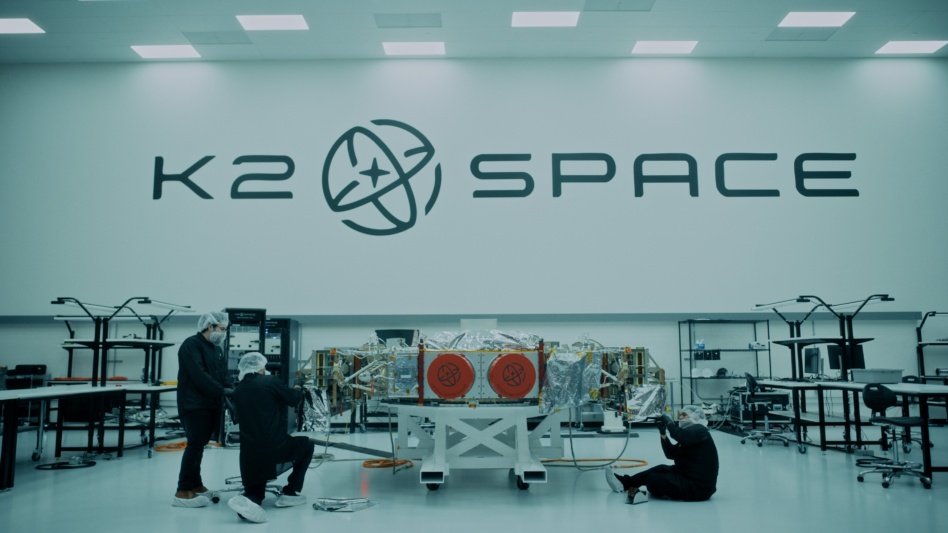
K2 Space announced a $500M Series D yesterday at a $6.8B post-money valuation. The round is hot off the heels of a $250M Series C in December, and brings K2’s total financing north of $1B since its founding in 2022.
Kleiner Perkins and ICONIQ led the round, which included additional participation from CapitalG, Lightspeed Venture Partners, Altimeter, Spark Capital, Sands Capital, ARK Invest, accounts advised by T. Rowe Price Associates, and other existing investors.
Do the math: While the lofty valuation comes just four months after K2 launched its first satellite—called Gravitas—CEO Karan Kunjur told Payload that it’s “purely based on multiples of next 12-month revenue.”
“These are big numbers, but they’re big numbers because we have big revenue numbers that are growing really fast,” Kunjur added.
In December, K2 Space revealed it had signed $500M+ in contracts. Since then, K2 has signed another ~$500M, according to Kunjur.
- In March, K2 signed a ~30-sat contract with SES to build sats for the comms company’s meoSphere network, which will eventually grow to 100 satellites;
- In May, K2 signed a deal with Anduril to collaborate in a consortium on missile-defense systems for Golden Dome;
- In June, K2 confirmed it was to supply sats to SES Space and Defense under the Space Force Protected Tactical SATCOM-Global initiative.
To meet this growing demand, K2 plans to invest the new capital to scale up its production capacity to churn out at least 100 satellites per year, which is the maximum capacity at its current facility. The company is also scaling up what its satellites can do in response to growing demand from the commercial sector.
“There’s a massive potential user for super high-power systems, and that’s on orbit compute,” Kunjur told Payload. “We designed components for the 100 kW system…We’ve built the entire tech stack to go scale up the platform itself, and so we intend to be first movers on orbital compute.”
K2 plans to launch its first 100kW satellite in H2 2028.
Do it again: While K2’s Gravitas mission validated the company’s ability to fly a high-power sat in orbit, doing so repeatedly is the company’s next major milestone.
To that end, K2 plans to launch multiple satellites in Q2 2027 as part of the company’s Trinity mission to demonstrate the company can fly at multiple orbits. The mission will fly sats in LEO, MEO, and GEO.
“The biggest intent with Trinity,” Kunjur said, “was just to say, ‘OK, we did it once… can we also prove that the exact same platform can be used for different missions? That the exact same platform can be used in different orbits? And that the exact same platform is reliable, robust, and performant?’”
If that mission goes well, it will help K2 preposition itself to take a larger slice of market share when new technologies take off.
“There are more and more applications that happen on the ground, and happen in the air, that are going to move to space—and we want to be on the front lines of rolling out those infrastructure layers,” Kunjur said.
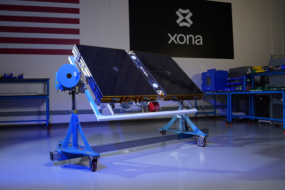
Xona Raises $250M Series D to Scale Commercial GPS Constellation
Xona’s long-term plan is to build a ~258-sat constellation to offer an upgraded commercial alternative to government GPS networks.
Exclusive: EraDrive Lands $13M DoD Award For Autonomy Module
EraDrive won a $13M DoD award, under which the Space Force will buy an undisclosed number of the company’s Era-Node vision-based autonomy modules.
WarpWare Closes Pre-Seed to Bring Agentic Tools to Flight Software
CO-based WarpWare closed its $1.2M pre-seed round today to expand what it calls an AI-enabled engineering platform for space missions.

RATLOG Wants to Cut ~90% of a Rocket Engine’s Parts
The heavy-lift rocket startup debuted on Y Combinator as part of the Fall 2026 batch.

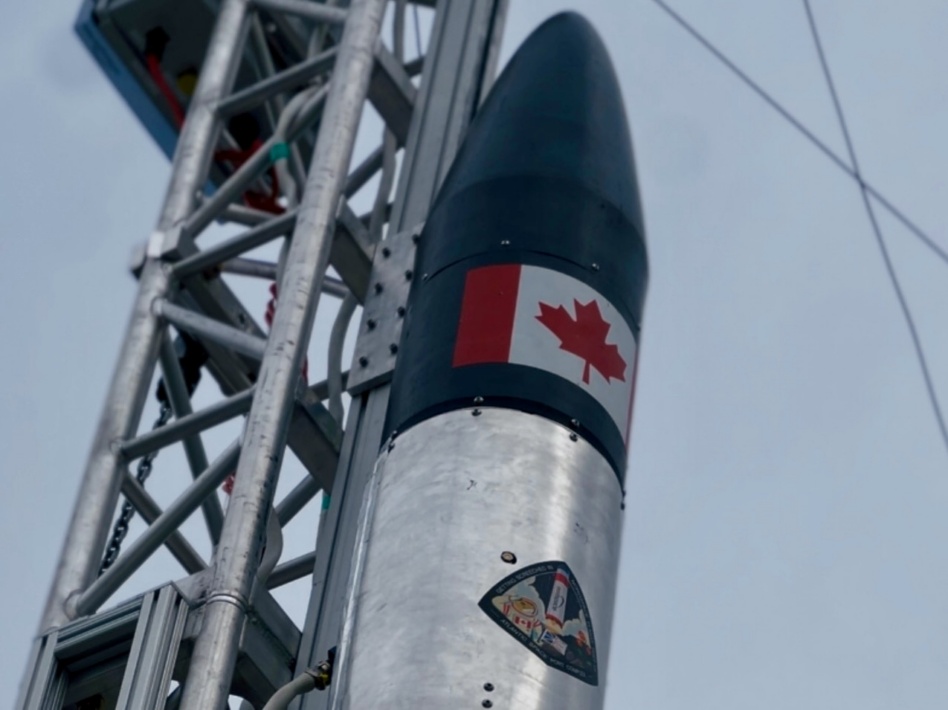
NordSpace Ventures—the strategic investment arm of Canadian launch startup NordSpace—announced an investment in North Vector Dynamics (NVD) this week, a Canadian defense tech company building full-spectrum sovereign missile capability.
The investment landed the same week Ottawa launched its Strategic Exports Office (SEO) in an effort to boost the country’s international competitiveness in strategic sectors—including aerospace and defense.
Each answers a different half of the same problem: Canada wants a robust A&D sector—NordSpace has the cash, and SEO has the tools to sell globally.
Keep reading