

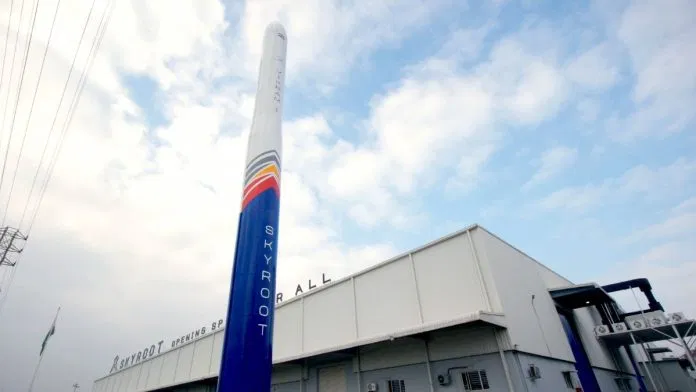
India has arrived at the private orbital launch party, and it brought its own rocket.
Skyroot Aerospace became the first private Indian company to reach orbit on Saturday, when its Vikram-1 rocket lifted off from India’s primary spaceport—the Satish Dhawan Space Centre.
Vikram-1 performed as planned, with the upper stage reaching a 450-km orbit about 15 minutes after liftoff and successfully deploying several customer payloads and in-orbit experiments. The mission was dubbed Aagaman, which is Sanskrit for “arrival.”
Road to Aagaman: Hyderabad-based Skyroot was founded in 2018 by two ISRO scientists interested in commercializing access to space. Four years later, the company made history with the successful launch of the Vikram-S mission. Vikram-S was the first privately developed Indian rocket to fly to suborbital space.
In May, Skyroot became India’s first space unicorn, reaching a valuation of $1.1B with a $60M round, which brought the company’s total funding past $160M. The company has a global set of investors, including California’s Sherpalo Ventures, Singapore’s sovereign wealth fund, and BlackRock-managed funds.
Betting on industry: India’s space sector has skyrocketed since opening up to private investment in 2020. Before India’s presence in space was almost exclusively through state-dominated endeavors, now the country boasts 400+ space startups.
The economic stakes of this shift are significant:
- India’s space economy is reportedly valued at roughly $8.4B and is projected to grow 5x to $44B by 2033;
- New Delhi amended its FDI policy in 2024 to court foreign capital;
- And its 2023 Indian Space Policy carved out distinct roles for government and commercial actors while opening a market for space services.
The government has also started investing money into the industry. The Antariksh Venture Capital Fund—anchored by the Indian National Space Promotion & Authorization Centre—made its first investment last week: ~$6M into satellite maker Dhruva Space.
Scaling up: One flight doesn’t make a launch business, however, and cadence is where space truly gets hard.
- Skyroot is reportedly planning additional development flights to validate Vikram-1’s repeatability before starting commercial operations.
- Post-Aagaman, the company is hoping to double its rocket production at its Hyderabad facilities: from one per month to two.
- Vikram-1 will get an upgrade to Vikram-1U, featuring strap-on boosters and increased payload performance.
- Skyroot also plans on developing a larger launch vehicle, Vikram-2, expected to debut in 2027, and designed to place 900kg into LEO
European Space Startups Steal the Show in Paris
European space startups have long wondered when big institutional buyers would stop handing large contracts exclusively to legacy A&D primes. During the last few weeks, it’s become clear that time is now.
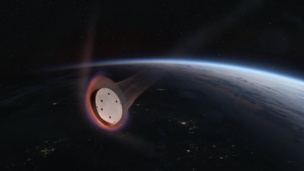
Exclusive: Space Cargo Unlimited Booked a Third of its Starfall Capacity
Demand appears to be skyrocketing, thanks to a new wave of pharmaceutical companies and researchers realizing that microgravity can provide benefits in drug discovery and research.
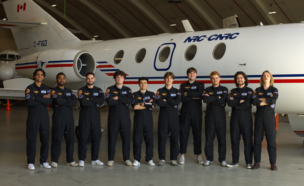
Icarus Robotics Completes Parabolic Flight Test Ahead of ISS Mission
Icarus Robotics completed a four-flight parabolic test campaign of its free-flying robot—named Joy—in preparation for its first ISS mission in 2027.
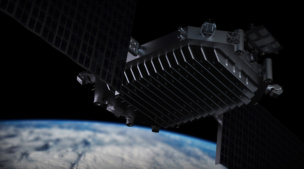
EnduroSat Raises $205M, Notches Vantor Sat Win
It was the third nine-figure fundraise announced by a European company during the past two weeks, following Open Cosmos’ €300M ($348.6M) raise and The Exploration Company’s $450M Series C.

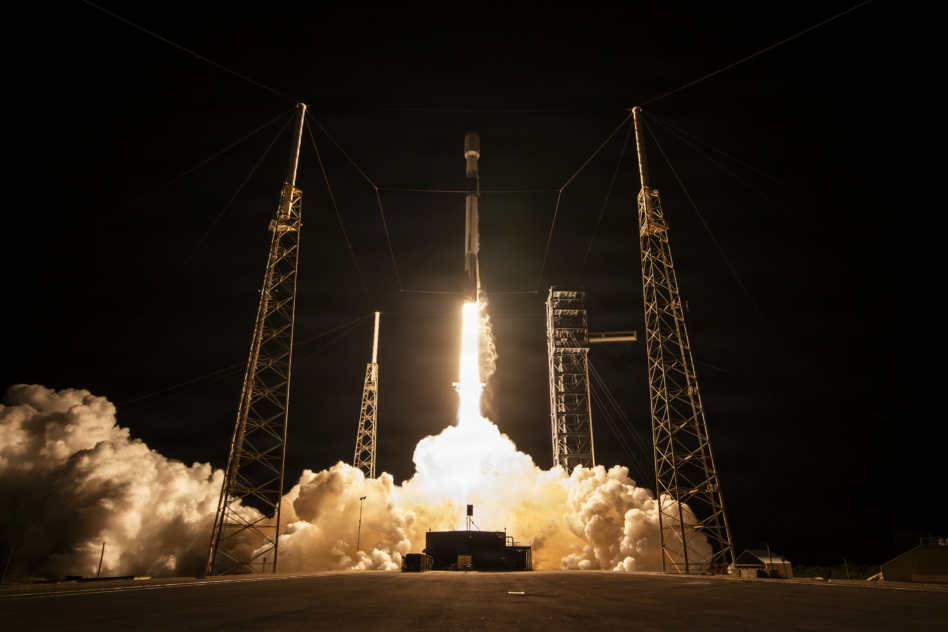
The DoD upped its ceiling for national security space launches (NSSL) by $11.4B on Friday, more than tripling the pool of NSSL launch contracts from $5.6B to $17B.
The companies standing to benefit are the seven launcher providers already selected under the NSSL Phase 3 Lane 1 program:
Send it: The contract increase is the latest example of the US government throwing resources behind its launch program to counter Russian and Chinese advances in space.
Keep reading