


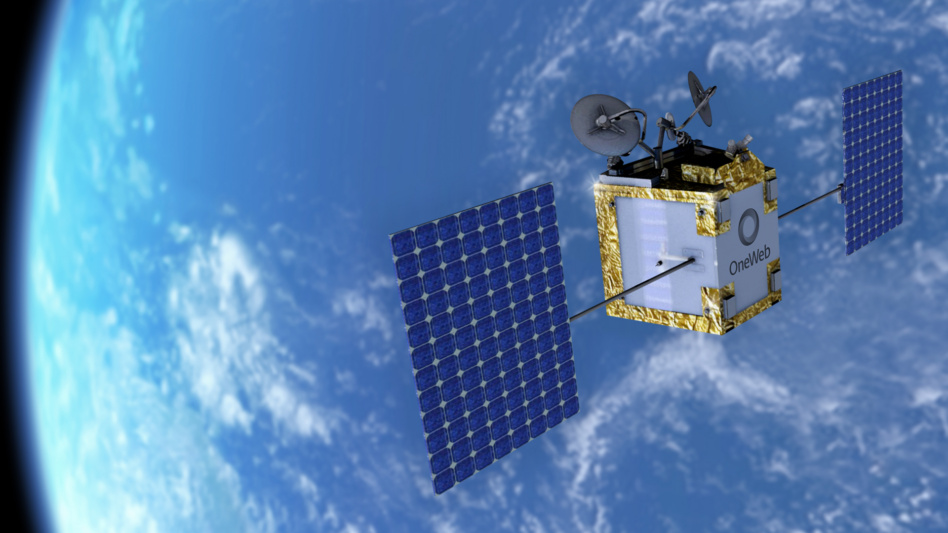
In FCC filings published this month, European satellite operator Eutelsat outlined plans for a 528-satellite constellation in LEO called Eutelsat Next. The proposed constellation would operate separately from its existing OneWeb constellation of 600+ satellites, which the company is replenishing with 440 new satellites.
The blueprint: Eutelsat submitted the proposal as part of the FCC’s latest Ku- and Ka-band processing round, seeking approval to offer Eutelsat Next services in the US, and outlining details of its planned constellation:
- Eutelsat Next is a planned 528-satellite constellation (plus in-orbit spares) spread across 24 orbital planes that are all at an altitude of 1,220 km.
- The satellites would use Ku- and Ka-band frequencies, and the network would be compatible with 5G standards.
- The network would operate through ~50 gateway stations worldwide, including six existing facilities in the United States.
- The satellites may carry optical intersatellite links, allowing data to be relayed between spacecraft within the network.
As Eutelsat Next would operate alongside the company’s current OneWeb constellation, the filings state this arrangement would “maximize the interoperability” of the new constellation, while extending coverage and adding capabilities.
What the company is and isn’t saying: While not stating it outright, the company’s comments to Payload suggest that Next is not yet a fully developed program.
Eutelsat declined to confirm whether the application preserves access for a possible future constellation, or whether they have a firm plan to deploy all 528 satellites. Instead, the Eutelsat spokesperson stated the filing is “part of our long-term planning for the evolution of our LEO constellation.”
On the question of how Eutelsat would fund the development of the new constellation, the spokesperson confirmed that “investment needs for the continuation of its LEO constellation are fully funded until 2030,” but failed to clarify whether that means the current 440-sat expansion of OneWeb—or the proposed new constellation.
While Eutelsat did provide some idea of how Next fits into its plans, it declined to clarify how the proposed constellation relates to Europe’s IRIS² system—a €10.55B project led by the European Commission to build a sovereign, secure communications service. Eutelsat is one of three satellite operators, alongside SES and Hispasat, that make up the SpaceRISE consortium, which the European Commission selected in October 2024 to develop, launch, and operate IRIS².
The bottom line: The filing suggests that Next could be more than a speculative placeholder. It lays out a detailed architecture, describes the constellation as “still under design and manufacture,” and states that Eutelsat has already begun coordinating with other non-GEO operators.
However, the company would not confirm when launches might begin, how the system would be financed, how it relates to IRIS², or whether all 528 satellites will ultimately be deployed. For now, Next appears to exist more as a regulatory hedge than a settled deployment plan.

Seraphim Space Investment Trust Doubled its Value in 2026
Seraphim’s major holdings—ICEYE, ALL.SPACE, D-Orbit, HawkEye 360, and Xona Space Systems, which together represent more than 75% of the firm’s portfolio—all had a great year, and that success has trickled upwards.

UKSA Taps ClearSpace for Country’s First Debris Removal Mission
The UK Space Agency is dressing up as a waste-management company for Halloween.
Europe’s Space Defenses Fall Just Shy of Weaponization
Europe doesn’t have any weapons in space—but that doesn’t mean the region is comfortable flying around in orbit defenseless.
Skyrora Shifts Orbital Launch Timeline to 2030
First-mover advantage isn’t all it’s cracked up to be—at least, that’s the thought process for UK launcher Skyrora.

NASA announced that its nuclear spacecraft bound for Mars will cost over $2B.
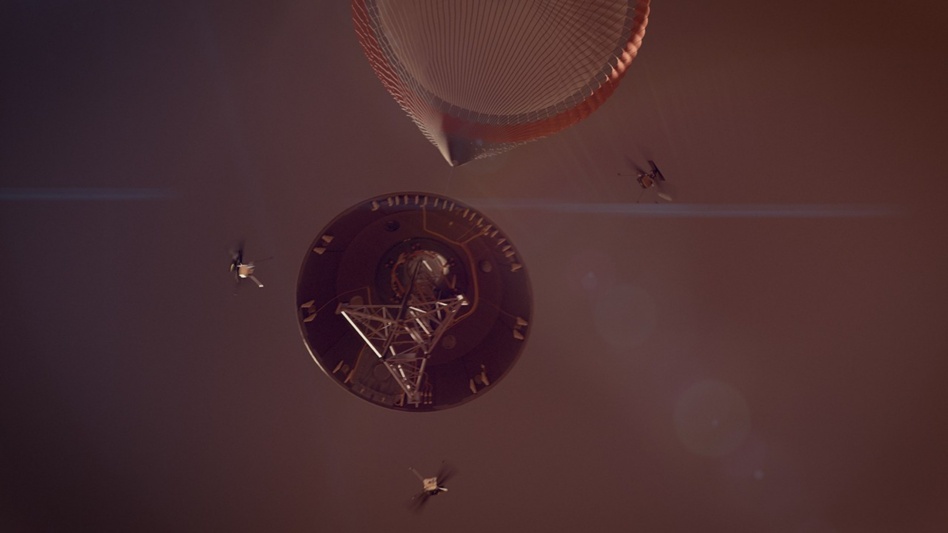
The mission—dubbed Space Reactor-1 (SR-1) Freedom—is targeting a launch in late 2028, and is said to be the first fission-powered interplanetary spacecraft. It will also ferry SkyFall, NASA’s next Mars helicopter mission, to scout landing sites for future crewed exploration on the Red Planet.
The $2B question: SR-1 was first announced at NASA’s Ignition event in March as the standout Mars mission amid the agency’s upgraded lunar focus. The agency has since been nailing down funding for its biggest bet yet on nuclear propulsion.
Keep reading