


NASA announced that its nuclear spacecraft bound for Mars will cost over $2B.
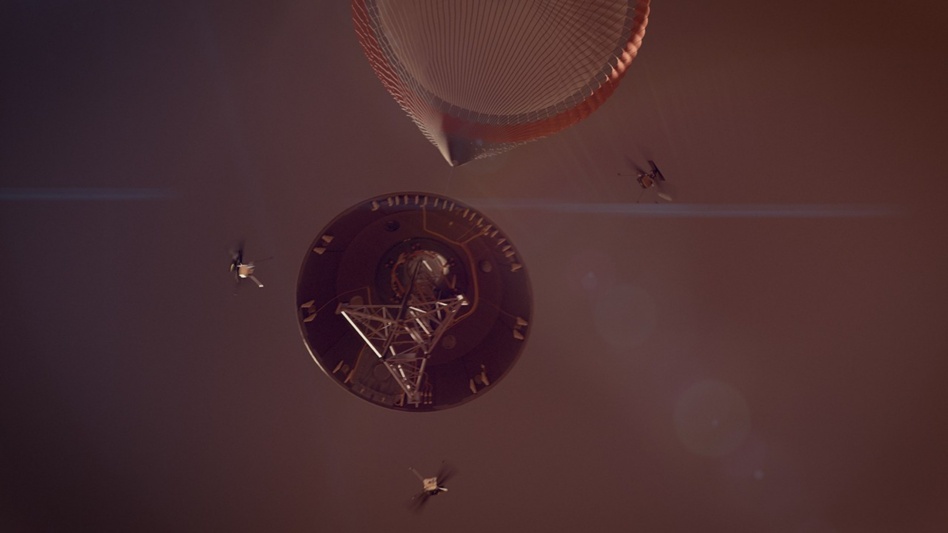
The mission—dubbed Space Reactor-1 (SR-1) Freedom—is targeting a launch in late 2028, and is said to be the first fission-powered interplanetary spacecraft. It will also ferry SkyFall, NASA’s next Mars helicopter mission, to scout landing sites for future crewed exploration on the Red Planet.
The $2B question: SR-1 was first announced at NASA’s Ignition event in March as the standout Mars mission amid the agency’s upgraded lunar focus. The agency has since been nailing down funding for its biggest bet yet on nuclear propulsion.
At a June meeting of the National Academies’ Aeronautics and Space Engineering Board, Associate Administrator of the Human Spaceflight Mission Directorate Lori Glaze said funding will pull from NASA’s FY27 budget request as well as the 2025 Working Families Tax Cut Act, which included $2.6B for the now-paused Gateway lunar orbiting space station.
A document sent to Congress and viewed by POLITICO proposes the following mission budget:
- $640M in FY26
- $890M in FY27
- $415M in FY28
- $180M in FY29
This budget does not include funding for SkyFall, and it’s unclear how NASA will reshuffle already-allocated funding—or how it will fold SR-1 into FY27 appropriations. Still, officials insist they’ll find the money.
Let the SkyFall: SR-1 will carry NASA’s next Mars choppers: SkyFall. The project is managed by JPL and has AeroVironment co-designing and co-manufacturing the helicopters. Firefly also recently won a $13M subcontract to build the landing aeroshell.
SkyFall is even more ambitious than its ingenious predecessor: Ingenuity
- SR-1 will release SkyFall in Mars orbit, where the entry vehicle will enter the Martian atmosphere and deploy its helicopters mid-air.
- After landing, the choppers will map subsurface ice and scout landing sites for future crewed missions.
- SkyFall adds payload capacity and range, and needs no rover for comms relay (sorry, Percy).
NASA has yet to disclose where exactly it will gather funds to develop SkyFall. However, the agency said funding would partly come from the science directorate’s line of future Mars missions, despite researchers warning SkyFall could cannibalize the agency’s science budget.
Waste not: NASA hopes to maintain schedule and budget by reusing hardware.
- Gateway’s repurposed Power and Propulsion Element will serve as the SR-1 spacecraft.
- NASA is partnering with the Department of Energy to design and assemble the mission, leveraging the national labs’ expertise.
“We’re trying to leverage as much as we can, with as little new development as possible,” Glaze told the board. “I know that’s a challenge and always sounds good on paper, but that’s the intent.”
Board members were skeptical of the timeline. One noted that a two-year development schedule is more typical of a cubesat than a nuclear interplanetary spacecraft. Glaze conceded the point: “It is ambitious. It’s a challenge,” she said, but insisted NASA is doing everything it can to rise to the occasion.

NASA Signs Space Nuclear Pact, Says Moon Base Is Ahead of Schedule
Isaacman gave updates at the White House’s “Science: A New Golden Age Summit.”
Starliner Targets Uncrewed Flight NET December, Crewed Follow Up in 2028
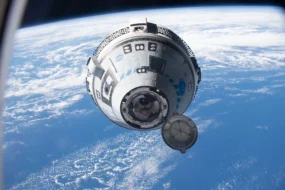
NASA and Boeing officials announced Monday that they have upgraded and redesigned Starliner following a dicey crewed test flight in 2024, which left NASA astronauts Butch Wilmore and Sunita Williams stuck on ISS for nine months.

Isaacman Doubles Down on New NASA Model for International Partnerships
Isaacman is less than a year on the job, but he’s already upended the way the agency interacts with the rest of the world.

Isaacman Promises ‘Artemis Acceleration’ Update Next Month
“There’s a lot of ingredients—so many ingredients—that need to come together for that landing, and we owe everybody an update,” he said. “There’s going to be an Artemis acceleration update…sometime in early October. Maybe it might even coincide with the [ISS] Crew 13 launch.”


EO data is a privilege, not a right, and the US government wants to control what EO satellite operators can and can’t share with the public.
Under a proposed bill—the 2027 Intelligence Authorization Act (IAA), which passed the House Permanent Select Committee on Intelligence this week—the US government would implement measures to block EO operators from sharing “sensitive imagery that could harm national security” with the public, according to a summary posted by the House Intel Committee.
All for one: In recent years, geospatial intelligence gathered by commercial EO operators has proved vital in US and allied efforts to maintain an edge in conflict zones. The value of EO data over Ukraine—to spot troop movements and to assess damage from bombing campaigns—sparked a surge in geospatial-intelligence demand from national governments.
Keep reading