


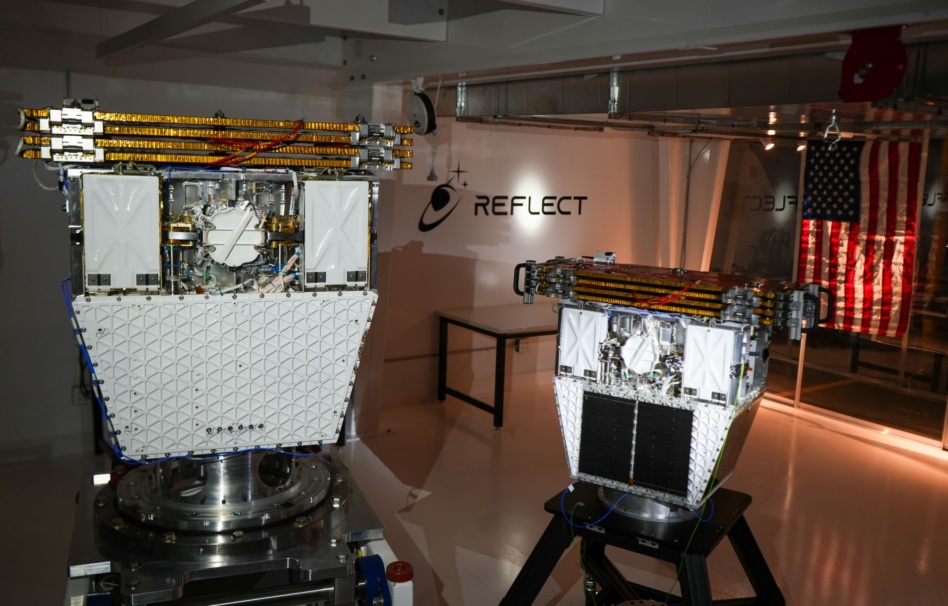
The space community is divided over whether Reflect Orbital’s sunlight-reflecting satellites are a bright idea.
The company, which obtained FCC approval last month to fly its first sat in orbit this year, says it has received 260,000+ requests to beam sunlight to illuminate everything from search and rescue operations to outdoor events at night. But it hasn’t all been good press.
Reflect’s plans to build a constellation of 50,000 orbiting mirrors has made a lot of people very angry, and has been widely regarded—by scientists, astronomers, and lovers of the night sky—as a bad move.
Payload spoke with Reflect CEO Ben Nowack to hear how the company is addressing the growing cacophony of concerns.
The cons list: Despite gaining the FCC’s approval to fly its demo satellite, the company has a lot of headway to make before it can scale up to larger satellites and a full constellation.
The FCC approved the company’s first sat—but explicitly declined to address the environmental or astronomical impacts of Reflect’s proposal. Since then, dozens of organizations, including DarkSky International, the American Bird Conservancy, Public Employees for Environmental Responsibility, the International Astronomical Union, Air Line Pilots Association, and the Royal Astronomical Society, have published their opposition.
These organizations have a broad list of fears, from light pollution and impacts on astronomy, to worries about human health and the effects on local flora and fauna. Nowack didn’t brush off these concerns, but cautioned that they were often overblown, and based on a misunderstanding of what Reflect is building.
Not for everyone: First and foremost, Nowack told Payload that Reflect isn’t trying to spread sunlight everywhere.
“[The] thing that people get really wrong about us is they kind of picture the whole Earth being lit up by our satellites, and that’s not the case at all,” Nowack said. “We only need about 200 sites around the world to close our business model for the first several years, and each one of those sites is 6,000 acres…So this is an incredibly small fraction of the Earth that’s being lit up.”
At $5,000 per hour, Reflect’s sunlight-as-a-service business model allows them to be very selective about where and when they cast sunlight down to Earth—and still turn a profit doing so. Nowack told Payload that Reflect wouldn’t beam sunlight without consent, and despite having to wade through webs of novel regulatory approvals, sunlight would only be shared if the appropriate local authorities gave their approval.
To achieve this, Reflect has designed its solar-reflecting sats to fly in two modes: on and off.
- In the on-mode, sunlight would be beamed down to Earth with the approximate brightness of a full Moon—though multiple researchers have disputed this claim.
- In the off-mode satellites would fly side-on to the sun, with Reflect expecting a maximum luminosity no greater than magnitude +7, as requested by the IAU and similar to Starlink satellites.
Reflect is also working with the National Science Foundation and NASA to ensure that they don’t beam sunlight over active astronomical equipment. Nowack was confident that turning the satellite off in such scenarios would maintain astronomers’ ability to photograph the night sky—although a study by the European Southern Observatory found that this would likely not be enough.
Pocket full of sunshine: Astronomers and night-sky enthusiasts also espoused concerns about Reflect’s broader impact on light pollution.
A study published this week from researchers at three universities—Princeton University, the Slovak Academy of Sciences, and Comenius University in Bratislava—argued that the illumination from one 54 sq m mirror satellite (the size Reflect is building towards) would be four times brighter than a full Moon. Researchers argued that each beam of light could extend up to 30 km away.
Nowack disagreed with the 4x full Moon luminosity finding, but didn’t take issue with the bulk of the study’s research, saying it “appear[s] to validate much of our own internal modeling,” and adding that Reflect would factor in the spread of sunlight in its determination of astronomical exclusion zones.
“If there’s an astronomer or a place that doesn’t want to see light, and they have a really hard brightness requirement…we will make sure that we don’t serve customers close[by],” Nowack said.
Not for the birds: When it came to other concerns—such as impacts to local flora and fauna, or effects on human health and the circadian rhythm—Nowack was notably less understanding, though he added that he is working with wildlife groups and commissioning environmental impact assessments to address issues.
“I think a lot of people are scared of new things,” Nowack said. “Similar concerns and fears were brought up when light bulbs were introduced to the world, and people were worried about circadian rhythm and like, is this godly?…I think it’s a sign that we’re doing something that’s really new and really important.”
What’s next: Reflect’s ultimate goal is to use its solar reflecting constellation to reduce humanity’s reliance on fossil fuels. The company plans to roll out its service to solar farm operators to extend the amount of time per day they can generate power. If they can achieve that, the constellation would be a net good for humanity, according to Nowack.
But the company isn’t waiting around to see if its critics can be convinced. Reflect unveiled its second completed satellite this week, and told Payload the company hopes to have 4,000 satellites in orbit by the end of the decade.
“We want to launch a full Falcon 9 as soon as possible. Potentially a couple in 2028,” Nowack said, “We don’t have those booked…[we] don’t have the money….But that’s what we’re shooting for. And [with the] current growth rate, we do think we can get there.”
Update: This article was updated with additional information from Nowack.
Exclusive: In Orbit Aerospace Pivots From Re-entry Vehicles to Spacecraft Autonomy
In Orbit has won new government contracts for its onboard AI system, which the company says can run a spacecraft’s operations without waiting on ground control.
Reflect Orbital Buys Two Skyroot Aerospace Launches
Reflect Orbital announced the purchase of two launches today from Indian launcher Skyroot Aerospace.

Fortastra Raises $30M Series A to Fund its Next Security Spacecraft
The US military has weapons in space, and—with the orbital arsenal expanding—security is becoming a top priority.
Exclusive: Xona Ramps Up Production Ahead of Pulsar Launch
With FCC approval in hand and six sats ready for the pad, Xona is turning to its next challenge: building the next 250.

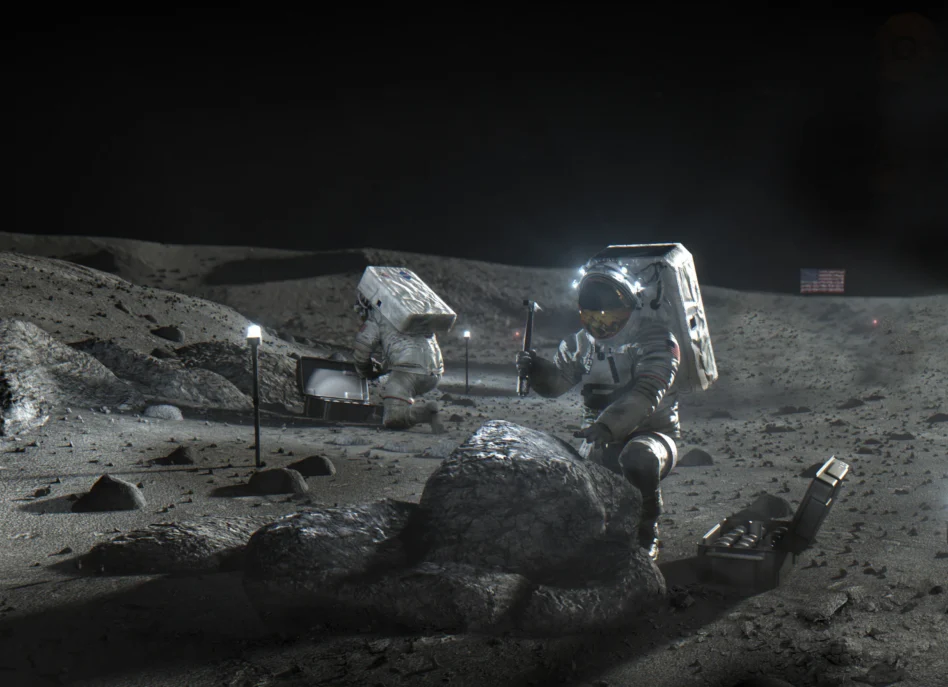
The human body has evolved to withstand many environments, but the Moon isn’t one of them.
NASA’s Human Research Program (HRP) is asking researchers what they want to know as the agency transitions from short-term lunar missions to long-term stays at a Moon Base. The RFI asks researchers to submit questions and ideas to guide the agency’s research planning, and reduce risks to astronauts during lunar and Mars exploration missions.
“We know a lot from work on the International Space Station, but exploration on the Moon will happen at a different scale and with different parameters, and we’re looking forward to exploring those differences,” Michael Stenger, the chief scientist of NASA’s HRP, told Payload via email.
Keep reading