



The White House has offered a look at how space technology figures into its plans for future national security competition.
On Tuesday, the Office of Science and Technology Policy (OSTP) released its National Security Science & Technology Strategy (NSSTS), backing the priorities laid out in the 2025 National Security Strategy.
The new strategy focuses on where S&T competition meets national security. It’s built on four pillars:
- Focusing techno-strategic competition,
- Building technological resilience,
- Accelerating innovation,
- Protecting national security S&T.
The document takes a holistic view of S&T, but space comes up repeatedly as a pillar of US strength.
Pick your battles: The NSSTS backs a shift toward maintaining battlefield advantage through dominance and power projection—and doubling down where the US is already strong. It describes the US as holding “clear technological superiority in the space domain” and stresses the need to detect, characterize, and counter threats to US space interests “from very low-Earth orbit, and through cislunar space.”
Rather than matching an adversary system-for-system, the strategy favors mixing a few high-end platforms with larger numbers of cheaper, sometimes expendable ones, both to deliver capability and to force competitors to overspend on defense. The strategy also warns against competing in ways that adversaries can cheaply counter, which drains US resources without improving security.
Cutting red tape: Regulatory reform and private capital also feature heavily in the plan to strengthen the national security S&T enterprise:
- Faster R&D funding, short-turnaround innovation competitions, and a “fail fast” culture take priority, leaning on Other Transaction Authority agreements and milestone-based, fixed-price contracts.
- Missile Technology Control Regime reforms are mentioned as a way to increase allied contributions; MTCR governs missile and space-launch technology transfer.
- Agencies should steer toward public-private partnerships for early- and mid-stage tech, then toward the private sector as a customer for later-stage development.
On the list: An appendix updates the Critical and Emerging Technologies list, the subset of advanced tech that is—or may become—critical to US national security. The list spans a wide range of space technologies, including:
- Cost-effective, on-demand, and reusable space launch;
- Advanced space vehicle propulsion and power generation;
- Novel spacecraft thermal management;
- Access to, and use of, cislunar space and “novel” orbits;
- In-space aggregation and assembly;
- Biotechnologies for space applications;
- Crewed-spaceflight enablers.

State Department Taps Trio for $5M Space Diplomacy Push
At last week’s second annual US Space Forum, the US Mission to the International Organizations in Vienna launched Project Constellation, a $5M effort to build international space partnerships.

NASA Signs Space Nuclear Pact, Says Moon Base Is Ahead of Schedule
Isaacman gave updates at the White House’s “Science: A New Golden Age Summit.”

DOT Proposes Changes to Part 450 Licensing Rules
On Tuesday, Transportation Secretary Sean Duffy announced five proposed FAA rules aiming to streamline and modernize commercial space launch and reentry regulations.

DOE Announces $400M for Frontier Science Research
The Department of Energy is super-charging research into bleeding edge energy tech.

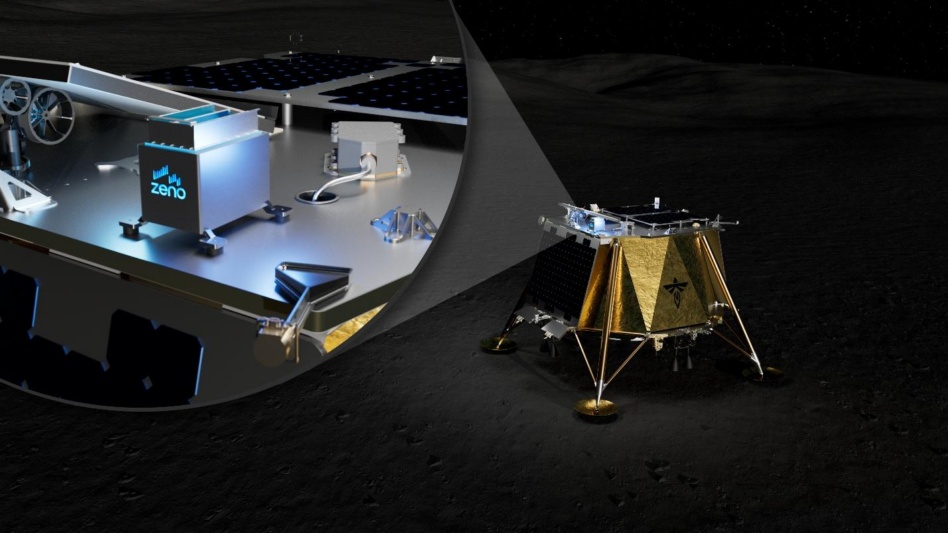
Zeno Power is ready to pull its first all-nighter.
On Wednesday, the nuclear-energy startup announced a commercial payload agreement with Firefly Aerospace ($FLY) to send a radioisotope heating unit (RHU) on a Firefly mission launching to the Moon NET 2028.
The mission—flying on Firefly’s CS-8 CLPS mission—aims to demonstrate Zeno’s ability to keep a 5W RHU—dubbed, fittingly, the “Survive-the-Night Package”—functioning during the blistering-cold, 14-day lunar night.
Keep reading