


The Department of Transportation is Marie Kondo-ing Part 450, keeping only what sparks safety.
On Tuesday, Transportation Secretary Sean Duffy announced five proposed FAA rules aiming to streamline and modernize commercial space launch and reentry regulations. The rules are the first output from the aptly named USDOT Space Policy Administration, Coordination, and Execution—aka SPACE—Task Force.
The proposals take aim at the Part 450 commercial space-licensing process, trying to balance efficiency and flexibility with existing safety standards. Updating the regs is intended to help industry meet the White House’s goal of 1,000 commercial launches and reentries per year by 2030.
Task force: Launched on Sept. 9, the SPACE Task Force is an intradepartmental body that coordinates space policy on behalf of DOT. Its to-do list includes implementing the White House’s National Space Transportation Policy and leading a commercial space transportation strategy.
The newly proposed changes to Part 450 include:
- Consolidating the documentation that operators submit for flight-safety analyses;
- Letting operators size flight-hazard areas by a vehicle’s maximum energy when they rely on physical containment, instead of a full probabilistic risk analysis;
- Exempting descending vehicles from extra lightning mitigation as long as they can’t leave an area from which the public was already cleared;
- Allowing operators to submit license applications electronically;
- Clarifying that far-field blast analyses must cover existing locations, not hypothetical ones.
Redline: The proposals target how operators prove they meet FAA public-risk limits—and some update wording that was construed in a way the agency didn’t attend.
For example, far-field blast analyses model the impact of a rocket explosion’s shock wave on windows miles away. As previously written, some applicants interpreted the rule as requiring them to guess where people might live in the future. The FAA says it always meant existing windows, so its fix is to simply delete a single word—”hypothetical.”
Track changes: Part 450 is no stranger to a rewrite. The rule took effect in March 2021 aiming to streamline launch licensing for commercial companies. But companies claimed it did the opposite, leading to a series of complaints from those using the program. In February 2025, House Science, Space, and Technology Committee leaders asked the GAO to examine whether the agency licenses launches in a timely way.
The White House got involved in August 2025, when President Donald Trump signed a commercial space executive order that directed DOT to “reevaluate, amend, or rescind” the rule. By March, every legacy launcher had moved on to Part 450—which had produced 14 licenses in five years. Tuesday’s proposals are DOT’s first response to that order.
Acting Deputy FAA Administrator Liam McKenna called the proposed rules “just the beginning” of the agency’s push to cut regulatory red tape. Public comments close Nov. 4.
NASA Signs Space Nuclear Pact, Says Moon Base Is Ahead of Schedule
Isaacman gave updates at the White House’s “Science: A New Golden Age Summit.”

DOE Announces $400M for Frontier Science Research
The Department of Energy is super-charging research into bleeding edge energy tech.

Skyrora Shifts Orbital Launch Timeline to 2030
First-mover advantage isn’t all it’s cracked up to be—at least, that’s the thought process for UK launcher Skyrora.
Transporter-18 Tests the Building Blocks of Orbital Data Centers
Few rideshares come with a theme, but SpaceX’s Transporter-18 had one: getting power to compute in orbit.
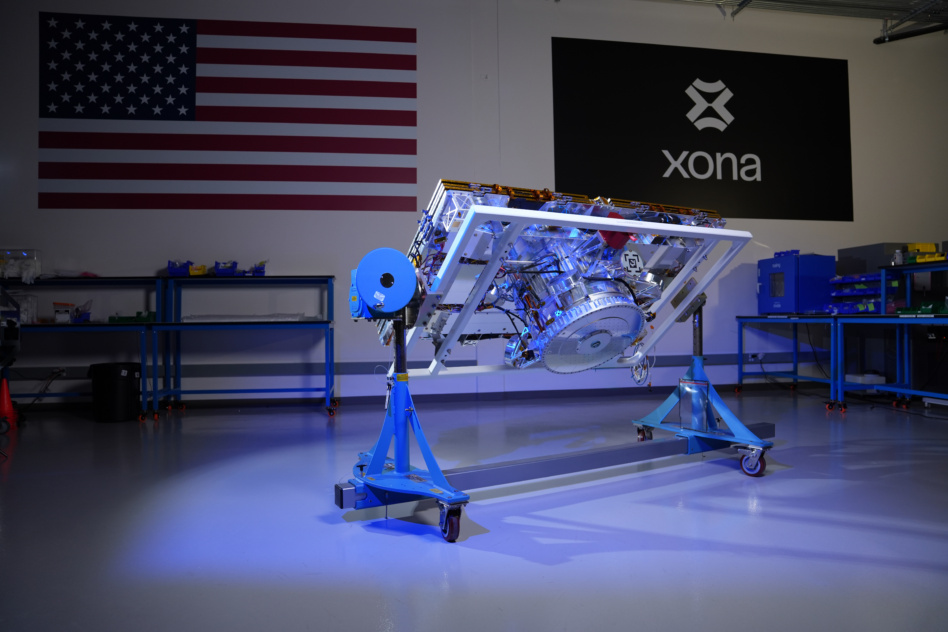
With FCC approval in hand and six sats ready for the pad, Xona is turning to its next challenge: building the next 250.
To do so, the company is making a few key moves, including:
“[Xona has] demonstrated that they can design and build satellites,” Cadariu told Payload. Now the job is to “demonstrate that we can build at scale, as we continue to prepare for having a full constellation providing our service.”
Keep reading