


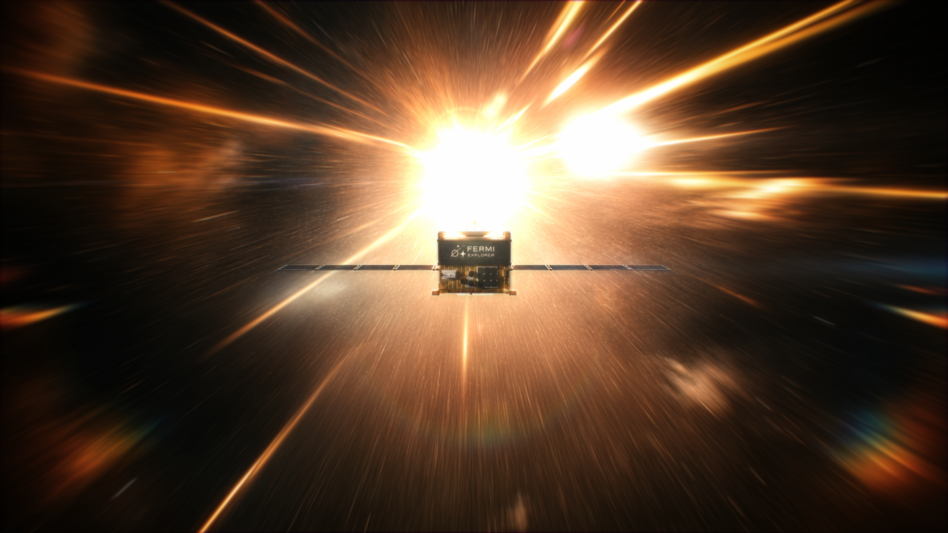
A new non-profit wants to send a spacecraft to a star for less than the cost of a first-season episode of House of the Dragon.
Today, the Starcloud cofounders announced the Fermi Explorer mission—which intends to succeed where Breakthrough Starshot struggled and launch humanity’s first mission to Alpha Centauri by 2029, on a $15M budget.
Starstruck: It began with a conversation. Starcloud CEO and cofounder Phlilip Johnston was speaking to another founder at a conference last year. The founder told Johnston that—after retirement—he planned to spend $1B on an interstellar probe.
“I told him, you could probably do that for like $10 [million] or $15 million and he replied, ‘No, you couldn’t,’” Johnston, now also the Fermi Explorer president and cofounder, told Payload. “I was like, ‘Sure you can. It just depends how long your time frame is.’”
Johnston went searching for proof. “It ended up being a lot harder than I was expecting, to be honest.”
Slow burn: Here’s how the mission is expected to work: After spiraling out from Earth, the spacecraft will spend ~12 years widening its orbit around the Sun, firing at each close pass to gain speed, before a final burn slings it out of the solar system toward Alpha Centauri at ~24 km/s.
Alpha Centauri is about four light-years away from Earth, so while the speed of the spacecraft sounds fast, success will be measured by generational milestones. Fermi breaks the mission down into four primary objectives:
- Aim: Reach at least 99% of the way to Alpha Centauri within 80,000 years.
- Payload: Carry at least a 1 kg, cubesat-sized payload that holds donor, scientific, and artistic payloads.
- Schedule: Launch before the end of 2029.
- Cost: Cost less than $15M to design, build, launch, and operate.
So how does one determine mission success for an 80,000-year mission?
For Johnston, mission success means leaving the solar system on the right trajectory—which will take a more palatable 12 years, and will be faster than either the Voyager 1 or Voyager 2 missions that reached interstellar space in about 35 and 40 years, respectively.
Program manager Garrett Jameson said he will be happy once Fermi makes it to the launchpad.
“The way that this is designed from the get-go is not to be this thing that will balloon into something that never actually leaves the ground,” he told Payload.
Token spend: After months stuck on bus design and trajectory planning, the team turned to Physical Superintelligence or PSI—an AI lab—to build a mission design.
“We’d spent three months and one billion tokens on it [the mission],” Johnston said. “In a week, they [PSI] spent 10 billion tokens on it, and it came up with this ingenious perihelion-pump maneuver that we then validated with the NASA guys.”
AI will do more than mission design. The mission will be mostly autonomous, and the team is prepared to lose radio comms after the first year to keep antenna mass low, relying on retroreflectors to track location.
“It’s basically 12 years of autonomy, and then after it’s left the solar system, then it’s just going,” said Johnston. “Everything powers down, and it just goes.”
Patient capital: As 80,000 years is a bit long for most investors, the non-profit relies on donations to fund the mission.
The team will open the mission to satellite manufacturers for bids, and has already received one proposal from a bus manufacturer for less than $15M.
For $100, donors can have their names etched onto the spacecraft. Fermi also plans to carry a replica of the Voyager Golden Record and 300-character messages from children in every country, solicited through national education ministries.
Next stop, Andromeda: And what do you do after sending off an interstellar spacecraft? You aim for intergalactic.
“For $100M, the next mission after this will be to send a spacecraft to the nearest galaxy, Andromeda, in a billion years,” Johnston said.
Roman Space Telescope Begins Its Journey to L2
The Nancy Grace Roman Space Telescope launched at 7:26 am ET on Sunday from KSC aboard a SpaceX Falcon Heavy rocket, starting its journey to Lagrange Point 2 and beginning a lengthy commissioning period.
ESA taps Aalyria to build deep-space network hub
ESA has tapped Aalyria to build a network-operations center that allows spacecraft to share data reliably across the solar system.
AstroForge Completes its DeepSpace-2 Spacecraft
DeepSpace-2 will aim to demonstrate the company’s ability to rendezvous with an asteroid and set the stage for future asteroid mining missions before the end of the decade.
Opportunities Beyond the Moon Opened by CLPS
NASA said it intends to launch monthly uncrewed missions to the Moon starting next year. That’s good news for more than just Moon-focused companies.

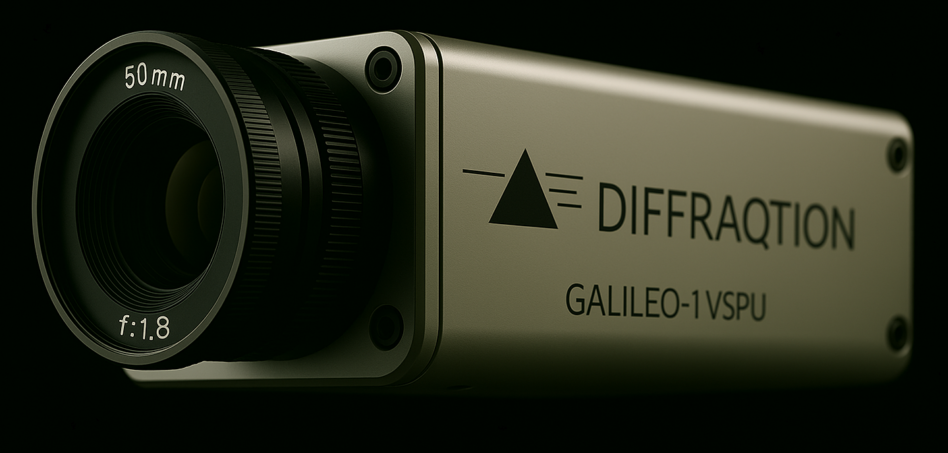
Quantum imaging startup Diffraqtion announced more than $5M in additional funding on Monday, more than doubling its pre-seed from when it first closed in January.
The investments from Lockheed Martin Ventures and Sumitomo Corporation’s Presidio Ventures brought the startup’s total funding to $10M+. Diffraqtion announced a $4.2M pre-seed round in January, which included participation from Ground State Ventures, milemark•capital, Aether VC, and ADIN, plus a $1.5M DARPA SBIR Direct-to-Phase II contract.
Other new investors include SBI US Gateway Fund with Plug and Play, Collaborative Fund, and TekVentures.
Keep reading