



Four major European mobile network operators (MNOs) are joining forces to explore a potential bid for future allocation of mobile satellite service (MSS) spectrum, as part of a strategy to provide the European market with D2D services.
Under the letter of intent, signed this week, Deutsche Telekom, Telefónica, Orange, and Vodafone plan to establish ground network infrastructure across Europe, and partner with an as-yet undetermined satellite operator for the D2D connection.
The deets: The news comes nearly six months after the European Commission proposed a new process for doling out licenses for 2 GHz frequency spectrum—the ideal band for D2D—which would set aside the majority of the total frequency rights to European operators:
- One-third of the 2 GHz MSS band spectrum would be dedicated to government use for critical comms, security, and military applications—and must be provided by an EU operator.
- One-third of the rights would only be available to EU operators for commercial uses, specifically applications like D2D and IoT.
- The final third is open to any satellite operators—EU and non-EU alike.
At a time when competition for spectrum rights are spurring multi-billion-dollar deals, the proposed legislation opens the door for the four-way MNO partnership to access a walled-off portion of spectrum for a European-led D2D service.
It’s not immediately clear which bucket of spectrum rights the four-way MNO partnership is going to bid on, but the wording of the announcement suggests that it could focus on both the security and commercial layers.
“The joint initiative…has a clear ambition: To meet customer demand for universal coverage in underserved areas, strengthen the resilience of public networks, protect critical communications, and support the development of a European constellation,” the release states.
All for one: While the partnership stands to streamline access to D2D services for the four MNOs themselves, a successful bid for MSS spectrum could open the door for MNOs across the region to access the new capability.
“These services would be offered through a model designed to foster competition, reduce market fragmentation, and expand consumer choice across Europe,” the release said.
It’s still early days for D2D connectivity—the first European D2D message was sent just last year—and there’s no shortage of doubt over whether the new capability has a viable market in Europe. For instance, at World Space Business Week in Paris this September, Orange’s SVP of international infrastructure, Stéphane Cugnon de Sévricourt, questioned the size of the market for D2D in Europe—given that 98%+ of the region is already covered by terrestrial networks.
For Deutsche Telekom, the opportunity in D2D lies in the combination of satcom and terrestrial capabilities.
“We see satellite communications as a complementary technology and an important addition to our networks. They can extend coverage, but they cannot replace the capacity, stability, low latency, indoor coverage and reliability of terrestrial networks,” a spokesperson for Deutsche Telekom told Payload via email. “Satellites can extend coverage, while fiber and mobile networks provide the capacity, quality and scalability needed to support these applications.”
Orange and Vodafone declined to comment on the LOI, and Telefónica did not respond to Payload’s request for more details.
The Starlink in the room: The MNO partnership comes at a time when Europe is attempting to wean itself off of its reliance on international partners for satcom connectivity. But that effort is easier said than done.
To date, the lack of available European alternatives in D2D has forced some MNOs—including Deutsche Telekom and Telefónica—to partner with SpaceX Starlink. So, the big, unanswered question remains: Will the new four-way partnership double down on this international reliance—by selecting a foreign satellite operator as its D2D partner—or attempt to back a European-led alternative?
For some outside observers, the partnership is being viewed with “cautious positivity,” ESPI Research Fellow Elisabeth Clemmons told Payload via email.
“The joint venture is European in nature, and of course is aimed at advancing Europe-wide D2D connectivity. But we view this as fulfilling only one of the two core objectives set out in the EC’s recitals,” Clemmons said. “Specifically, it contributes to the ‘provision of mobile satellite services’ in this band, but it does not necessarily ensure actual ‘development of a satellite project’ as described in the regulation proposal.”

Seraphim Space Investment Trust Doubled its Value in 2026
Seraphim’s major holdings—ICEYE, ALL.SPACE, D-Orbit, HawkEye 360, and Xona Space Systems, which together represent more than 75% of the firm’s portfolio—all had a great year, and that success has trickled upwards.

UKSA Taps ClearSpace for Country’s First Debris Removal Mission
The UK Space Agency is dressing up as a waste-management company for Halloween.

Europe’s Space Defenses Fall Just Shy of Weaponization
Europe doesn’t have any weapons in space—but that doesn’t mean the region is comfortable flying around in orbit defenseless.

Skyrora Shifts Orbital Launch Timeline to 2030
First-mover advantage isn’t all it’s cracked up to be—at least, that’s the thought process for UK launcher Skyrora.
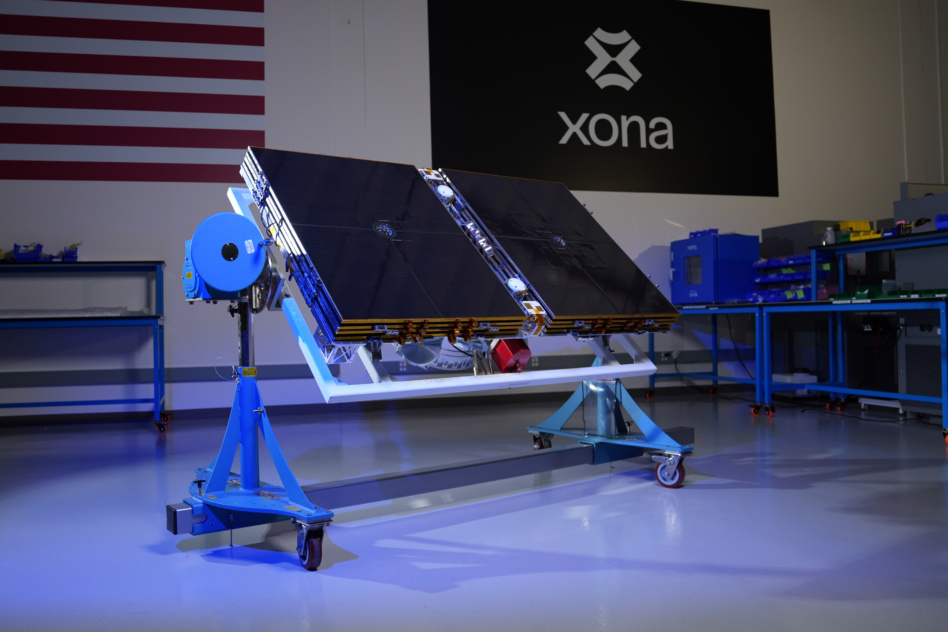
Xona Space Systems announced a $250M Series D today to accelerate production of its Pulsar commercial GPS constellation, which is aiming to begin service in 2027.
Steve Jurvetson, cofounder and managing director of Future Ventures, led the round, which included additional participation from undisclosed new and existing investors. The round, which valued the company at $2.45B, brings Xona’s fundraising to $570M+ since its founding in 2019.
Location, location, location: Xona’s long-term plan is to build a ~258-sat constellation to offer an upgraded commercial alternative to government GPS networks. Xona’s pitch: GPS is a critical capability underpinning much of the modern economy, but publicly funded GPS networks are costly, complex, and too exposed to spoofing and jamming.
Keep reading