


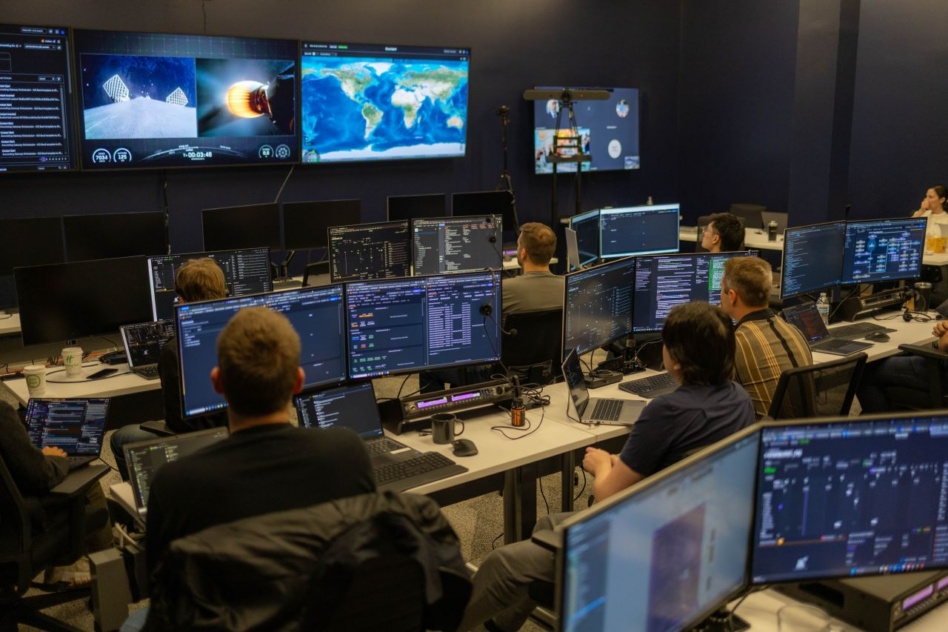
BOTHELL, WA—Portal Space Systems’ Starburst-1 spacecraft has been in orbit for just a couple days, and CEO Jeff Thornburg is already ready to declare the mission a success.
The spacecraft launched on Tuesday aboard SpaceX’s Bandwagon-5 rideshare mission. After launch, Starburst separated from the rocket, began communicating with the ground, and unfurled its solar arrays to charge up its batteries. That’s the moment Thornburg said he and the 60+ person Portal team could relax—at least a little bit.
“The relief came in stages,” he said. “The last big one came a couple hours after [launch] when we found the spacecraft. It was where we thought it was, it was communicating, and then it was like, ‘Oh my gosh, this has happened.’”
Second act: Thornburg is proud of what the team has accomplished so far on Starburst’s first flight, noting that many inaugural spacecraft fail due to power issues, communications troubles, or even just an inability to locate the satellite after separation. But Starburst’s mission is far from over.
Thornburg said the spacecraft is expected to fire up its thrusters for the first time “over the next few days,” and the team will take Starburst through a series of propulsive maneuvers.
“I feel like 80% success now,” he said. “I call it a success right now mainly because we made it through launch, we made it through early checkouts…and we have complete control and confidence in the system right now. The other 20% is going to come with the activation of our ammonia-propulsion system, and when we do that, I’m going to call it 100% mission success. But honestly, to get this far this fast, I’m tempted to call it 100% mission success now.”
Customers aren’t waiting for the mission to be declared a full success. Thornburg said three prospective commercial customers in the final stages of negotiations for Starburst are encouraged by the mission so far—and that a flood of demand has poured in over the past 48 hours since the launch.
Ride along: Thornburg acknowledged that full success also means Portal’s customers have a positive mission outcome. Starburst-1 has three payloads:
- An attitude-control system from Zenno Astronautics to help orient the spacecraft using Earth’s magnetic field.
- A camera from TRL11 to provide live video of the spacecraft, plus edge processing capabilities.
- Atomic-6’s Space Armor tiles, to protect the spacecraft from debris impacts.
It’s the first spaceflight for the Space Armor. But Atomic-6 CEO Trevor Smith said the company won’t know how well the armor performed until it gets hit with debris, which can be captured by the on-board camera.
“We’re crossing our fingers hoping to get hit,” Smith said. “If we can get the impact on camera and check the telemetry, we can say it worked in the operational environment.”
Holy ground: The Starburst that’s in orbit was built in Portal’s previous 6,000-sq.-ft. facility. The future fleet will be built in the company’s new 65,000-sq.-ft. manufacturing space that opened in August.
While Portal will use the space to build hardware that will reach for the heavens, the building has a history of searching for heaven in a different way—as a former mega-church.
Remnants of the building’s previous life remain. Thornburg shows me a mostly empty room that will host future avionics and flight software testing on flat sats. On the wall, kids’ drawings are still tacked up, with colorful scribbles that say “Jesus is coming back soon” and “the Lord is my shepherd.”
The new facility will be designed to pump out 28 spacecraft a year—16 Starbursts, and 12 Supernovas, Portal’s larger, more powerful maneuverable spacecraft. The facility also houses a mission control, where Portal’s team is actively tracking Starburst in orbit—the line of slippers by the door a tangible reminder of the long overnight shifts the team has been pulling after the launch.
The modern building, parts of which are still under construction, is still a work in progress. Thornburg lays out his vision for the path spacecraft will take across the manufacturing floor—now bare—including in-house testing capability by the back wall, and a clean room for customer integration.
In a nod to employee comfort, there are lots of windows to let in natural light to fight off seasonal depression from the Pacific Northwest’s cloudy weather. While much of the hardware still needs to be moved to the new facility, the branding is there in full force, including a fresh coat of blue-painted letters denoting the various rooms—all with names themed around Star Trek.
There’s the Captain’s Quarters (Thornburg’s office), Excelsior (a Starfleet starship) and Galileo (a shuttlecraft assigned to the USS Enterprise). But my favorite room is the Holodeck, a nod to the Star Trek facility that can become anything. The multipurpose room will host social gatherings and all-hands meetings, Thornburg tells me. But it’s built for more than just the employees.
Near the entrance is a large orange wrap around tube slide—the kind you’d find at a playground, or McDonald’s PlayPlace. It’s a relic of the mega-church’s nursery that Thornburg said he told construction crews to leave to be used by young-at-heart employees—and the actual children of those building Portal’s spacecraft.
“They may not know what their parents do, but they know that mom or dad has a cool slide at work,” Thornburg said.
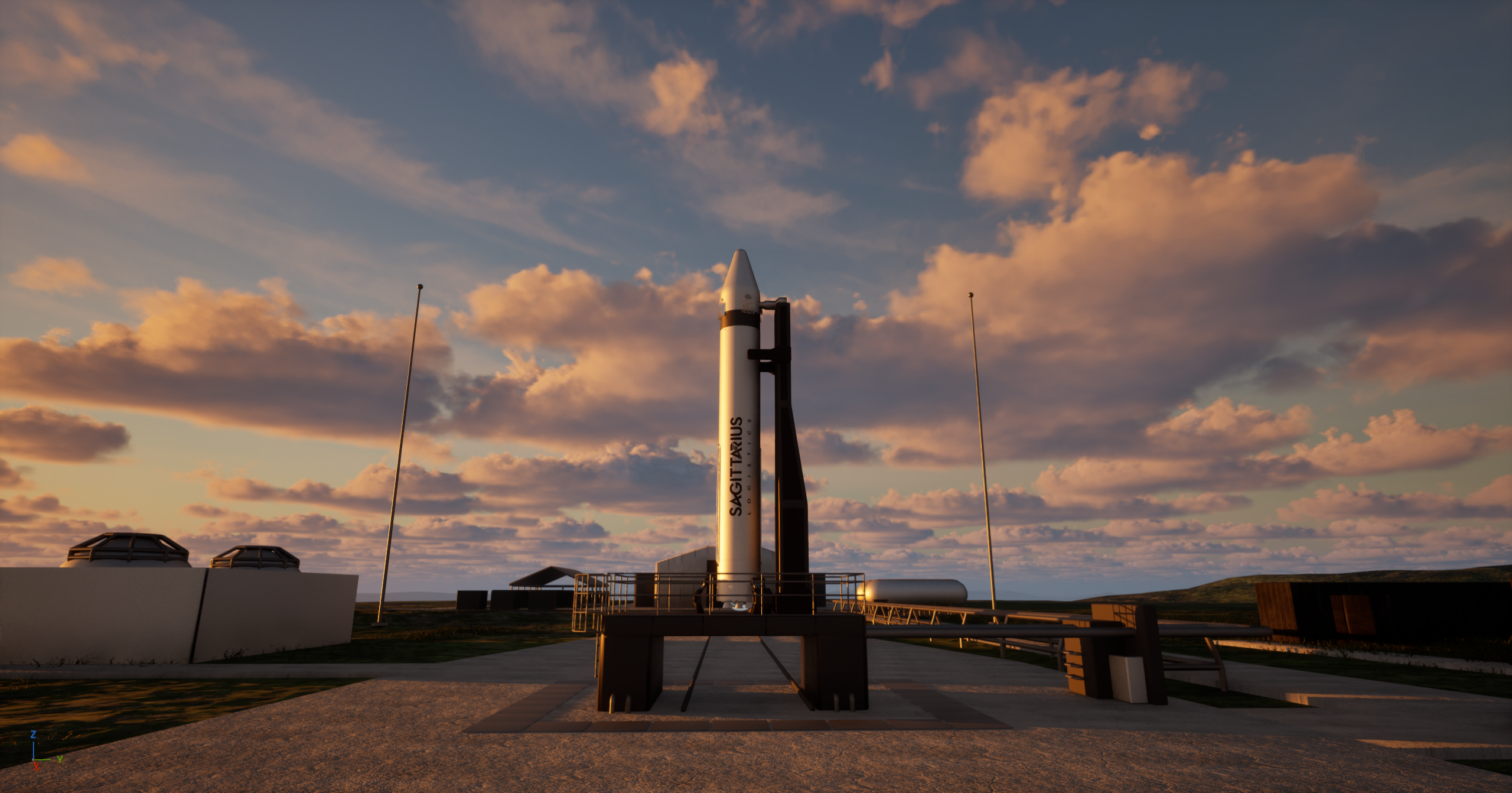
Exclusive: Sagittarius Logistics Raises $1.2M to Build Inland Launch Capabilities
There’s a new launcher in town.
Gama Raises €15M Seed to Boost Europe’s Solar Array Supply Chain
Europe continues to stack the building blocks for a more robust space economy.

NeuralSat Raises €2.9M to Build Orbital Data Relay Network
The Autobahn is coming for in-space data traffic.
OwlO Cloud Emerges from Stealth to Build European Orbital Cloud Network
OwlO Cloud is planning to have at least 10 spacecraft—orbital cloud nodes (OCN)—operational by 2030.

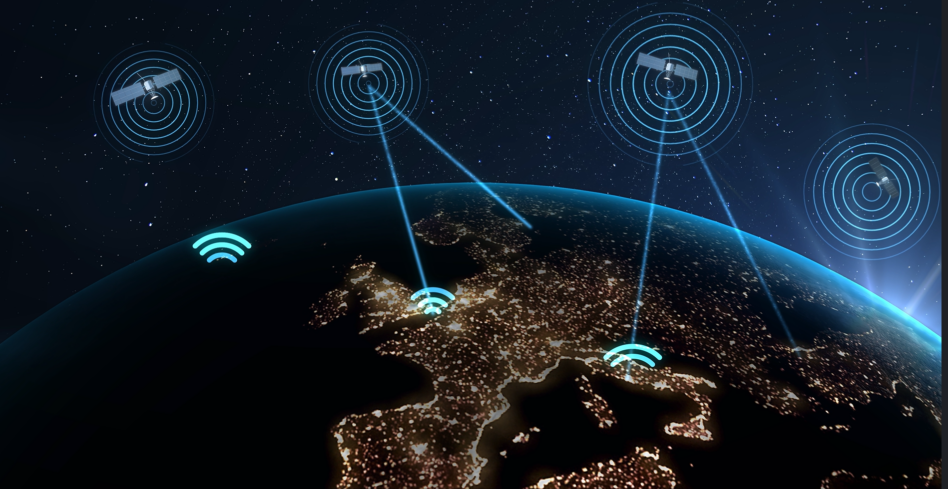
Four major European mobile network operators (MNOs) are joining forces to explore a potential bid for future allocation of mobile satellite service (MSS) spectrum, as part of a strategy to provide the European market with D2D services.
Under the letter of intent, signed this week, Deutsche Telekom, Telefónica, Orange, and Vodafone plan to establish ground network infrastructure across Europe, and partner with an as-yet undetermined satellite operator for the D2D connection.
The deets: The news comes nearly six months after the European Commission proposed a new process for doling out licenses for 2 GHz frequency spectrum—the ideal band for D2D—which would set aside the majority of the total frequency rights to European operators:
Keep reading