

When your phone dies on Earth, you find the nearest outlet. On the Moon, someone has to build the outlet first.
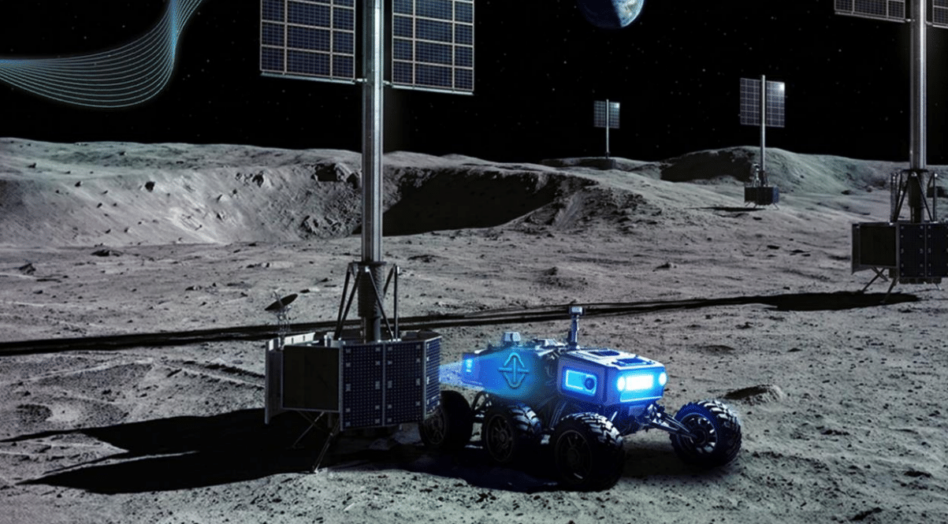
NASA took a first step towards this goal at its Nov. 7 Moon Base update during MAX POWER, tapping three companies—Redwire, Blue Origin’s Honeybee Robotics, and Yank Technologies—to build the pieces of a Mini-Communications and Solar Tower (miniCAST).
- Redwire will generate power with its roll-out solar arrays (ROSA).
- Honeybee Robotics will store it.
- Yank Technologies will supply wireless power transfer hardware.
Today, Yank Technologies shared more about its role in the project, including that it will deliver flight hardware to power payloads such as rovers.
Marshall Space Flight Center will assemble and test the pieces before they head to the lunar surface. NASA expects a separate solicitation for fully integrated power systems in early 2027.
Common enemy: Regolith is one of the biggest obstacles to building on the Moon.
“[The] number one enemy on the Moon…is not China, it’s regolith,” Redwire President of Space Mike Gold told Payload. “It will attack our people. It will attack our machines.”
The abrasive electrostatic dust sticks to nearly everything, including the exposed metal terminals on power connectors, eventually rendering hook ups unusable. “If you need to unplug something, you could only plug it back in right now several times with regolith accumulation,” Yank Technologies CEO Josh Yank told Payload.
Cutting the cord: Brooklyn-based Yank Technologies builds wireless chargers mostly for automakers, whose factories fight dirt on charging pads. Yank saw the Moon as “a really dusty and dirty factory, but like to the nth degree,” and the company went to work on solutions:
- Contactless plates send power across a small gap, so a rover can charge without plugging in.
- Yank’s first plates delivered up to a kilowatt at better than 80% efficiency, according to the company.
- Dust-tolerant connectors carry up to 6 kW over cables with insulated ends, which Yank likened to an electric toothbrush.
For miniCAST, Yank is adapting the plates that have so far only been used terrestrially. The company is also talking with other primes about using its hardware on their lunar missions, and it’s planning to raise more money and expand manufacturing to meet its new space goals.
“We think we could be a very core piece, not just for a mission, but arguably for every mission,” Yank said.
Roll with it: Redwire’s ROSA arrays already power the ISS. On the Moon, they will be able to retract during launches and landings to dodge regolith kicked up by engine plumes, then roll back out under the $40M award. Gold said Redwire also plans on including panel-cleaning scrubbers and will handle power distribution to future rovers and habitats.
“Ironically, many of the benefits that we had done for Earth orbit are actually more important than ever on the moon,” Gold said.
Exclusive: Verde Technologies Will Test Perovskite Solar Cells on the ISS in 2027
Solar cell manufacturer Verde Technologies signed a contract with NASA to send its lightweight, ultra-thin perovskite solar cells to the ISS.
Atomic-6 Wants to Shield Astronauts Against Untrackable Debris
Atomic-6 built Space Armor to shield satellites from debris too small to track. Now, it’s exploring whether the same tiles could protect astronauts on spacewalks.

Sophia Space Tests Orbital-Compute Software on Kepler Constellation
Sophia Space has deployed its Sophia Orbital Operating System (SOOS) across multiple Kepler Communications optical-data-relay sats.
Exclusive: Inflection Space Systems Books First Orbital Mission
Inflection Space System’s first mission, Pax, will launch NET 2028 on a rideshare booked through Exolaunch.
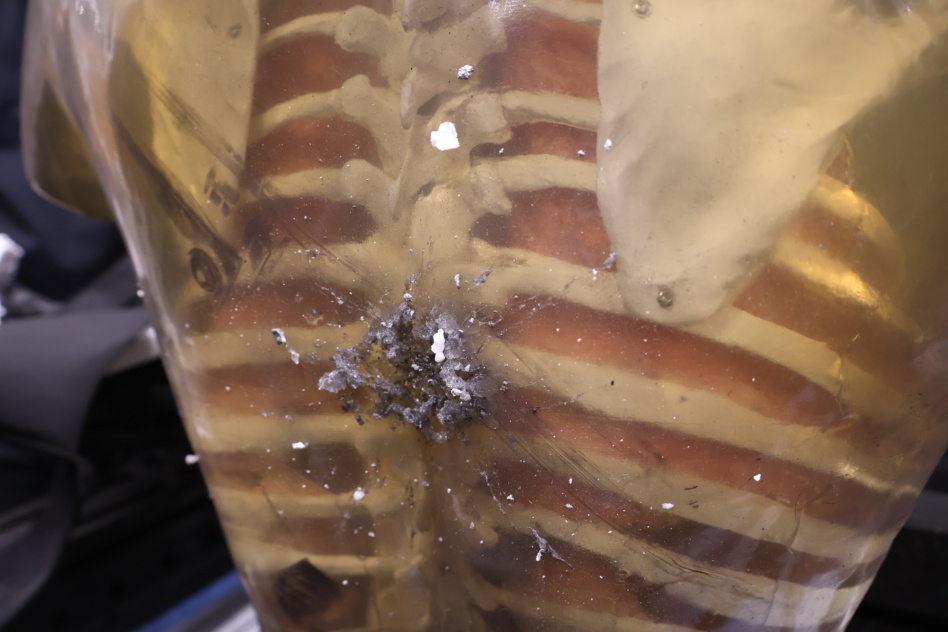
What’s the scariest thing about space exploration? Probably the snakes. The second most frightening thing? Untrackable debris.
Atomic-6 built Space Armor to shield satellites from debris too small to track. The startup released test results today exploring whether the same tiles could protect astronauts on spacewalks.
“Building Space Armor, we want to protect assets in space,” Atomic-6 CEO Trevor Smith told Payload. “I can’t think of a higher value asset than a human life.”
Keep reading