


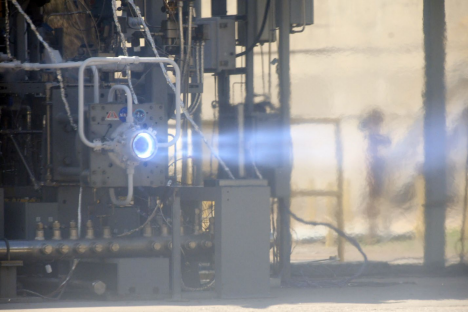
Astrobotic Technology reportedly broke a hotfire record on a more efficient rocket engine designed for cislunar and logistics missions, the company announced today.
The continuous burn of 300 seconds (five minutes) with one of their two Chakram engine prototypes was one of several tests the company conducted at NASA’s Marshall Space Flight Center in Huntsville, AL.
The company says the Chakram design—a rotating detonation rocket engine (RDRE)—could cut costs and increase capacity on future missions—especially cislunar ones.
Supersonic spin: RDREs get their thrust by generating supersonic detonation waves that whip around the outer body of the engine, which is shaped like a ring. The controlled detonation could boost engine efficiency up to 15% while also reducing engine size, according to Astrobotic.
While the tech is not yet space-proven, the terrestrial engine demo worked “flawlessly,” Travis Vazansky, Astrobotic’s RDRE program manager, said in a statement. The NASA-supported hotfires were done on a budget of less than $1.5M.
To the Moon? Astrobotic received NASA CLPS contracts to launch spacecraft to the Moon using the company’s Peregrine and Griffin landers.
- The company’s first Moon attempt, Peregrine Mission-1, reentered Earth’s atmosphere in 2024 after several issues prevented a lunar landing attempt.
- Astrobotic will try again this year with its Griffin Mission-1, which will carry payloads including Astrobotic’s FLIP rover, and OIP Sensor Systems’ LandCam-X for ESA.
The company’s RDRE doesn’t have a flight date, but Astrobotic said it eventually plans to add the engine tech to Griffin, two reusable rockets called Xodiac and Xogdar, and a future OTV.
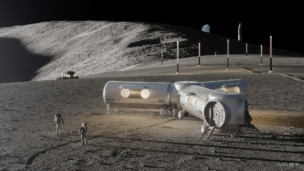
Vast Announces New Lunar Programs Division
Vast announced a Lunar Programs division, building on its commercial space station and satellite development work to support NASA’s Moon Base ambitions.
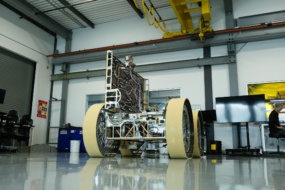
Exclusive: Astrolab, Interstellar Mapping Hunt Lunar Water
A new partnership between Astrolab and Interstellar Mapping is one giant leap for mapkind.
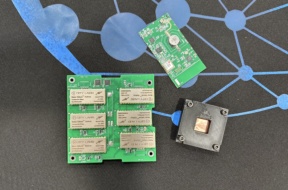
Exclusive: City Labs Plans Second Nuclear Demo
Following the success of City Labs’ first nuclear-powered betavoltaic demo, City Labs is planning a demo of its radioisotope heating unit.
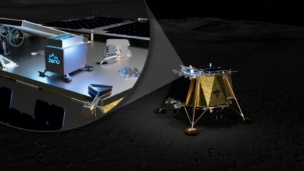
Zeno Power Books its First Nuclear Mission to the Moon
Zeno Power is ready to pull its first all-nighter. On Wednesday, the nuclear-energy startup announced a commercial payload agreement with Firefly Aerospace ($FLY) to send a radioisotope heating unit (RHU) on a Firefly mission launching to the Moon NET 2028. The mission—flying on Firefly’s CS-8 CLPS mission—aims to demonstrate Zeno’s ability to keep a 5W…


This content is restricted to subscribers
The post Orbital vs. Terrestrial Data Center Cost Analysis appeared first on Payload Pro.
Keep reading