

Beyond Reach Labs, the Brooklyn, NY startup developing a new way for spacecraft to deploy lengthy solar arrays, unveiled its first commercial-deployment system today—called Flarewing—which is expected to hit the market early next year.
The company, which raised a $10M seed round in July, has been developing a patent-pending solar-array-deployment system designed to fold flat during launch, and maintain its rigidity after deployment—thus allowing spacecraft to carry larger solar arrays.
Goldilocks choice: While much of the Flarewing technology is still under development, Beyond Reach Labs is planning three different sizes to fit a range of customer spacecraft:
- Flarewing-S has a total mass of 9kg. It stows as small as 1m long, 25cm wide, and 8cm tall, but unfolds to a maximum area of 30 m2, allowing it to gather up to 8 kW of power.
- Flarewing-M has a total mass of 29kg. Its storage size is about 3x the Flarewing-S, with only 2 cm extra height. Its maximum deployed area stands at 180 m2, for a max power of 55 kW.
- Flarewing-L is significantly larger, with a total mass of 109 kg. However, it still packs as small as 6m long, by 29cm wide, and 13cm tall. It deploys to 625 m2, and can offer spacecraft up to 200 kW of power.
Beyond Reach Labs expects to ground-qualify the Flarewing-S by the end of the year, and start integrating it onto customer spacecraft in early 2027.
Flarewing-M is expected to be ground-qualified in Q2 2027, and Beyond Reach Labs hopes to hit the same milestone with Flarewing-L before the end of next year.
Always be closing: With the new products, Beyond Reach Labs is positioning itself to cash in on the growing ambitions of space companies that are proposing increasingly power-hungry missions, such as in-space data centers and commercial space stations, which require hundreds—if not thousands—of Watts to operate.
While there’s no shortage of companies developing tech to try to solve the in-space power shortage, Beyond Reach Labs’ approach focuses on making the most of the immovable limitations of launch vehicles.
“From the outset of us coming up with this architecture, we were thinking, basically, height becomes the constraining dimension,” Beyond Reach Labs’ CTO Pele Collins told Payload. “As more people talk about constellations, then it just becomes, ‘How do you pack as many satellites into a single launch as possible?’”
Inside Starburst’s First Flight, and Portal’s New Bothell Office
“I feel like 80% success now,” CEO Jeff Thurnburg said. “But honestly, to get this far this fast, I’m tempted to call it 100%.”
Exclusive: EraDrive Lands $13M DoD Award For Autonomy Module
EraDrive won a $13M DoD award, under which the Space Force will buy an undisclosed number of the company’s Era-Node vision-based autonomy modules.
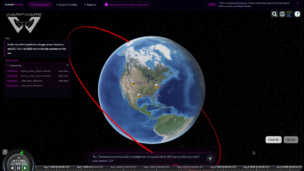
WarpWare Closes Pre-Seed to Bring Agentic Tools to Flight Software
CO-based WarpWare closed its $1.2M pre-seed round today to expand what it calls an AI-enabled engineering platform for space missions.
RATLOG Wants to Cut ~90% of a Rocket Engine’s Parts
The heavy-lift rocket startup debuted on Y Combinator as part of the Fall 2026 batch.


The hottest real estate for the data-center business right now may just be the one place with no neighbors to object.
Starcloud has raised a $250M extension to its March $170M Series A funding round. With the new funding, announced Friday, the orbital-data-center company has now raised $450M, at a valuation of $2.3B.
Manhattan West—which has invested in other orgs such as SpaceX, Relativity Space, and Axiom—led the extension, which also included participation from Benchmark (which led the initial Series A), EQT, Soma Capital, NFX, SevenSevenSix, Cedar Capital, Goanna Capital, and Standard Capital. NVIDIA and Cisco also participated in the round, suggesting a role for terrestrial-infrastructure providers in the orbital infrastructure market.
Keep reading