


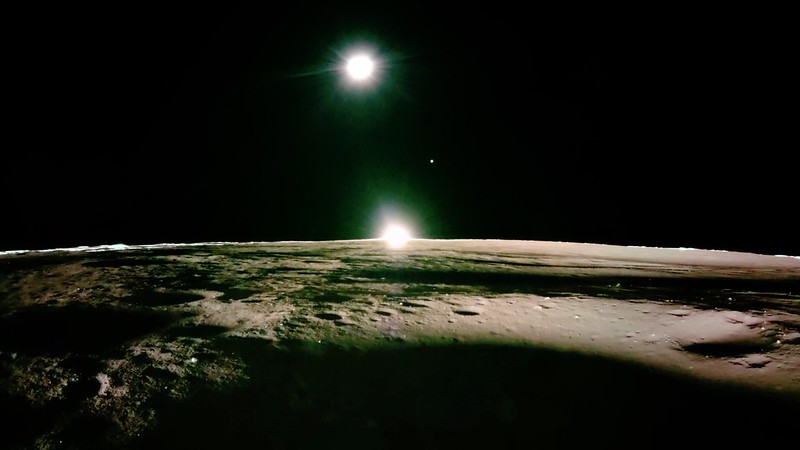
Firefly’s successful Moon landing has caught the interest of space startups looking to build their businesses on the lunar surface, CEO Jason Kim said Tuesday.
“People have business models and revenues they need to generate,” Kim said, adding that he’s been getting “a lot of inquiries” from potential commercial customers after Blue Ghost’s flight. “They can depend on Firefly to take a pragmatic approach and stick the landing and get multiple days of surface operations.”
Blue Ghost’s first flight was funded by NASA’s Commercial Lunar Payload Services, or CLPS, program, but companies are already talking about heading to the Moon for everything from lunar mining to building power grids. Those industries could allow Firefly to ramp up its mission cadence to multiple lunar flights every year, Kim predicted.
The highlights: Kim’s comments came during a press conference with NASA during which both entities took a victory lap following the mission, which wrapped up this week when Blue Ghost entered the darkness and extreme cold that comes with lunar night.
During the 14+ day mission, Blue Ghost:
- Allowed NASA to collect data for longer than expected on all 10 of its science payloads
- Captured images of a lunar eclipse and a lunar sunset
- Made history, setting the record for the longest commercial mission on the Moon
The success could lead to a bigger payday for Firefly—Adam Schlesinger, the CLPS project manager at NASA Johnson, said the contract includes several options tied to additional money if certain milestones are met, and while the teams are still evaluating the end result, Blue Ghost appears to have checked a lot of boxes.
What’s next: NASA is looking to expand the success of the CLPS program throughout the solar system, including using commercial tech to send science payloads to Martian orbit and, eventually, the surface of the Red Planet, said Joel Kearns, NASA’s deputy associate administrator for exploration.
When that happens, expect Firefly to toss its hat in the ring.
“I don’t see anything that precludes us doing Moon missions and Mars missions,” Kim said.

Nebex Partners with Thrusters Unlimited to Unlock $700M for Mexico’s Space Ecosystem
The capital will fund EO, telecoms and other strategic capabilities, according to Nebex.

Exclusive: Meridian Space Spins Out from SpinLaunch
“Meridian will carry forward the satcom infrastructure business… SpinLaunch will continue to build on its vision for a lower-cost approach to launch, with further applications in hypersonics to support the Golden Dome program and in the lunar economy,” Meridian Space CEO Massimiliano Ladovaz told Payload.
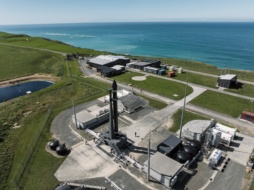
Rocket Lab CFO Adam Spice Predicts More M&A Deals on the Horizon
Iridium shareholders voted overwhelmingly to approve the company’s acquisition by Rocket Lab. According to Rocket Lab CFO Adam Spice, there’s more M&A on the horizon.
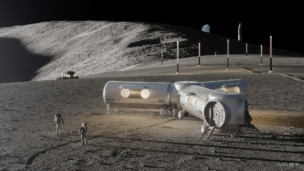
Vast Announces New Lunar Programs Division
Vast announced a Lunar Programs division, building on its commercial space station and satellite development work to support NASA’s Moon Base ambitions.

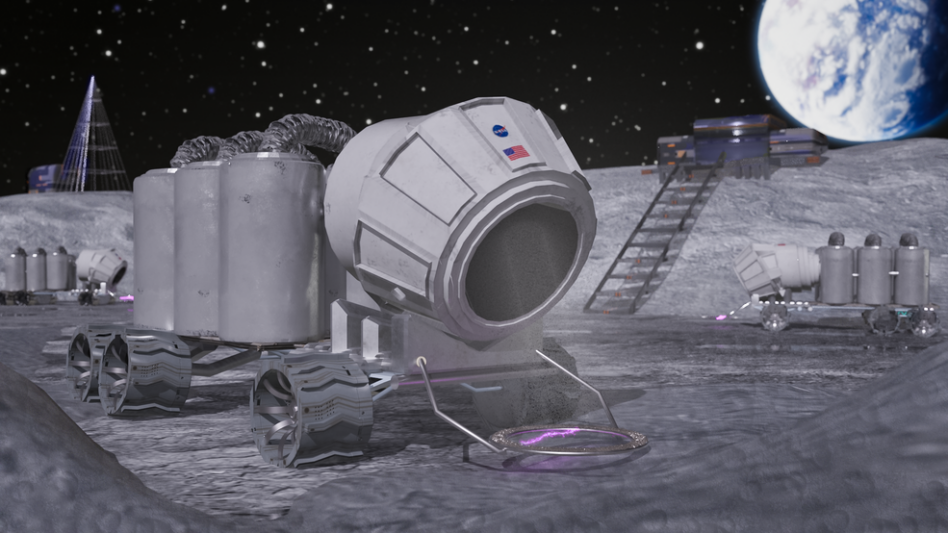
There are two global space races happening today. One is about long-term sustainable exploration with flags and footprints, and the other is about who has the strongest space industrial base. For now, the US commercial space industry remains firmly in the lead. Two American companies recently landed on the Moon, proving once again that the commercial space industry can accomplish feats once left only to governments.
But, as industry develops and deploys its most innovative capabilities—from commercial space stations to asteroid mining missions—there is no US government entity clearly empowered to approve such commercial activities, threatening the future of US leadership in space.
How we got here: For more than a decade, industry and policymakers have proposed and debated legislation to endow various federal agencies with the authority to authorize novel space activities. We have watched numerous proposals, frameworks, bills, and ideas come and go with little progress made towards resolving this issue.
Keep reading