

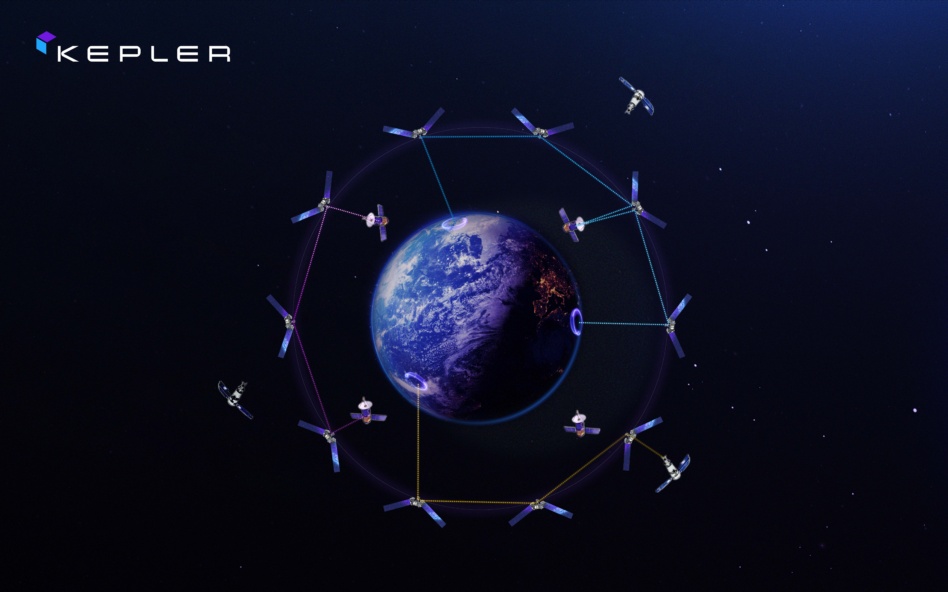
After years of development and demonstrations, optical communications are reshaping how the space industry approaches mission architectures. Kepler’s optical space data relay constellation gives government and commercial customers opportunities to connect previously isolated systems, strengthen resilience, and move mission data more quickly and efficiently.
For Caitlin Marsh, the recently appointed president of Kepler U.S., that progress marks a turning point.
“The industry has been discussing and planning for optical connectivity for a long time,” Marsh said. “Kepler can do that now; it is real and proven.”
With its first operational optical relay constellation in service and additional launches secured, Kepler is helping customers move from evaluating optical connectivity to reliably integrating it into their missions.
The Interoperability Challenge
Space architectures have historically developed around individual missions, acquisition programs, and operational requirements. Government agencies and commercial operators invested in systems that addressed specific needs.
The result is an ecosystem of highly capable but disconnected systems. Marsh sees this fragmentation as a significant obstacle to faster decision-making.
“Despite advances in technology, operators still have a long data path from collection to the decision-maker,” she said. “The lack of interoperability has historically made the timeline and data movement longer than it should be.”
Solving the problem requires more than a software update. Organizations must address hardware compatibility, communications standards, and different operational requirements across systems.
Kepler helps bridge those gaps with interoperable infrastructure that supports multiple customers and complements existing investments.
Kepler’s network supports Space Development Agency-compatible optical communications terminals, and is designing its future satellites to also support emerging standards from the European Space Agency, creating opportunities to exchange data across participating constellations.
The objective extends beyond moving more data. It’s about shortening the path between collection and operational use.
Resilience by Design
Interoperability also gives operators more ways to maintain connectivity when disruptions occur.
Spacecraft face equipment failures, space debris, radiation, and potential interference from adversaries. In architectures that depend on limited communications paths, losing a critical node can interrupt data delivery.
Interconnected networks provide alternative routes.
“If operators lose a node in their communications path, multiple interconnected constellations can allow data to be dynamically rerouted across the network and still reach the end user,” Marsh said.
“It’s what we do in terrestrial communications,” she said. “Now, we’ve taken those lessons and implemented them into our space architectures.”
The implications extend beyond national security. Consider wildfire monitoring. Satellite observations can help emergency managers track changing fire conditions, but those observations lose value when information arrives too late to inform a response. More persistent connectivity delivers updates sooner, while interoperable networks offer alternative paths if a communications link becomes unavailable.
The example illustrates a broader principle: The infrastructure that rapidly delivers space-based information is as important as the sensors that collect it.
From Connectivity to Operational Value
Kepler’s onboard computing capability complements optical connectivity, allowing operators to process and prioritize information closer to where it is collected.
Rather than transmitting entire datasets for ground-based analysis, onboard processing can identify and prioritize the most valuable information for delivery to the end user.
“You’re decreasing the timeline between collecting data, answering your intelligence question or addressing your operational need, and then delivering that data to the end user in seconds,” Marsh said.
This approach can eliminate processing steps, reduce data transmission volume, and make more communications capacity available for other missions.
It also gives customers a way to evaluate performance.
Marsh said operators have long requested lower latency without necessarily defining quantitative requirements. Now that operational optical networks exist, customers can begin measuring the benefits and determining what performance future missions should demand.
Scaling Infrastructure for U.S. Missions
For Marsh, who joined Kepler as president of its U.S. operations in October 2026, the immediate priority is helping government and commercial customers put the company’s operational infrastructure to work.
That means demonstrating how interoperable optical connectivity can strengthen existing architectures, and helping customers incorporate those capabilities into future mission planning. Kepler partners with customers to build infrastructure that supports and amplifies their existing investments.
The company recently selected Rocket Lab’s Neutron for its first dedicated launch, scheduled no earlier than 2028. Separately, Maverick Space Systems secured capacity for 10 Kepler Tranche 2 satellites aboard Portal Space Systems’ Motus Via Sol mission, targeted for mid-2028 on a SpaceX Falcon 9.
These missions will expand Kepler’s optical relay network with additional communications capacity, onboard computing, and hosted payload capabilities. The next-generation satellites will support optical data rates of up to 100 Gbps.
The launch commitments also give prospective customers greater visibility into Kepler’s planned growth as they evaluate their own deployment schedules and infrastructure needs.
Customers are leveraging Kepler’s hosted payload capabilities as an opportunity to test or deploy new technology without having to develop and launch a dedicated spacecraft.
From Capability to Expectation
The space industry has relied on radio-frequency communications for decades. RF technology is familiar, proven, and deeply integrated into existing systems. Optical communications add substantially greater capacity and new opportunities to connect space systems directly. “We are helping the larger space ecosystem build trust in on-orbit optical technology,” Marsh said.
As customers gain experience with optical connectivity and on-orbit compute, they can begin defining new expectations for performance, interoperability, and resilience. Those expectations, in turn, can influence how organizations design and procure future space systems.
Marsh also sees opportunities that extend beyond today’s established applications. Customers are already exploring different combinations of connectivity, computing, and hosted payload services, and she expects operational experience to reveal uses that neither Kepler nor its partners have fully anticipated.
“We are on the leading edge of optical relay in space and there are endless future applications that we haven’t even considered yet,” Marsh said.
For an industry accustomed to designing missions around communications constraints, optical connectivity creates the potential to move beyond those limitations and design missions around what is operationally possible.
To learn more, visit kepler.space.

The Lunar Economy Could Be Worth $566B by 2050. First, We Have to Build It.
The return to the Moon is an infrastructure story, and Deloitte has created numbers to back it up. The number: A new report from Deloitte, Building the Lunar Economy: How a Sustained Presence on the Moon Could Transform Life, Industry, and Infrastructure on Earth and Beyond, puts the lunar economy’s cumulative economic value through 2050…
The Commercial-First Shift in National Security Space
For decades, the model for building national security space systems was relatively straightforward. The government defined a mission, established requirements, funded a spacecraft designed specifically to meet them, and ultimately owned and operated the resulting capability.

The New Middle Ground in Spacecraft Development
For years, the commercial space industry has focused on making spacecraft more affordable and accessible. Today, a new wave of customers want to build their own hardware to gain full ownership of the systems that define their mission.
A Faster Path to Orbit: How Hosted Payloads Are Changing Access to Space
Historically, deploying a new capability in space required significant time, investment, and technical expertise. Companies often had little choice but to build nearly everything themselves—from spacecraft and payload integration to ground infrastructure and mission operations. Today, the space industry offers a different model: hosted payloads. “We’re seeing companies looking for the fastest, most economical way…

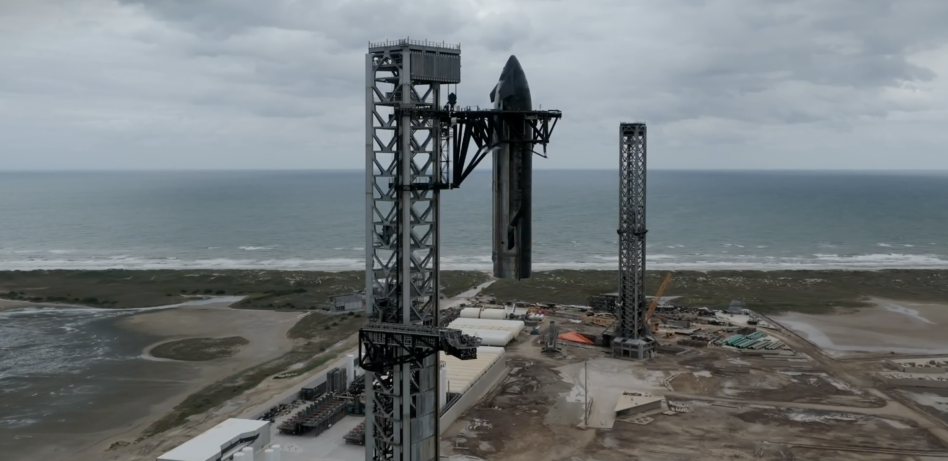
The answer to life, the universe, and everything is 42. Turns out, it was also the answer to catching a Starship, too.
SpaceX made history on Saturday, recovering a Starship upper stage from orbit for the first time. The chopstick arms of the Mechazills launch tower plucked Ship 42 out of the air in Starbase, Texas at 4:20pm ET.
Flight 15 lifted off from Starbase at 5:47pm ET Friday, deploying its payload and completing 14 orbits before heading home.
Keep reading