

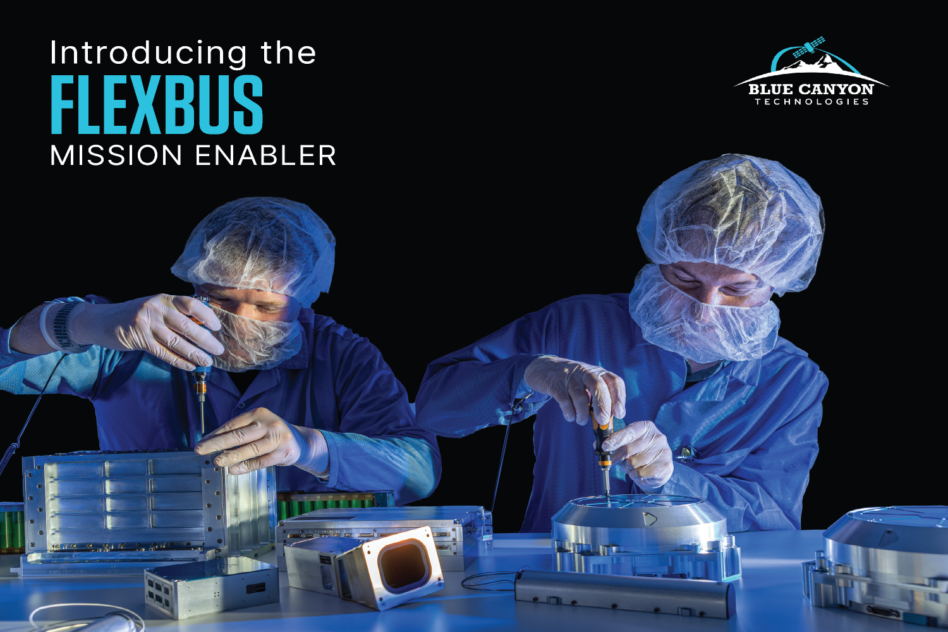
For years, the commercial space industry has focused on making spacecraft more affordable and accessible. Today, a new wave of customers want to build their own hardware to gain full ownership of the systems that define their mission.
Instead of choosing between buying a complete spacecraft bus or designing one from scratch, organizations are looking for a middle ground: a proven technical foundation they can build upon.
Blue Canyon Technologies, part of RTX’s Raytheon business, believes that middle ground represents the next stage of commercial space development.
Flexibility is the Mission Enabler
The first generation of commercial spacecraft buses solved an important problem. Instead of designing every subsystem from the ground up, organizations could purchase an integrated platform and focus on launching their payload.
For many missions, that remains the right approach.
But as spacecraft become more specialized, that model can introduce a different challenge. Engineering teams may find themselves adapting their payload to fit an existing platform, rather than designing the spacecraft around the mission itself.
Building a custom bus restores that flexibility—but at a cost.
Creating a new spacecraft architecture requires years of systems engineering, flight software development, manufacturing preparation, supplier qualification, and testing before a mission ever reaches the launch pad.
“We see a lot of pressure to go fast,” said Blake Cardwell of Blue Canyon Technologies. “But the system still has to work and perform on orbit.”
Rather than asking customers to choose between purchasing a complete spacecraft or developing every subsystem internally, Blue Canyon’s new FleXbus subsystem product provides a flight-proven technical foundation customers can integrate into their own spacecraft.
“There is no one-size-fits-all solution in space,” Cardwell said. “Different customers have different needs and priorities. We’re trying to meet the customer where their mission is.”
An Anchor Point for Engineering
The most expensive part of spacecraft development isn’t always hardware. Often, it’s the engineering effort required to create the infrastructure supporting it.
Requirements must be established. Architectures evaluated. Software written. Manufacturing processes validated. Every subsystem must ultimately work together—not only during testing, but after launch.
FleXbus doesn’t eliminate that work. It changes where engineering teams spend their time.
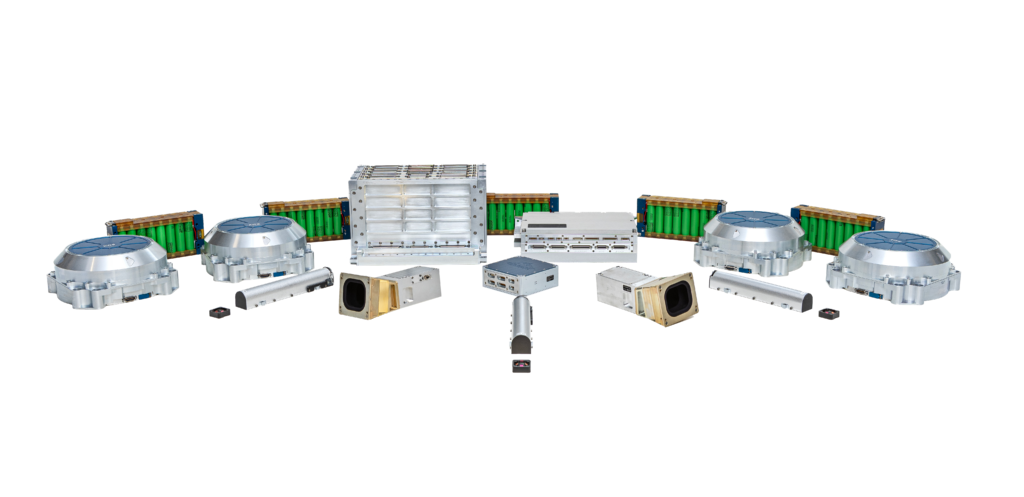
Its known power, avionics, software, and GNC capabilities give engineers an anchor point from which to develop the rest of the spacecraft.
“You know what you’re going to build around,” Cardwell said. “There are fewer variables to investigate, and that speeds up the process.”
Instead of recreating mature spacecraft technologies, organizations can focus on the systems that make their mission unique, such as the structural configuration.
That philosophy reflects a broader trend across engineering. As foundational technologies mature, innovation increasingly shifts higher in the stack—from rebuilding infrastructure to creating new capabilities on top of it.
Performance That Keeps Pace with the Payload
“As payload technology gets better, and we’re able to sense more things with greater precision, the bus and platform have to get better at the same rate—or faster,” Cardwell said.
Higher-resolution imaging systems, synthetic aperture radar, space domain awareness missions, rendezvous and proximity operations, and optical communications all demand precise spacecraft performance.
Blue Canyon’s FleXbus delivers that performance through three closely connected characteristics:
- Precision determines how accurately a spacecraft points toward its target;
- Stability maintains that orientation while collecting data;
- Agility allows the spacecraft to rapidly maneuver between objectives.
Rather than prescribing a single configuration, FleXbus allows customers to select the sensors, actuators, and control systems best suited to their mission.
Blue Canyon’s philosophy is consistent: the mission—not the hardware catalog—should drive the spacecraft design.
Building Capability, Not Just Spacecraft
Countries are investing in sovereign space programs that develop domestic engineering expertise alongside national space assets. Commercial companies want to build internal spacecraft integration experience while still leveraging proven technologies. Even established aerospace organizations are looking for ways to shorten development timelines without sacrificing technical ownership.
The goal isn’t simply reaching orbit faster. It’s developing the people, knowledge, and engineering maturity that make future missions easier to execute.
That helps explain why FleXbus includes more than hardware. Alongside avionics, GNC technologies, and electrical power systems, the platform incorporates modular flight software developed across more than 90 spacecraft, as well as access to Blue Canyon’s systems engineering, testing, and mission operations expertise.
Customers will continue searching for ways to build and own more of their unique mission capabilities. FleXbus enables this approach, giving engineers the freedom to spend less time recreating proven systems—and more time creating the missions that define what’s next.
To learn more about the FleXbus mission enabler from Blue Canyon Technologies, visit the website here.

The Lunar Economy Could Be Worth $566B by 2050. First, We Have to Build It.
The return to the Moon is an infrastructure story, and Deloitte has created numbers to back it up. The number: A new report from Deloitte, Building the Lunar Economy: How a Sustained Presence on the Moon Could Transform Life, Industry, and Infrastructure on Earth and Beyond, puts the lunar economy’s cumulative economic value through 2050…
The Commercial-First Shift in National Security Space
For decades, the model for building national security space systems was relatively straightforward. The government defined a mission, established requirements, funded a spacecraft designed specifically to meet them, and ultimately owned and operated the resulting capability.

A Faster Path to Orbit: How Hosted Payloads Are Changing Access to Space
Historically, deploying a new capability in space required significant time, investment, and technical expertise. Companies often had little choice but to build nearly everything themselves—from spacecraft and payload integration to ground infrastructure and mission operations. Today, the space industry offers a different model: hosted payloads. “We’re seeing companies looking for the fastest, most economical way…
Mass Is the Easy Part, Coordination Is The Hard Part
Ukraine rewrote the economics of conflict. When an adversary can field cheap drones by the thousand every month, you can’t answer them with million-dollar interceptors and exquisite platforms, you answer mass with mass. The U.S. has absorbed the lesson and is building autonomous, disposable systems faster than it ever has, led by a new generation…

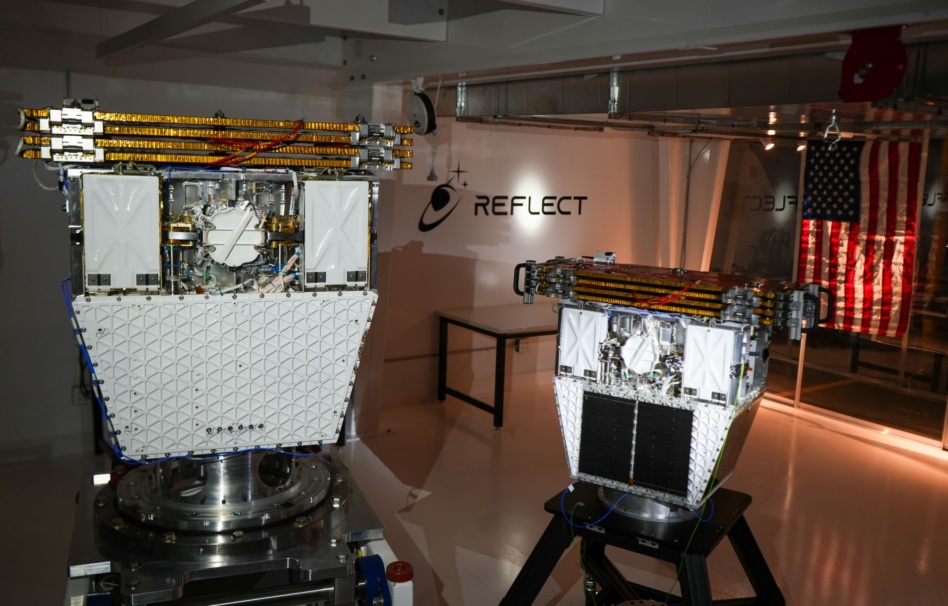
The space community is divided over whether Reflect Orbital’s sunlight-reflecting satellites are a bright idea.
The company, which obtained FCC approval last month to fly its first sat in orbit this year, says it has received 260,000+ requests to beam sunlight to illuminate everything from search and rescue operations to outdoor events at night. But it hasn’t all been good press.
Reflect’s plans to build a constellation of 50,000 orbiting mirrors has made a lot of people very angry, and has been widely regarded—by scientists, astronomers, and lovers of the night sky—as a bad move.
Keep reading