


A massive Moon economy, held together by a vast network of robots, is solidly in the works.
Yesterday, DARPA (the Defense Advanced Research Projects Agency) revealed the 14 companies that will be participating in its 10-Year Lunar Architecture (LunA-10) capability study. Each of these companies will supply a piece of the vast puzzle needed to support a sustainable human presence on the lunar surface.
“LunA-10 has the potential to upend how the civil space community thinks about spurring widespread commercial activity on and around the Moon within the next 10 years,” LunA-10 program manager Michael Nayak said in a DARPA release.
The 14 companies participating in the program are Blue Origin, CisLunar Industries, Crescent Space Services LLC, Fibertek, Inc., Firefly Aerospace, GITAI, Helios, Honeybee Robotics, ICON, Nokia, Northrop Grumman ($NOC), Redwire Corporation ($RDW), Sierra Space, and SpaceX.
DARPA’s MO: The future space economy envisioned by the current space industry and government spacefaring organizations includes robust in-orbit servicing, deep space transportation, and sustained human settlements on other celestial bodies. However, building futuristic worlds is expensive and takes a lot of R&D work.
DARPA has existed for over 65 years in order to fund and push forward the development of those ambitious projects with the potential to expand US capabilities. It’s exploring the LunA-10 project to clear the risk from tech that will be needed to support commercial opportunities on the Moon.
LunA-10: Over the next seven months, the 14 contract winners will work together to map out a future potential lunar infrastructure. The projects will span resource extraction, construction, power, communications, and transportation.
DARPA did not reveal the specifics of what each awardee will be working on. However, a handful of the companies let a few details slip:
- ICON, a Texas-based 3D home printing startup, will be working on building structures using lunar regolith
- Sierra Space will contribute tech it’s working on to extract oxygen from regolith
- Firefly is putting forward “a framework for on-orbit spacecraft hubs” based on its Elytra vehicle
- GITAI will explore deploying its modular Inchworm robots for lunar construction and maintenance
- Redwire will work on communications and PNT services between lunar craft and cislunar orbiters
Each consortium member will present its project publicly in April 2024 at the Lunar Surface Innovation Consortium meeting, and a final report on each project will be due in July.
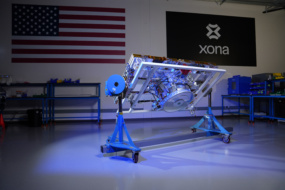
Exclusive: Xona Ramps Up Production Ahead of Pulsar Launch
With FCC approval in hand and six sats ready for the pad, Xona is turning to its next challenge: building the next 250.
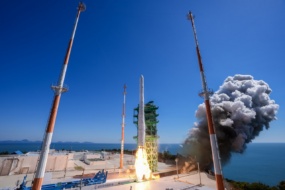
ArbaLabs Launches AI Verification Demo On South Korea’s Nuri Rocket
“In short, tons of companies are looking at the latest and greatest physical AI deployments,” ArbaLabs CEO Ashley Reeves told Payload. “Nobody is really thinking about putting some checks and balances on what these AI models are doing.”

Colorado Springs, Huntsville Team Up on Golden Dome
“It’s a transformed relationship between Colorado Springs and Huntsville,” Rep. Jeff Crank (R-CO) told Payload. “When I took office, I don’t think it was a bad relationship, but it was one where both communities were kind of looking over their shoulder at the other. That wasn’t good for America, and I don’t think it was good for Colorado Springs or Huntsville either.”
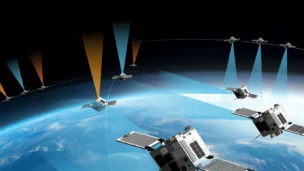
HawkEye 360 Turns its RF-Sensors to Orbital Targets
The DoD wants to better understand what’s going on in orbit. HawkEye 360 ($HAWK) has the inside scoop.

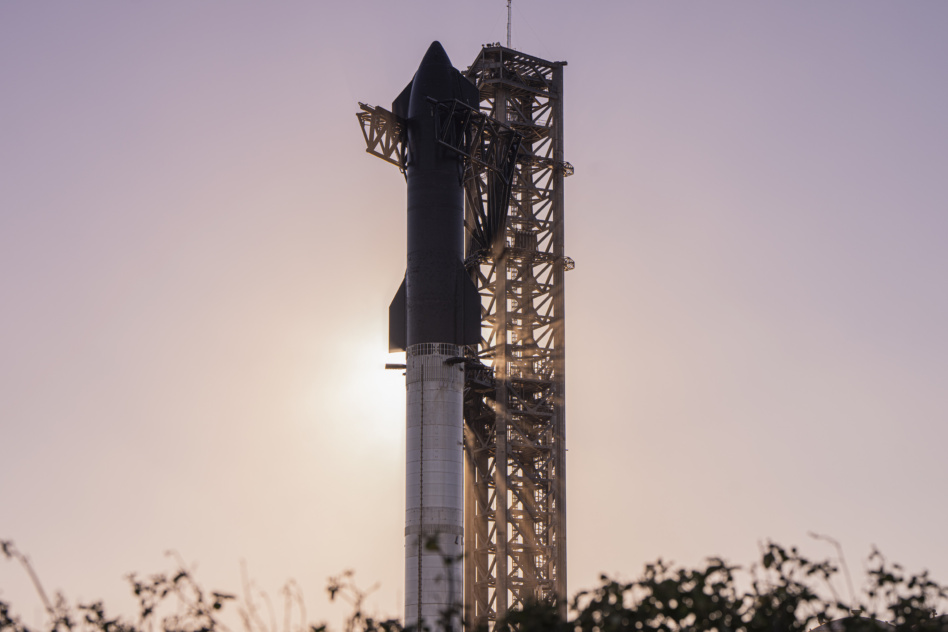
SpaceX is advancing toward testing propellant transfer capability on its Starship Human Landing System (HLS), a significant milestone in its lunar transport architecture.
On Monday, a NASA presentation revealed Starship could attempt a 10-ton internal transfer of extremely cold liquid oxygen propellant from one tank to another on its next Starship launch (IFT-3). However, an agency spokesperson cautioned Payload after the meeting that no final decision has been made.
Tipping point: The test is part of SpaceX’s 2020 $53M Tipping Point contract and requires the company to demonstrate the cryogenic tank-to-tank fuel transfer to provide insights for larger vehicle-to-vehicle transfers—a key capability needed for its lunar lander to ferry Artemis astronauts to the Moon.
Keep reading